
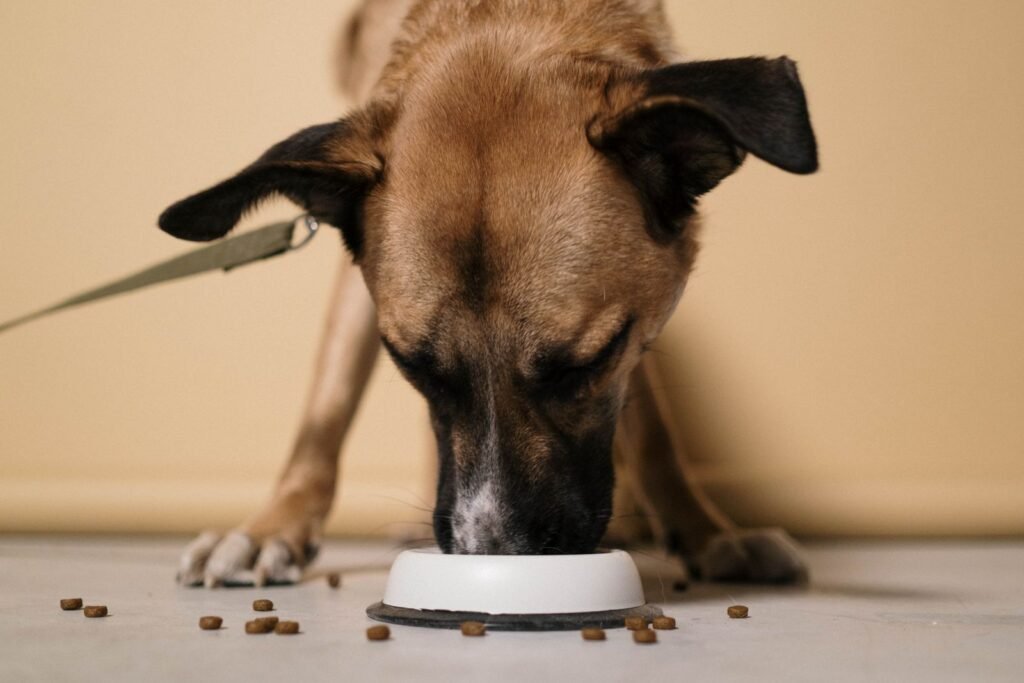
Feeding too much is the most common nutrition mistake dog owners make — and feeding too little can leave a puppy or an active dog short on energy. Our free dog food calculator uses the same formula veterinary nutritionists start with, so you can work out how many calories your dog actually needs each day, then turn that number into real portions of the food in your cupboard.
Enter your dog’s weight and life stage below. The calculator does the maths instantly — no sign-up, no email, just the number you need.
Dog Food Calculator
You’ll find this on the bag as “kcal/cup”. 350 is a typical dry food — adjust it to match your food.
Also printed on the bag as “kcal/100 g”. 370 is typical for dry food.
Enter your dog’s weight above to see how much to feed.
This calculator gives a starting estimate based on standard veterinary formulas. Every dog is different — check your dog’s body condition regularly and ask your vet if you’re unsure.
How this calculator works
Vets estimate a dog’s daily energy needs in two steps. First they calculate the Resting Energy Requirement (RER) — the calories a dog burns just existing, at rest:
RER = 70 × (body weight in kg)0.75
Then they multiply the RER by a life-stage factor to get the Daily Energy Requirement (DER) — the number that actually goes in the bowl. Growing puppies need up to three times their RER; a neutered adult needs much less.
| Life stage | Factor (× RER) |
|---|---|
| Puppy, under 4 months | 3.0 |
| Puppy, 4–12 months | 2.0 |
| Adult, neutered / spayed | 1.6 |
| Adult, not neutered | 1.8 |
| Less active, or gains weight easily | 1.3 |
| Weight loss (calculated on target weight) | 1.0 |
These are the standard factors published in veterinary nutrition references (see Sources below). They are a starting point, not a prescription — individual dogs can need 20% more or less, which is why body-condition checks matter.
Turning calories into meals
Weigh the food, don’t guess. A kitchen scale is far more accurate than a scoop, because cups of kibble vary with kibble size and shape. If you do use cups, use the same measuring cup every time and level it off.
Check your own bag. Dog foods range widely — roughly 300 to 450 kcal per cup for dry foods. The calorie statement is printed on every complete dog food label; type your food’s real numbers into the calculator for a result that matches your dog. Choosing the food itself matters too — see our guide to dog food brands to avoid for the red flags to watch for.
Split the daily amount into meals. Most adult dogs do well on two meals a day; young puppies need three or four smaller ones. And remember that everything counts: training treats, dental chews and table scraps all come out of the same daily budget. Two tablespoons of peanut butter, for example, add about 190 kcal — a big slice of a small dog’s day. (More on that in is peanut butter good for dogs?)
Adjust by body condition, not by the chart alone. You should be able to feel your dog’s ribs easily under a thin cover of fat, and see a waist from above. If ribs disappear, cut portions by about 10% and recheck in two weeks. If you can see ribs and hip bones, increase slowly. Wondering which extra foods are safe to add? Start with our guide to what human foods dogs can eat.
Frequently asked questions
How many calories does a 10 kg dog need?
A 10 kg dog has an RER of about 394 kcal. A typical neutered adult (×1.6) needs roughly 630 kcal per day — about 1.8 cups of a 350 kcal/cup food. An intact adult needs a little more (about 710 kcal); a less active dog a little less (about 510 kcal).
How many calories does a puppy need?
Puppies need far more energy per kilo than adults because they are building a body, not just maintaining one. Under 4 months, aim for about 3 × RER; from 4 to 12 months, about 2 × RER. Because growth rates vary a lot by breed, weigh your puppy regularly and confirm the plan with your vet at each vaccination visit.
Do treats count towards the daily calories?
Yes. A common veterinary guideline is to keep treats and extras under about 10% of the daily calorie total, so the main food still provides at least 90% of your dog’s nutrition. The calculator shows your dog’s personal 10% treat budget in the result.
My dog needs to lose weight. Which weight should I enter?
Enter the target weight your vet has set, and choose “Weight loss” in the life-stage list. Feeding for the dog you want — not the dog you have — is how safe weight-loss rations are calculated. Weight loss in dogs should be gradual and vet-supervised, especially if your dog has any other health condition.
Disclaimer: This calculator provides general estimates for healthy dogs based on published veterinary formulas. It is not a substitute for advice from your own veterinarian, who knows your dog’s body condition, health history and needs. Always consult your vet before starting a weight-loss plan or changing a puppy’s, a pregnant dog’s, or an unwell dog’s diet.
Sources
- National Research Council — Nutrient Requirements of Dogs and Cats (National Academies Press)
- WSAVA (World Small Animal Veterinary Association) — Global Nutrition Guidelines
- Ohio State University Veterinary Medical Center — Nutrition Support Service (RER/DER calorie calculations)