
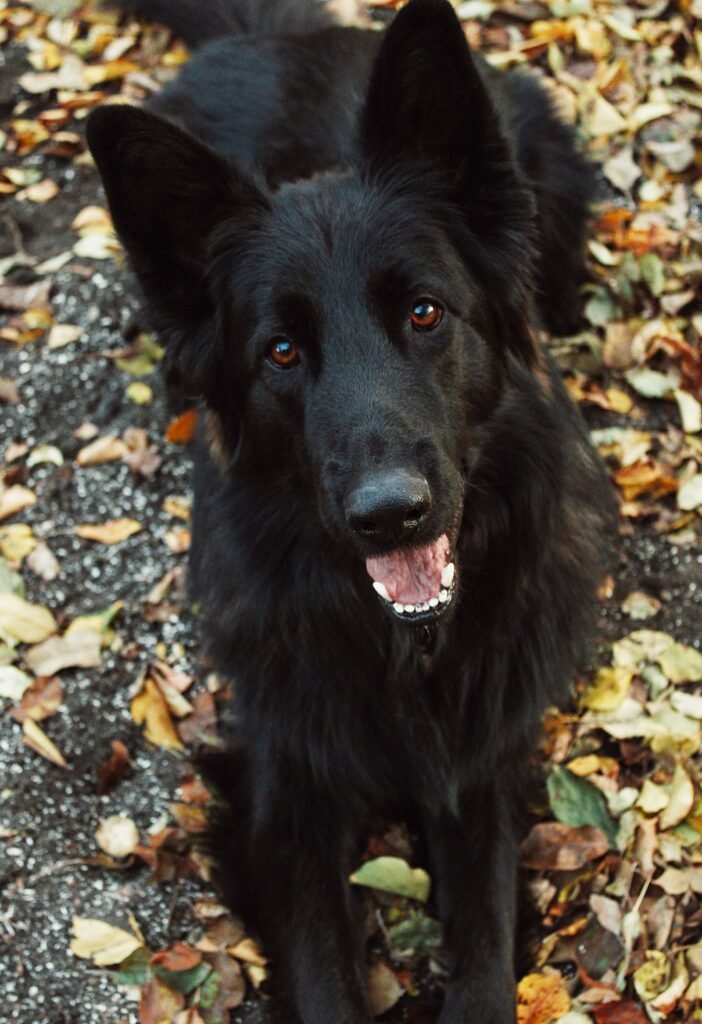
A black German Shepherd stops people in their tracks. That solid, glossy black coat looks striking next to the familiar black-and-tan pattern — and it raises the same questions again and again: is it a separate breed, is it rare, and is it more aggressive?
The short answer is reassuring. A black German Shepherd is a purebred German Shepherd Dog with a black coat, caused by a recessive gene. It has the same intelligence, loyalty and protective instincts as any other German Shepherd. The coat is different; the dog underneath is not.
Only about 6.8–7% of German Shepherd puppies are born solid black, which is why they stand out — and why they often carry a higher price tag. Before you fall for the look, understand what living with one involves: heavy shedding, high energy, and a dog that needs training and a job. The most common German Shepherd colour is actually sable: our sable Alsatian guide explains the banded agouti coat and why sable, not black, was the breed’s original colour.
Is a Black German Shepherd a Separate Breed?
No. A black German Shepherd is not a separate breed, and it is not a mix. It is a German Shepherd Dog whose coat is black, the result of both parents carrying the recessive gene for solid black colouring.
The American Kennel Club recognises solid black as an accepted colour in the breed standard. The breed was standardised in Germany in 1899 by Max von Stephanitz, and the AKC recognised the German Shepherd Dog in 1908. A black puppy from health-tested parents is every bit as purebred as a black-and-tan one — colour alone says nothing about quality.
That matters because some sellers market black puppies as a rare variety and charge a premium for it. Rarity is real, but breeder reputation, health testing and temperament matter far more than coat colour.
Black German Shepherd vs Standard German Shepherd
Apart from the coat, there is almost nothing to separate them. Size, lifespan, temperament and health risks follow the same breed standard. The same is true of the long coat: our long haired German Shepherd guide covers how the recessive long-coat gene changes grooming, shedding and care.
| Feature | Black German Shepherd | Black-and-tan German Shepherd |
|---|---|---|
| Breed | German Shepherd Dog | German Shepherd Dog |
| Coat colour | Solid black | Black saddle with tan legs, chest and head |
| Size (males) | 22–26 in, 65–90 lb | 22–26 in, 65–90 lb |
| Lifespan | 7–10 years (AKC); many guides quote 9–13 years | 7–10 years (AKC); many guides quote 9–13 years |
| Temperament | Confident, loyal, protective, intelligent | Confident, loyal, protective, intelligent |
| Shedding | Heavy, thick double coat | Heavy, thick double coat |
| Rarity | About 6.8–7% of puppies | The most common colouring |
UK vet data averages around 10.3 years.
Temperament: Loyal, Smart and Protective
Black German Shepherds have the classic German Shepherd temperament: confident, loyal, intelligent and naturally protective. They bond deeply with their family, are usually reserved with strangers, and are quick learners who thrive on structure.
Are black German Shepherds more aggressive than other German Shepherds? There is no evidence that coat colour affects aggression. Temperament comes from bloodline, early socialisation and training, not coat colour. That protective instinct is real, though — without guidance, it can turn into over-guarding or barking at visitors. Early, consistent socialisation is not optional for this breed. Our guide to the German Shepherd as a guard dog explains how that working instinct shows up at home and how to channel it well.
Family Life and Shedding
Black German Shepherds are typically gentle and devoted with their own family, including children they have grown up with. They suit active families best: a family that hikes, trains and plays with their dog will get a wonderful companion, while a household that leaves the dog alone in a yard all day will get a bored, destructive one. With children, supervision and ground rules matter — teach children to respect the dog, and never leave a young child unsupervised with any dog.
Ask owners what surprised them most, and the answer is almost always the shedding. German Shepherds have a thick double coat that sheds year-round, with two heavy “coat blows” in spring and autumn. Owners joke that they are “German Shedders”, and owners on forums repeat that nobody warns you about it. Black fur is also highly visible on light furniture and clothing. Brush 3–4 times a week with an undercoat rake, daily during a blow, and bathe every 2–3 months. Our guide on how to reduce shedding on dogs covers brushing tools and diet tips that help heavy shedders.
Exercise, Training and Health
An adult needs around 1.5–2 hours of activity a day — walks, play, training and scent work, obedience or agility. Puppies need far less: short, gentle exercise while their joints are still growing.
German Shepherds are among the most trainable breeds in the world — intelligent, eager to work and quick to learn. They learn bad habits just as fast as good ones, so start early and stay consistent:
- Socialise at 8–16 weeks. Introduce your puppy to many different people, places, sounds and other dogs in calm, positive ways.
- Teach the basics. Sit, down, stay, recall and loose-lead walking, in short daily sessions of 5–10 minutes.
- Reward what you want. Use treats, praise and play for calm, wanted behaviour. Harsh corrections damage trust and can make a protective breed fearful — talk to a professional trainer if you are unsure.
- Keep training for life. Ongoing obedience or a dog sport keeps their mind busy and your bond strong.
Black German Shepherds share the breed’s usual health risks: hip and elbow dysplasia, degenerative myelopathy, bloat, allergies and hemangiosarcoma. Responsible breeders screen for hip and elbow dysplasia and degenerative myelopathy — ask to see the results before you buy. Bloat is an emergency: a swollen belly or retching without vomiting after eating needs an immediate vet visit. If anything worries you, consult a vet rather than trying home remedies.
How Much Does a Black German Shepherd Cost?
In the US, a puppy typically costs $800–$2,500+, or $1,500–$4,500 from a reputable, health-tested breeder; working or champion lines can cost $6,500+. Rescue adoption is usually $100–$600. Budget $1,500–$2,500 for first-year setup, $2,000–$3,500 a year for upkeep, and around $15,000–$30,000 over the dog’s lifetime. These are breed-guide ranges, not quotes.
Black puppies often carry a premium because of their rarity, but price does not guarantee quality. Always meet the breeder, meet at least the mother, and see health screening results. Rescue is worth considering too. For a fuller picture of what to expect over a dog’s life, see our guide on the German Shepherd’s expected lifespan.
The Bottom Line
A black German Shepherd is a German Shepherd in every way that matters: loyal, intelligent, protective and hard-working, wrapped in a striking solid black coat. Only a small share of puppies are born black, and the AKC accepts the colour — but colour should never be the reason you choose one. Choose this dog if you are active, consistent and ready to train and exercise a large, powerful breed every day.
Frequently Asked Questions
+ Is a black German Shepherd a separate breed?
No. It is a purebred German Shepherd Dog with a solid black coat, caused by a recessive gene that both parents must carry. The AKC recognises solid black as an accepted colour in the breed standard.
+ How much does a black German Shepherd cost?
In the US, $800–$2,500+ is typical, and $1,500–$4,500 from a reputable, health-tested breeder. Rescue adoption is usually $100–$600.
+ Do black German Shepherds shed a lot?
Yes — heavily. They have a thick double coat that sheds year-round, with two big coat blows in spring and autumn. Brush 3–4 times a week with an undercoat rake, daily during a blow, and bathe every 2–3 months.
+ Are black German Shepherds more aggressive?
There is no evidence that coat colour affects aggression. Temperament comes from bloodline, early socialisation and training.
+ How long do black German Shepherds live?
The AKC lists 7–10 years for the breed, many breed guides quote 9–13 years, and UK vet data averages around 10.3 years. Genetics, weight and care all play a part.
+ Are black German Shepherds good with kids?
Yes, with supervision and ground rules. They are usually gentle and devoted with their own family. Teach children to respect the dog, and never leave a young child unsupervised with any dog.
Sources
- American Kennel Club — German Shepherd Dog breed standard: https://www.akc.org/dog-breeds/german-shepherd-dog/
- German Shepherd Dog Club of America — Health and breed information: https://gsdca.org/
- PetMD — German Shepherd breed guide: https://www.petmd.com/dog/breeds/german-shepherd
- Embrace Pet Insurance — German Shepherd breed guide: https://www.embracepetinsurance.com/dog-breeds/german-shepherd
Pingback: Long Haired German Shepherd: Traits, Temperament & Care Guide
Pingback: Sable Alsatian: German Shepherd Coat, Traits & Care Guide