
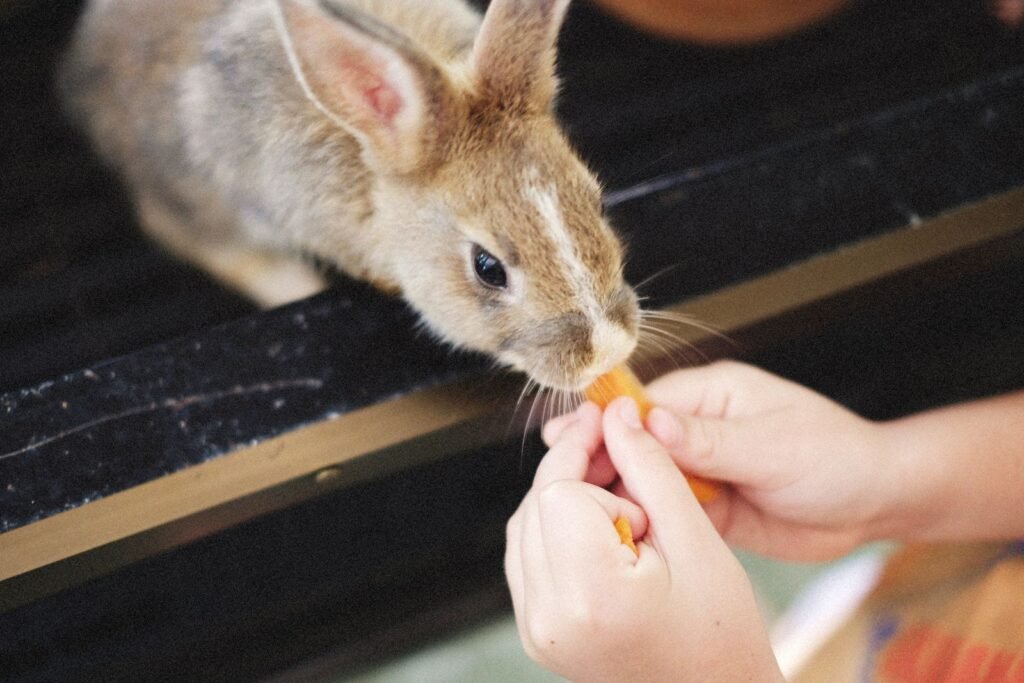
Can rabbits eat cabbage? Yes — but only in small amounts, and only as an occasional extra, never as a daily staple. Cabbage is not toxic to rabbits, and many bunnies love its crunch. But it belongs to the brassica family, the same group as broccoli, kale and Brussels sprouts, and it can cause gas and bloating. Because rabbits cannot pass gas easily, too much cabbage can slow the gut and lead to GI stasis — a veterinary emergency.
Why Cabbage Can Cause Problems for Rabbits
Cabbage is safe in principle, but three properties make portion control essential. First, it produces gas: cabbage contains raffinose, a complex sugar rabbits cannot fully digest, and gut bacteria ferment it into gas. A rabbit that cannot pass gas gets a bloated, painful belly — and a gut that slows down or stops.
Second, cabbage contains glucosinolates, the sulphur compounds that give brassicas their sharp smell, which can irritate a rabbit’s digestive tract in large amounts. Third, it contains goitrogens, which can interfere with thyroid function if a rabbit eats large amounts of brassicas regularly over a long period. An occasional small serving is not a thyroid risk; a daily pile of cabbage is.
How Much Cabbage Can a Rabbit Eat?
The safe rule is simple: 1–2 small leaves per serving, 1–2 times a week — roughly a thumb-sized piece per 4 lb (1.8 kg) of body weight, not a wedge of the head.
| Rabbit | Cabbage per serving | How often |
|---|---|---|
| Adult rabbit (4–6 lb) | 1–2 small leaves | 1–2 times a week |
| Large adult rabbit (7 lb+) | 2–3 small leaves | 1–2 times a week |
| Baby rabbit under 12 weeks | None | Never |
| Rabbit with thyroid problems, or a history of gas or GI slowdown | None | Ask your vet first |
Raw green cabbage is low in calories and rich in fibre and vitamins: about 25 kcal, 2.5 g of fibre, 36.6 mg of vitamin C and 76 mcg of vitamin K per 100 g. The fibre keeps a rabbit’s gut moving and helps wear down teeth — but hay provides far more fibre, far more safely. Cabbage adds variety; it does not replace hay.
How to Introduce Cabbage to Rabbits
Never offer a full serving on day one. Introduce it slowly over several days so you can see how your rabbit’s gut reacts.
- Day 1: one small piece. Offer a single leaf the size of your thumb, washed and raw. Watch droppings and appetite for 24 hours.
- Day 2–3: watch the droppings. Normal droppings are round, dry and plentiful. Smaller, fewer or misshapen droppings mean the cabbage is not agreeing with your rabbit — stop, or skip cabbage altogether.
- Day 4: a second small piece. If droppings stayed normal, offer another small piece. Do not increase the amount yet.
- Week 2: settle into the routine. If everything is normal, feed 1–2 small leaves once or twice a week, never two days in a row. Always wash leaves under running water first, serve raw only — never cooked, seasoned, pickled or oiled — and remove uneaten cabbage within a few hours.
If your rabbit refuses cabbage, do not force it. Plenty of rabbits prefer other greens — see our guide on should rabbits eat celery for another crunchy option.
Which Types of Cabbage Are Safest?
All common cabbage types are safe in the same small amounts, but some are gentler on the gut. Savoy cabbage is the gentlest: its loose, crinkly leaves are less dense than a tight head, and causes the least gas — a good first choice. Napa (Chinese) cabbage is also gentle: softer and milder than head cabbage, with a higher water content. Green cabbage is fine in small amounts, but it is dense and more likely to cause gas, so keep servings small. Red cabbage is safe too, with the same nutrients plus anthocyanins, the purple pigments. Some owners report it turns their rabbit’s urine greenish — harmless, but worth knowing.
Compared with romaine lettuce, cabbage is more nutritious but riskier: romaine is the safer daily green because it rarely causes gas. Iceberg lettuce should be avoided — it is mostly water and can cause loose stools. Whatever type you choose, it must be fresh and raw. Cooked cabbage is too soft to help wear down teeth and too rich for a rabbit’s gut, and pickled or seasoned cabbage is never safe.
Warning Signs and What to Do
Watch your rabbit for 24 hours after any new food. Stop feeding cabbage and call your vet immediately if you see fewer or smaller droppings, or none at all; a swollen or hard belly; not eating hay; lethargy, hiding, or grinding its teeth in pain; or diarrhoea or soft droppings stuck to the fur.
These are signs of GI stasis or a gut slowdown, and rabbits can deteriorate fast. A rabbit that has not eaten for 12 hours needs a vet the same day — do not wait, and do not try home remedies. If in doubt, consult a vet.
If your rabbit got into a whole head of cabbage, remove it so your rabbit cannot eat more, and make sure hay and fresh water are available — hay is what keeps the gut moving. Watch appetite, droppings, belly size and behaviour for 24 hours, and call your vet if droppings shrink or stop, the belly looks swollen, or your rabbit stops eating. Do not offer any more fresh food until droppings are back to normal. Most rabbits recover with hay, water and monitoring; the danger is daily brassicas, which turn gas into stasis. Hay still has to be 80% or more of everything your rabbit eats: our timothy hay guide for rabbits explains why hay, not vegetables, is the foundation of a rabbit’s diet.
The Bottom Line
Cabbage is safe for adult rabbits in small amounts: 1–2 leaves, once or twice a week, raw and washed, introduced slowly. Savoy and Napa are the gentlest types, and babies under 12 weeks should not have any. Hay stays the foundation of the diet — cabbage is a treat, not a staple. And if your rabbit shows any sign of a slow gut after eating it, stop the cabbage and call your vet. For another safe food to rotate into the diet, see our guide on can rabbits eat strawberries.
Frequently Asked Questions
+ Can rabbits eat cabbage?
Yes, but only in small amounts — 1–2 small leaves, 1–2 times a week. Cabbage is not toxic, but it can cause gas and bloating, and too much can lead to GI stasis. Serve it raw and washed.
+ How much cabbage can a rabbit eat?
About 1–2 small leaves per serving, roughly a thumb-sized piece per 4 lb of body weight, once or twice a week. Never feed a whole wedge, and never two days in a row.
+ Can rabbits eat red cabbage?
Yes, in the same small amounts as green cabbage. It has the same nutrients plus anthocyanins, the purple pigments. Some owners notice it turns urine greenish — that is harmless.
+ Can baby rabbits eat cabbage?
No. Babies under 12 weeks should not eat cabbage or any fresh vegetables — their guts are still developing. Feed unlimited hay and age-appropriate pellets only, and ask your vet when to start greens.
+ What happens if a rabbit eats too much cabbage?
It causes gas and bloating, because rabbits cannot pass gas easily. Watch for fewer droppings, a swollen belly, not eating, or teeth grinding. In serious cases the gut stops — GI stasis, a vet emergency.
Sources
- The Vet Desk — Can Rabbits Eat Cabbage? Vet-Verified Nutritional Facts & FAQ: https://thevetdesk.com/pet-nutrition/rabbits/can-rabbits-eat-cabbage/
- RSPCA — What Should I Feed My Rabbits?: https://www.rspca.org.uk/adviceandwelfare/pets/rabbits/diet
- House Rabbit Society — Fruits & Vegetables: https://rabbit.org/care/fruits-vegetables/
- ASPCA — Toxic and Non-Toxic Plants: https://www.aspca.org/pet-care/aspca-poison-control/toxic-and-non-toxic-plants