
IVDD in Dogs: Symptoms, Causes, Treatment & Care Guide
Intervertebral disc disease, usually shortened to IVDD, is a painful spinal condition in which a disc between the vertebrae bulges or bursts and presses on the spinal cord, causing signs from back or neck pain to paralysis. It always needs veterinary management. This guide explains, in general terms, what IVDD is, which dogs are most at risk, its signs, and its treatment and home care. It is general information only, not a diagnosis for any individual dog. Contact a vet promptly for any sign below, and treat sudden paralysis or loss of bladder control as an emergency.
What Is IVDD?
The spine is made up of vertebrae, with soft, cushioning discs between them that let it bend and absorb movement. In IVDD, those discs degenerate: they dry out, harden, and cushion less well. Eventually a disc may bulge or rupture, pressing on the spinal cord or nearby nerves, causing pain and, in serious cases, weakness or loss of movement.
Vets distinguish two patterns. In Type I, the disc hardens early and can rupture suddenly, often after ordinary movement, most commonly in short-legged, long-bodied breeds. In Type II, the disc hardens gradually and slowly bulges against the cord, usually in older, larger dogs. Neck problems often cause neck pain and reluctance to lower the head; middle and lower back problems, the more common type, often cause back pain, a hunched posture, and back-leg weakness.
Which Dogs Are Most at Risk?
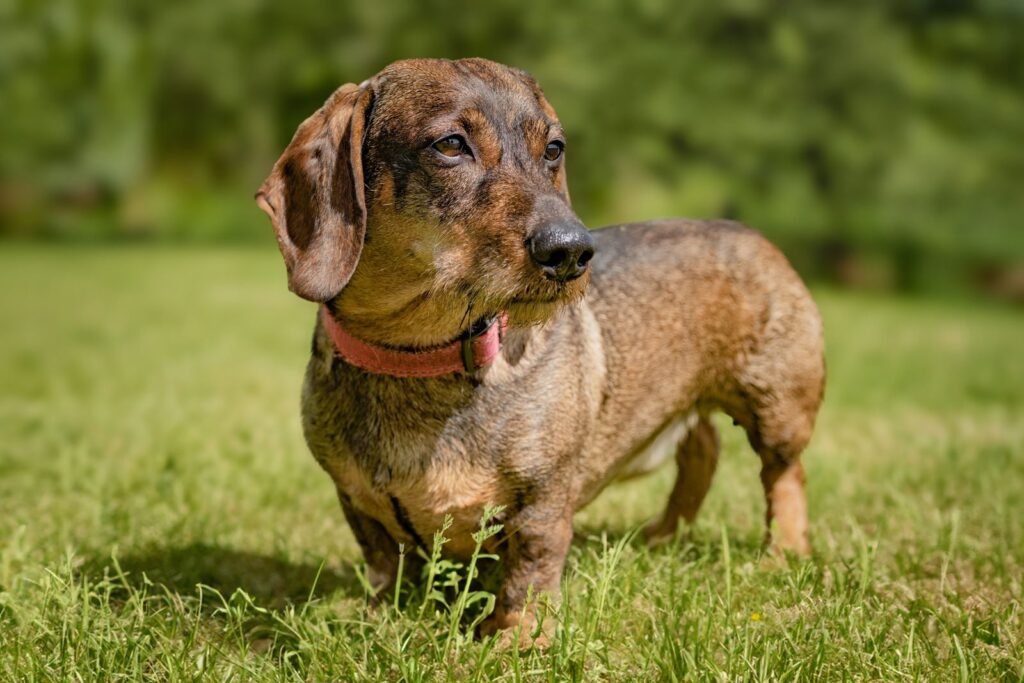
Any dog can develop disc disease, but some breeds face a much higher risk. Dachshunds are by far the most commonly affected breed, often showing signs between about three and six years of age. Other short-legged, long-bodied breeds at higher risk include French Bulldogs, Beagles, Shih Tzus, Pekingese, and Corgis. These breeds are sometimes described as chondrodystrophic, meaning their cartilage develops in a way that makes discs degenerate unusually early. Age and weight also matter: degeneration is more likely in older dogs, and extra weight stresses the spine, so keeping a dog lean is one practical step an owner can take.
Symptoms of IVDD in Dogs
Signs depend on the disc’s location and the pressure on the cord. Early signs can be easy to miss, as a dog in pain may simply seem quieter. Watch for:
- Back or neck pain, shown by yelping when touched or picked up
- A hunched back or neck, tense muscles, or head held low
- Reluctance to move, jump, climb stairs, or walk
- Limping, stumbling, or unsteady walking, especially in back legs
- Dragging back feet or knuckling over paws
- Weakness in a leg, or difficulty standing
- Reduced appetite, less play, or unusual tiredness
- Loss of bladder or bowel control
A single brief yelp does not automatically mean IVDD; muscle strain, infection, and other conditions can cause similar signs. Only a vet can work out what is going on, so do not diagnose at home, and never give human painkillers to a dog.
When IVDD Is an Emergency
Contact an emergency vet immediately if your dog suddenly cannot walk, is dragging its back legs, cannot stand, has lost bladder or bowel control, or seems to have lost feeling in its legs. These are classic signs of severe spinal cord compression, and speed matters: for dogs that have lost deep pain sensation, prompt surgery gives a better chance of regaining mobility. While you wait, keep your dog still and calm, carry a small dog, and do not manipulate the spine or start medication without veterinary advice.
How Vets Assess IVDD
A vet will start with a physical and neurological examination, checking posture, gait, reflexes, and feeling in the feet. X-rays are often taken, but they alone cannot diagnose disc disease, as they do not show the spinal cord. For more than mild pain, referral to a neurologist and MRI imaging is the usual way to confirm which disc is pressing on the cord.
Treatment Options for IVDD
Treatment depends on severity and is decided by the treating vet. Dogs with mild signs that can still walk are often managed conservatively: strict rest, usually in a crate, plus vet-prescribed pain relief and anti-inflammatory medication. Strict rest means short, on-leash toilet trips only, with no jumping, stairs, rough play, or off-leash running, even if the dog seems better; stopping early is a common reason signs return. Surgery, which removes disc material pressing on the cord, is more often recommended for dogs that cannot walk, are worsening, or do not improve with rest and medication. Never give leftover medication from another pet or combine painkillers without veterinary guidance.
Recovery and Home Care
Recovery takes patience: after surgery, many dogs need several weeks of restricted activity, and full recovery can take months. Follow the rest and medication schedule exactly and tell your vet if signs worsen. At home, use a harness, provide ramps, keep your dog lean, and use non-slip mats.
For digestive upsets during recovery, see our guide on dog diarrhea and keeping preventive care on track in our puppy vaccine schedule guide. Sudden abdominal distress is a separate emergency, so read about puppy bloat signs and contact a vet at once.
Can IVDD Be Prevented?
There is no guaranteed way to prevent IVDD, especially in genetically prone breeds. Sensible steps include keeping your dog lean, avoiding repeated high-impact jumping where possible, and using ramps and a harness. A dog that has had one episode is at higher risk of another, so keep those precautions in place long term, and let your vet decide how urgently back pain needs to be seen.
FAQ
What is IVDD in dogs?
A condition in which spinal discs degenerate and then bulge or rupture, pressing on the spinal cord, causing pain, weakness, difficulty walking, and in severe cases paralysis. It needs veterinary assessment.
What are the first signs of IVDD?
Often pain-related: yelping when touched or picked up, a hunched back or neck, reluctance to jump or climb stairs, and a quieter dog. Weakness or dragging the back feet may follow. A vet examination is needed rather than a home diagnosis.
Is IVDD in dogs an emergency?
It can be. Sudden inability to walk, dragging legs, loss of bladder or bowel control, or loss of feeling in the legs should be treated as an emergency. Milder pain still deserves a prompt vet appointment.
Can a dog recover from IVDD without surgery?
Some dogs do, particularly those with mild signs that can still walk, with strict crate rest and vet-prescribed pain relief. Surgery is more often recommended for dogs that cannot walk, are worsening, or do not improve with rest and medication.
Which breeds are most prone to IVDD?
Dachshunds most commonly, followed by French Bulldogs, Beagles, Shih Tzus, Pekingese, and Corgis. Older, larger dogs can also develop the gradual form.
Sources
- https://www.petmd.com/dog/conditions/neurological/intervertebral-disc-disease-in-dogs
- https://www.vet.cornell.edu/departments-centers-and-institutes/riney-canine-health-center/canine-health-topics/intervertebral-disc-disease
- https://www.vet.cornell.edu/departments-centers-and-institutes/riney-canine-health-center/canine-health-information/diseased-spinal-disks
- http://vetmed.tamu.edu/news/pet-talk/intervertebral-disc-disease-in-dogs/
Pingback: German Shepherd Lifespan: How Long Do They Live?