
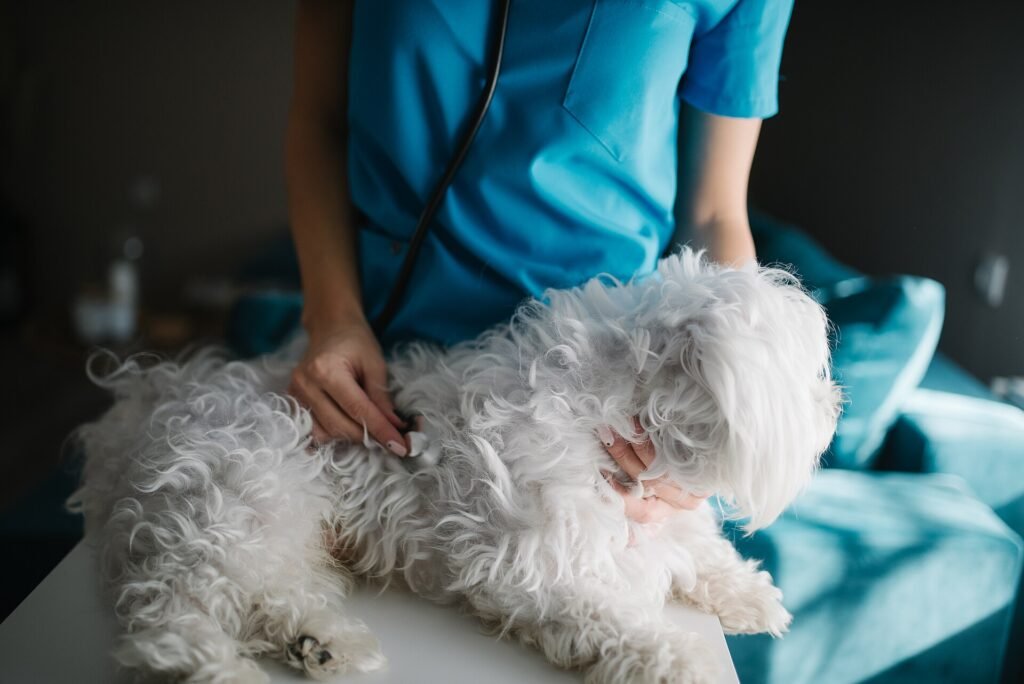
Pale gums in dogs are never normal, and they always need a same-day vet visit. Healthy dog gums are moist and bubblegum pink. When gums look pale, light pink or white, it usually means not enough red blood — or not enough blood flow — is reaching the tissues. The causes range from anemia and internal bleeding to shock, and many are life-threatening without prompt treatment.
If your dog has pale gums and seems weak, has collapsed, or is breathing fast or with difficulty, go to an emergency vet now. If your dog seems otherwise well, still call your vet the same day — there is no safe “wait and see” window.
What Colour Should a Dog’s Gums Be?
Healthy gums are moist, salmon or bubblegum pink. Some dogs have naturally black or grey pigmented patches — that is normal. What matters is a change from your dog’s usual colour.
| Gum colour | What it may mean | What to do |
|---|---|---|
| Bubblegum pink, moist | Normal | No action needed |
| Pale pink or light | Mild anemia, early blood loss, or reduced circulation | Same-day vet visit |
| White or very pale | Severe anemia, significant blood loss, or shock | Emergency — go now |
| Blue, purple or grey | Not enough oxygen reaching the tissues | Emergency — go now |
| Yellow | Liver problems or red blood cell destruction | Same-day vet visit, urgently |
| Bright red | Heatstroke, high blood pressure, or poisoning | Emergency — go now |
How to Check Your Dog’s Gums at Home
You can check your dog’s gums in under a minute. Only do this if your dog will let you — never force it, and do not risk being bitten if your dog is in pain or frightened.
- Lift the lip gently. With clean hands, lift your dog’s upper lip and look at the gums above the teeth. Pick a pink area, not a black pigmented patch.
- Look at the colour. Healthy gums are bubblegum pink and moist. Note whether they look paler than usual, white, grey, blue, yellow or bright red.
- Press and count. Press a fingertip on a pink area until it turns white, then let go — this is the capillary refill time test. The pink colour should return within about 1 to 2 seconds.
- Feel the moisture. Gums that feel sticky or tacky can be a sign of dehydration, which often goes with circulation problems.
- Check the rest of your dog. Weak or collapsed? Breathing fast? Swollen belly? Bleeding, vomiting or diarrhoea? Any of these with pale gums means an emergency.
A refill slower than 2 seconds can signal poor circulation — but a normal refill does not rule out a problem. Pale gums still need a vet check.
What Causes Pale Gums in Dogs?
Pale gums mean too few red blood cells or too little blood flow — an underlying problem only a vet can diagnose. The most common causes are:
Anemia. Anemia — a shortage of healthy red blood cells — is the leading cause of pale gums, and a sign of another problem, not a disease on its own. VCA notes a healthy dog’s packed cell volume (PCV) is typically 35% to 55%; below 35% is generally considered anemic.
Immune-mediated hemolytic anemia (IMHA). In IMHA, the dog’s own immune system attacks its red blood cells — the most common cause of red-cell destruction in dogs. Signs come on quickly: weakness, pale or yellow gums, fast breathing and dark urine. It is serious, but dogs that get through the first weeks usually do well.
Internal bleeding. Trauma, a ruptured spleen or liver tumour (such as hemangiosarcoma), or a clotting disorder can cause internal bleeding — a dog can lose a dangerous amount of blood with none visible. Sudden collapse, pale gums, fast breathing and a swollen belly together strongly suggest it.
Rat poison and other toxins. Anticoagulant rat poison prevents clotting, and bleeding usually starts 3 to 7 days after the dog eats it. If your dog may have eaten rat or mouse poison, go to the vet even if your dog seems well, and call the ASPCA Animal Poison Control Center on 888-426-4435.
Shock. In shock — from trauma, severe infection (sepsis), a severe allergic reaction, or heart failure — blood is redirected to vital organs and gum circulation falls. Shock needs immediate treatment.
Bloat (gastric dilatation-volvulus, GDV). In bloat, the stomach fills with gas and can twist, cutting off its own blood supply. A dog with bloat typically retches without bringing anything up, has a swollen belly, drools, and has pale gums. It is fatal without emergency surgery — see our guide to puppy bloat signs.
Kidney disease, parasites and heart disease. The kidneys produce erythropoietin (EPO), which tells the bone marrow to make red blood cells, so chronic kidney disease can cause anemia. Heavy hookworm, flea or tick infestations can also cause anemia, especially in puppies, and some heart conditions reduce circulation and cause pale gums.
You cannot tell which of these is the cause by looking at the gums. That is why pale gums always need a vet, not a guess.
When Are Pale Gums an Emergency?
Go to an emergency vet immediately if pale gums come with any of these: white, grey or blue gums; weakness or collapse; fast or laboured breathing; a swollen belly, or retching without vomiting; visible bleeding or new bruising; tremors or seizures; a known or suspected toxin, even if your dog seems fine; or recent trauma.
Keep your dog calm and quiet and do not try home remedies — none work for pale gums, and iron supplements are not useful. Do not give medication unless your vet tells you to. Pale pink gums in a dog that seems well still need a same-day vet visit.
What Will the Vet Do?
Your vet will start with a physical exam, then blood tests — a complete blood count, blood chemistry, sometimes a clotting profile — plus X-rays or ultrasound. Treatment depends on the cause: fluids or oxygen, surgery for internal bleeding or bloat, immune-suppressing treatment for IMHA, or a blood transfusion. Afterwards, follow your vet’s recheck schedule and check your dog’s gums when you brush their teeth — see how often to brush your dog’s teeth. Diarrhoea plus pale gums means a same-day vet visit — see our dog diarrhea guide.
The Bottom Line
Pale gums are never normal: the tissues are not getting enough oxygenated blood, and the cause is often serious. Learn your dog’s normal gum colour and act the same day if it changes. White, grey or blue gums, weakness, collapse or laboured breathing mean an emergency vet now.
This article is for education only and does not replace veterinary advice, diagnosis or treatment. If your dog has pale gums, consult a vet.
Frequently Asked Questions
+ What do pale gums in dogs mean?
Pale gums mean the tissues are not getting enough oxygenated blood — usually anemia (too few red blood cells) or poor circulation, as in shock. Common causes include internal bleeding, immune-mediated anemia, rat poison, bloat, kidney disease, parasites and heart disease. Only a vet can find the cause.
+ Are pale gums in dogs an emergency?
They always need a same-day vet visit. They are an emergency if the gums are white, grey or blue, or if your dog is weak, has collapsed, is breathing fast or with difficulty, has a swollen belly, or may have eaten a toxin. Go to an emergency vet immediately.
+ What should I do if my dog has pale gums?
Keep your dog calm and quiet, do not encourage exercise, and call your vet the same day — or go straight to an emergency clinic if there are emergency signs. Do not try home remedies. If a toxin was eaten, call the ASPCA Animal Poison Control Center on 888-426-4435.
+ How do I check my dog’s gums at home?
Gently lift the upper lip and look at a pink area of gum — healthy gums are moist and bubblegum pink. Press a fingertip on the gum until it turns white and release: the pink colour should return within about 1 to 2 seconds. Slower than 2 seconds can signal poor circulation.
+ What colour should a dog’s gums be?
Healthy gums are moist and salmon or bubblegum pink. Some dogs have naturally black or grey pigmented patches, which is normal. Anything else — pale, white, blue, grey, yellow or bright red — is abnormal and worth a vet check the same day.
Sources
- PetMD — Pale Gums in Dogs: Common Causes and When To Call Your Vet (Barri J. Morrison, DVM): https://www.petmd.com/dog/symptoms/pale-gums-in-dogs
- VCA Animal Hospitals — Anemia in Dogs (healthy PCV typically 35–55%): https://vcahospitals.com/know-your-pet/anemia-in-dogs
- Merck Veterinary Manual — Parameters to Evaluate During Triage (pale/white gums point to anemia or shock; capillary refill 1–2 seconds): https://www.merckvetmanual.com/
- PDSA — Are My Dog’s Gums Pale? (salmon pink normal; contact a vet straight away for any other colour): https://www.pdsa.org.uk/pet-help-and-advice/pet-health-hub/other-veterinary-advice/are-my-dog-s-gums-pale
- ASPCA Animal Poison Control Center — 888-426-4435 (toxin ingestion): https://www.aspca.org/pet-care/animal-poison-control
- Great Pet Care — Pale Gums in Dogs: Why It Might Be Happening: https://www.greatpetcare.com/dog-health/pale-gums-in-dogs/