
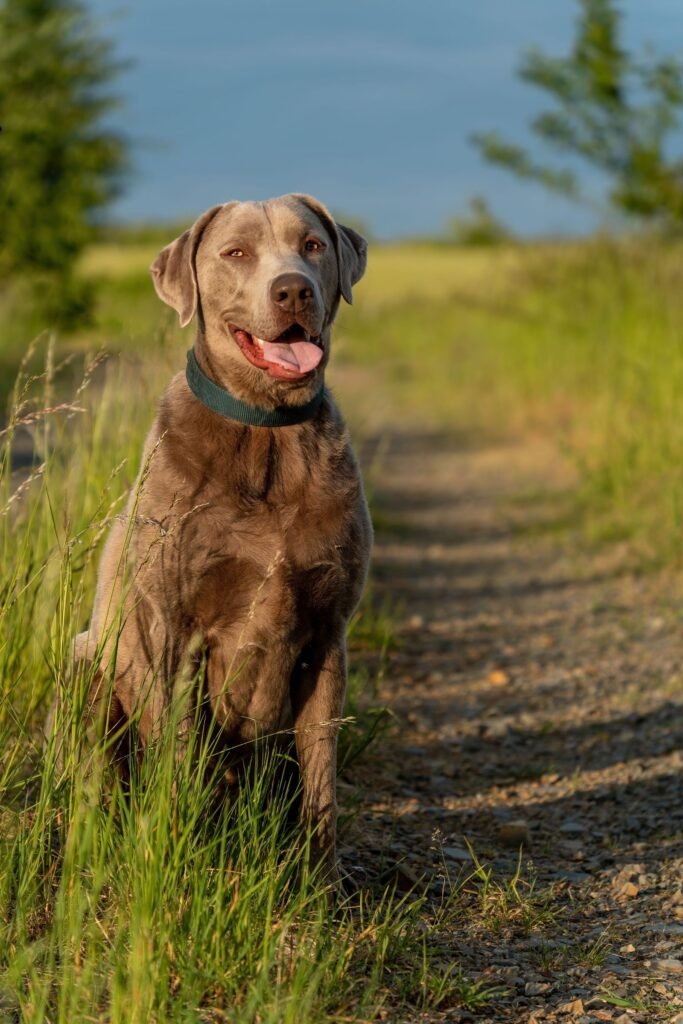
A silver Lab turns heads. With a steel-gray coat, pale eyes and the same friendly Labrador face, it looks like a Labrador dipped in pewter — and it sparks the same questions: is it a real Labrador, a Weimaraner mix, and does the colour mean extra health problems?
The short answer: a silver Lab is a chocolate Labrador whose coat has been lightened by the recessive dilute gene. Same temperament, size and energy as any Labrador — but the colour comes with one specific health risk worth knowing first.
What Is a Silver Lab?
A silver Lab is not a separate breed or a fourth Labrador colour. It is a chocolate Labrador carrying two copies of the recessive dilute (d) gene at the MLPH locus, which controls pigment in the hair shaft. A dog needs two copies to show the colour; a dog with one copy looks like a normal chocolate Lab but can pass the gene on.
The dilute gene lightens chocolate brown into a steel-gray or pewter shade, often lightening the eyes to pale green, gray or amber. The colour is not new — silver Lab advertisements in the US date to the 1950s — though it only became widely marketed in recent decades, often at a premium price.
Are Silver Labs Purebred?
It depends on who you ask. The American Kennel Club registers silver Labs — but only as chocolate. Its breed standard recognizes only black, yellow and chocolate, and any other colour is a disqualification in conformation shows. Registration is not recognition: a silver Lab can hold AKC papers saying “chocolate” while its coat is not a recognized standard colour.
The Labrador Retriever Club, the AKC’s parent club, takes a firmer line: its public position is that a silver Labrador is not a purebred Labrador, and its genetics committee says no peer-reviewed study definitively proves how the dilute gene entered the breed.
The most common theory — a cross with a Weimaraner — is unproven: genetic testing cited by several sources found no Weimaraner link. For a buyer, the practical point is simple: the same temperament, health profile and care needs as any Lab, plus one colour-linked skin condition covered below. If you plan to show in AKC conformation, silver is not accepted; if you want a family pet, the colour changes nothing.
Silver Lab vs Chocolate Lab vs Charcoal Lab
Silver, chocolate and charcoal are the same breed in different coats — charcoal is the diluted version of black, just as silver is the diluted version of chocolate. The differences are cosmetic. Coat-colour genetics cause confusion in other breeds too — our merle French Bulldog guide explains the merle gene, double-merle risks and why the AKC does not recognize it.
| Coat | Base colour | Gene | AKC standard colour? |
|---|---|---|---|
| Silver | Chocolate, diluted | Two copies of dilute (d) | No — registered as chocolate |
| Chocolate | Chocolate | None | Yes |
| Charcoal | Black, diluted | Two copies of dilute (d) | No — registered as black |
See also our red labrador and white labrador guides — another colour variant, and a pale-yellow Lab strangers often confuse with silver.
Silver Lab Temperament
Coat colour does not change personality — every major source agrees. A silver Lab is a Labrador through and through: friendly, outgoing, eager to please and highly food-motivated, so training is straightforward.
Silver Labs are famously good with children and usually get along with other dogs and pets when socialized early. They make poor guard dogs — expect a wagging tail.
The trade-off is energy. Labs mature slowly and stay puppy-like past their first birthday, so expect 60–90 minutes of daily exercise plus mental stimulation — walks, fetch, swimming, puzzle feeders — or that energy turns into chewing and digging.
Silver Lab Size and Lifespan
Males stand 22.5–24.5 inches and weigh 65–80 lb; females 21.5–23.5 inches and 55–70 lb. Lifespan is reported at 10–15 years. Labs gain weight easily, so measure food and count treats.
Silver Lab Health Problems: Color Dilution Alopecia
Silver Labs share the usual Labrador risks — hip and elbow dysplasia, progressive retinal atrophy (PRA) and exercise-induced collapse — plus one condition tied directly to the silver coat: color dilution alopecia (CDA).
CDA is hereditary: the dilute gene makes pigment clump in the hair shaft, weakening the hair. The result is patchy thinning or loss, usually on the trunk, plus flaky, dry, itchy skin, typically starting in the first year or two. VCA Animal Hospitals lists the Labrador among affected breeds.
Not every dilute dog develops CDA, and it cannot be cured — it is managed with medicated shampoos and skin care. A dog with CDA can live a full, comfortable life, but its coat will never be as full.
Because CDA is hereditary, the breeder matters more than the colour. Ask for DNA tests for the dilute gene and common Lab conditions (PRA, exercise-induced collapse), the skin history of the puppy’s parents, hip and elbow clearances, and a health guarantee. Breeders who advertise colour above health are a red flag — a responsible breeder talks about health testing first.
Caring for a Silver Lab: A Daily Routine
Silver Lab care is standard Labrador care, with extra attention to skin.
- Exercise first. 60–90 minutes daily — walks, fetch or swimming, plus short training sessions.
- Brush weekly. Once or twice a week with a slicker brush; daily during coat blows. Bathe every 6–8 weeks — over-bathing strips coat oils.
- Watch the skin. Check weekly for thinning patches, flakes or itching — early signs of CDA — and tell your vet rather than trying home remedies.
- Train with food. Short, positive sessions with small treats; early socialization keeps them friendly.
For a related Lab guide, see our labrabeagle profile — another Labrador mix with the same high-energy, family-friendly temperament.
The Bottom Line
A silver Lab is a chocolate Labrador with a diluted gray coat — the same friendly, high-energy, highly trainable dog. The AKC registers silver Labs as chocolate but does not recognize silver as a standard colour. The one real difference is color dilution alopecia, a manageable skin condition that makes breeder health testing essential. Choose a breeder who tests first and talks about colour second.
Frequently Asked Questions
+ Are silver Labs purebred?
It depends on who you ask. The AKC registers silver Labs, but only as chocolate. The Labrador Retriever Club’s position is that a silver Labrador is not a purebred Labrador, and no peer-reviewed study has proven how the dilute gene entered the breed.
+ Does the AKC recognize silver Labs?
Not as a colour. The AKC standard lists only black, yellow and chocolate; any other colour is a disqualification in shows. A silver Lab can be registered as chocolate, but it cannot be shown as silver.
+ Do silver Labs have health problems?
They share the usual Labrador risks — hip and elbow dysplasia, PRA and exercise-induced collapse — plus color dilution alopecia, which causes patchy hair loss and flaky, itchy skin. Not every silver Lab develops it.
+ Are silver Labs good family dogs?
Yes. Coat colour does not change temperament — silver Labs are friendly, outgoing, highly trainable and famously good with children. They need 60–90 minutes of daily exercise, like any Labrador.
+ How much does a silver Lab cost?
Silver Labs usually cost more purely because the colour is marketed as rare. Prices vary widely by region and breeder; a higher price is only justified by DNA testing, hip and elbow clearances and a health guarantee.
+ Do silver Labs shed a lot?
Yes, like any Labrador. They have a short, dense double coat that sheds moderately all year and heavily twice a year. Brush weekly, daily during a coat blow, and bathe every 6–8 weeks.
Sources
- American Kennel Club — Labrador Retriever: https://www.akc.org/dog-breeds/labrador-retriever/
- The Labrador Retriever Club — Silver Labradors: https://thelabradorclub.com/
- UC Davis Veterinary Genetics Laboratory — Dilute Test: https://vgl.ucdavis.edu/test/dilute
- VCA Animal Hospitals — Color Dilution Alopecia: https://www.vcahospitals.com/know-your-pet/color-dilution-alopecia-in-dogs
- PetMD — Labrador Retriever: https://www.petmd.com/dog/breeds/labrador-retriever
Pingback: Golden Mountain Dog: Traits, Temperament & Care Guide