
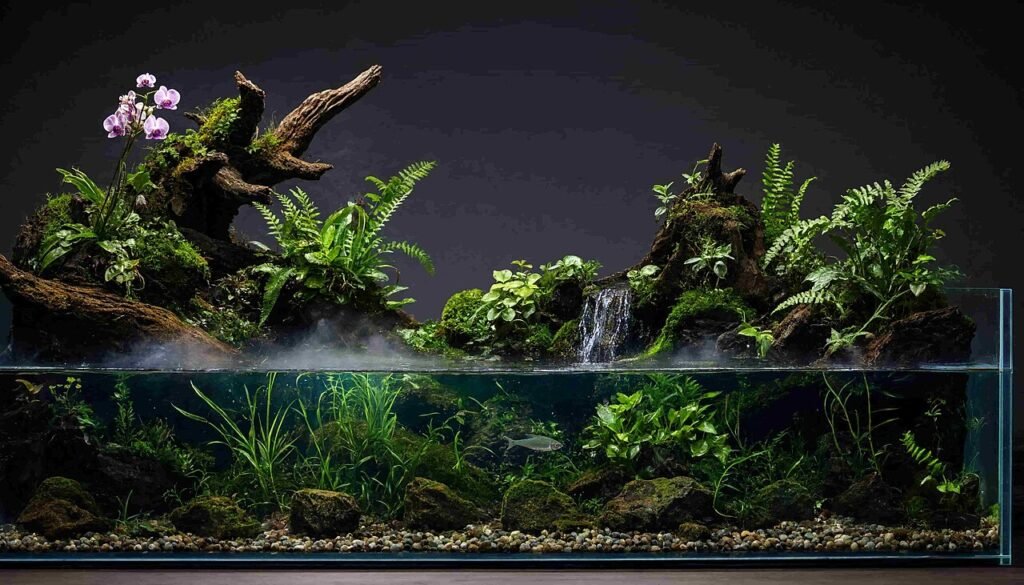
The best aquarium substrate for live plants is nutrient-rich aquasoil, at 2–3 inches deep and sloped deeper toward the back. For a simpler low-tech setup, fine gravel or sand with root tabs works for easy plants. The right substrate anchors roots, feeds plants, and keeps your water chemistry stable.
What Is Aquarium Substrate and Why Does It Matter?
Substrate is the material covering the bottom of your aquarium. For fish-only tanks it is mostly decoration, but in a planted tank it does three jobs: it anchors plant roots, acts as a slow-release food store supplying iron, potassium, and trace minerals to roots for a year or more, and buffers pH, holding the water slightly acidic — around pH 6.0–7.0 — where most aquatic plants grow best.
Inert substrates such as plain gravel or sand do none of the feeding work, so plants grown in them need root tabs or liquid fertiliser. That does not make them bad — many beautiful low-tech tanks use them — but feed accordingly.
The Best Substrate Types for Planted Tanks
1. Aquasoil (nutrient-rich aquarium soil)
Aquasoil is the top choice for demanding planted tanks. These baked clay granules are packed with nutrients and lower pH to 6.4–6.8, suiting most tropical plants — ADA Amazonia and Fluval Stratum are popular examples. It feeds plants for 18–24 months, then root tabs take over. Two rules: never rinse aquasoil, and expect ammonia in the first weeks, so cycle the tank fully before adding fish.
2. Sand
Fine sand looks natural, suits bottom-dwelling fish, and is ideal for carpeting plants such as dwarf hairgrass and Monte Carlo. Its weakness is nutrition: sand holds almost no plant food, so add root tabs under heavy root feeders and stir gently during water changes to stop waste building up in oxygen-free pockets.
3. Gravel
Fine gravel (2–3 mm grain) is the beginner-friendly classic: water flows through it, waste is easy to vacuum, and it never clouds the tank. Like sand, it is inert, so pair it with root tabs for swords and crypts. Avoid very coarse gravel — food falls through its large gaps and rots, and delicate roots struggle to grip.
4. Laterite and capped soil
Laterite is an iron-rich clay used as a nutrient layer under a sand or gravel cap; it costs less than branded aquasoil and slowly releases iron, which helps red plants keep their colour. Organic potting soil capped with 1–1.5 inches of gravel or sand is the cheapest nutrient-rich option of all, but disturbed soil can release ammonia and cloud the water, so cap it securely and cycle carefully. Never use garden soil: it can contain fertilisers and pesticides that harm fish.
How Deep Should Aquarium Substrate Be?
For most planted tanks, aim for 2–3 inches of substrate, sloped from about 2 inches at the front to 3–4 inches at the back — the slope gives deep-rooted plants room and makes the tank look deeper.
Beds shallower than 1.5 inches will not hold most rooted plants, while beds deeper than 3 inches trap waste and can develop anaerobic pockets releasing hydrogen sulphide — a toxic, rotten-egg-smelling gas. For a deep bed, stir it lightly during maintenance and keep bottom dwellers such as corydoras that naturally turn it over.
How to Set Up Substrate for Live Plants: Step by Step
- Plan the layout first. Decide where tall, midground, and carpeting plants will go, and place hardscape before any substrate goes in.
- Rinse inert substrates only. Rinse sand and gravel until the water runs clear — never rinse aquasoil or laterite.
- Add the nutrient layer. Spread aquasoil, laterite, or capped soil to your planned depth, sloping from front to back.
- Cap it if needed. If you used organic soil, cover it with 1–1.5 inches of fine gravel or sand.
- Fill slowly. Pour water over a plate or plastic bag so the substrate is not disturbed.
- Let it settle. Run the filter and heater for 24–48 hours so fine particles clear.
- Plant properly. Push stem plants about an inch deep, spread rosette roots outwards, and never bury the rhizome of Anubias, Java fern, or Bucephalandra — tie or glue those to wood or rock instead, since a buried rhizome rots.
- Cycle before adding fish. Test ammonia and nitrite until both read zero — aquasoil can leach ammonia for two to four weeks.
Matching Substrate to Your Plants
Different plants feed in different ways, and substrate only matters for some. Heavy root feeders such as Amazon swords, Cryptocoryne, and Vallisneria need a nutrient-rich base or root tabs. Stem plants such as Ludwigia and Rotala feed from roots and water, so they grow in almost any substrate with liquid fertiliser. Rhizome plants (Anubias, Java fern, Bucephalandra) and floating plants (frogbit, duckweed) need no substrate at all. Carpeting plants prefer fine-grained aquasoil or sand with good light and, ideally, CO2.
For a betta, fine sand or smooth gravel with easy plants is a low-maintenance choice — see our betta fish tank guide. Goldfish dig and uproot plants constantly, so choose tough plants and heavier gravel — see our oranda goldfish and comet goldfish guides.
Substrate Maintenance and Mistakes to Avoid
Vacuum the surface gently during water changes — never jam the siphon deep into a planted bed or you will damage roots. Start root tabs once aquasoil is about a year old, since its nutrients fade after 12–24 months. Avoid very light-coloured gravel: it reflects light, stresses shy fish, and shows every speck of waste. Dark brown, black, or grey substrates look natural and make fish colours pop.
The most common beginner mistakes are a bed that is too shallow, mixing substrate types so the fine layer sinks, and adding fish before the tank has cycled. Get the depth, cap, and cycle right, and your plants will do the rest.
FAQ
What is the best substrate for a beginner planted tank?
Fine gravel or sand with root tabs: cheap, never clouds the water, and grows plants well. Move to aquasoil for demanding plants.
Can I use regular gravel for aquarium plants?
Yes, for most easy plants — just add root tabs for root feeders and liquid fertiliser for stem plants. It will not feed plants on its own.
Do I need CO2 with aquasoil?
No, but CO2 speeds up growth and helps carpeting plants spread. Low-tech tanks with aquasoil and moderate light do fine without it.
How often should I replace aquarium substrate?
Aquasoil’s nutrients last 18–24 months, but you rarely need to replace it — add root tabs as it ages. Inert sand and gravel never expire.
Can substrate change my aquarium’s pH?
Yes. Aquasoil usually lowers pH to around 6.4–6.8 and reduces hardness. Inert sand and gravel do not change water chemistry.
Sources
- DBC Aquatics — Best Substrate for Aquarium Plants: Soil, Sand or Gravel: http://dbcaquatics.com/best-substrate-for-aquarium-plants/
- The Aquarium Adviser — Best Substrate for Freshwater Aquarium Plants: https://www.theaquariumadviser.com/best-substrate-for-freshwater-aquarium-plants/
- The Aquarium Expert — Can You Put Live Plants in a New Aquarium: https://theaquariumexpert.com/can-you-put-live-plants-in-a-new-aquarium/