
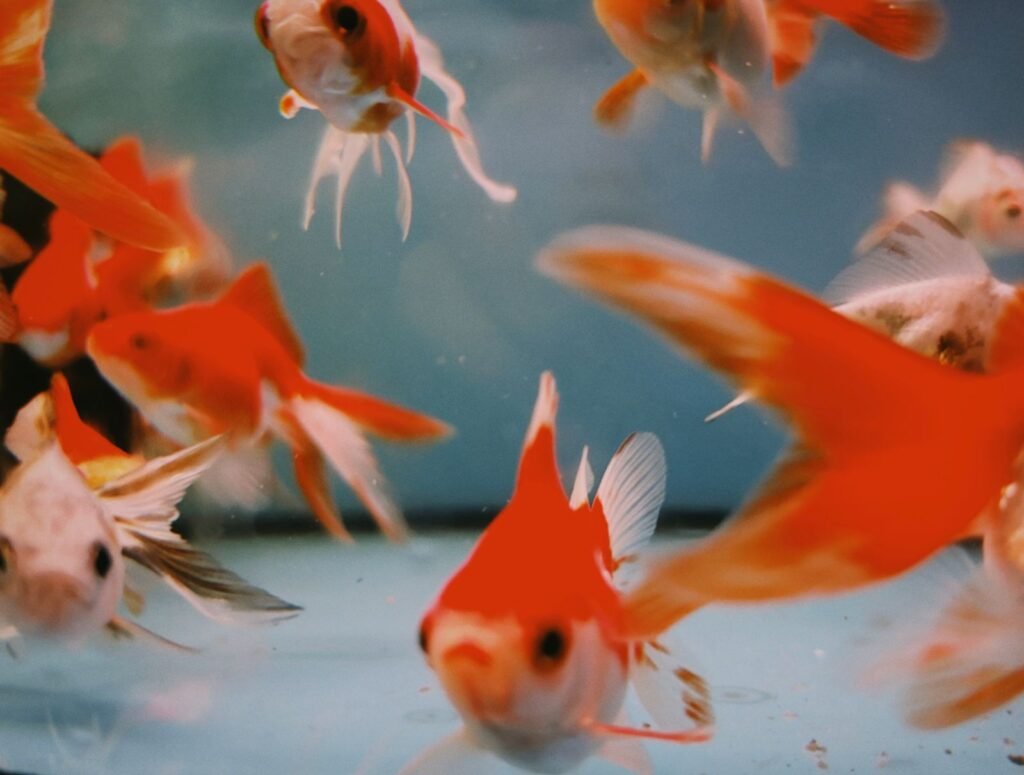
What do goldfish eat? Almost anything — but that is exactly how goldfish get sick. Goldfish are enthusiastic omnivores with no off switch: they keep eating as long as food is offered, and the wrong food or too much of it is a leading cause of illness and dirty tank water.
A healthy goldfish diet has three layers: a goldfish-specific staple food every day, fresh vegetables a few times a week, and small protein treats once or twice a week. Feed only what your fish finish in one to two minutes.
What Do Goldfish Eat in the Wild?
Goldfish are domesticated carp, descended from grazers that picked at algae, soft plants, insects, larvae, and crustaceans all day. Pet goldfish still spend much of the day nosing around the tank looking for food.
That wild diet is the model for the aquarium diet: plant and animal food, plenty of fibre, more carbohydrates and a little less protein — around 30 to 32 percent. Food made for tropical fish is not a substitute.
What Is the Best Food for Goldfish?
The best food for a goldfish is a high-quality sinking pellet made for goldfish, given every day as the staple. Pellets are nutritionally complete, so your fish gets balanced protein, vitamins, and minerals in every bite, and the sinking kind keeps your fish feeding below the surface instead of gulping at the top.
| Food type | How often | Notes |
|---|---|---|
| Sinking pellets | Daily staple | Goldfish-specific, ~30% protein |
| Flakes | Occasionally | Float, so fish gulp air; soak first |
| Vegetables | A few times a week | Shelled peas, zucchini, cucumber, romaine, spinach |
| Live/frozen foods | 1–2 times a week | Bloodworms, brine shrimp, daphnia |
Variety matters as much as the staple. PetMD’s care guidance stresses variety: do not feed the same food every day.
Goldfish Food Pellets vs Flakes
Pellets beat flakes for most goldfish, especially fancy varieties such as orandas. Our oranda goldfish guide explains why these round-bodied fish are prone to buoyancy problems — and food choice is part of it.
Flakes float, so your fish eats at the surface and swallows air along with the food. That swallowed air can cause bloating and buoyancy trouble, especially in fancy goldfish. Flakes are acceptable occasionally, but they should not be the everyday food. If you do feed flakes, soak them briefly in tank water first so they sink a little.
Can Goldfish Eat Vegetables?
Yes — vegetables are an essential part of a goldfish diet, not an optional extra. They add fibre that keeps digestion moving, and fibre is exactly what a fish with no true stomach needs. Food passes quickly through a goldfish’s short gut, so fibre-rich food helps prevent the constipation and buoyancy problems that plague overfed goldfish.
Safe vegetables, a few times a week in small pieces: shelled peas (blanch briefly, squeeze out of the skin — peas genuinely help with mild constipation), zucchini and cucumber slices, blanched romaine, spinach or kale, and thin carrot slivers. Blanch hard vegetables first, and remove leftovers within a few hours.
Protein Treats: Bloodworms, Brine Shrimp, and Daphnia
A couple of times a week, swap one pellet meal for a protein treat. Bloodworms, brine shrimp, and daphnia are the best choices — they mimic the insects and larvae goldfish hunt in the wild, and brine shrimp and daphnia are high in fibre as well as protein. Frozen is the most convenient form; thaw a small portion in tank water before feeding, and never refreeze what you thawed.
Keep treats to roughly 10 percent of the overall diet. Too much rich protein is hard on a goldfish’s digestion and produces extra waste, which pushes ammonia up. Live food is fine too, from a reputable source, rinsed well.
How Much Should I Feed My Goldfish?
Feed adults once or twice a day, only as much as they finish in one to two minutes — roughly an eye-sized portion per feeding. Young goldfish under a year old are still growing fast and need two or three small meals a day instead.
Your goldfish will beg constantly — hovering at the glass, following your hand, acting starving. Ignore it. Goldfish always beg, and giving in is how tanks get overfed. Our how often to feed goldfish guide covers feeding frequency in detail. Many keepers also add one fasting day a week.
A Simple Weekly Feeding Rotation
A weekly rotation keeps the three-layer diet balanced — staple days, vegetable days, and protein days, with one fast day:
| Day | What to feed |
|---|---|
| Monday | Sinking pellets, 1–2 small meals |
| Tuesday | Sinking pellets + a few blanched peas |
| Wednesday | Sinking pellets, 1–2 small meals |
| Thursday | Protein treat (bloodworms or brine shrimp) instead of one pellet meal |
| Friday | Sinking pellets + blanched zucchini or romaine |
| Saturday | Sinking pellets, 1–2 small meals |
| Sunday | Fasting day — no food |
Foods Goldfish Should Never Eat
Some everyday human foods can seriously harm a goldfish. Never feed:
| Never feed | Why it is dangerous |
|---|---|
| Bread, crackers, and pasta | Swell in the gut, cause blockages and bloating |
| Cheese and dairy | Goldfish cannot digest dairy at all |
| Raw meat | Too fatty and a source of bacteria; goldfish cannot digest mammalian fat |
| Onions and garlic | Toxic to fish |
| Citrus fruit | Too acidic for a goldfish’s gut |
| Salty or seasoned snacks | Salt and seasonings damage kidneys and water quality |
| Tropical fish food as a staple | Wrong protein and carbohydrate balance for goldfish |
| Feeder fish as routine food | Often diseased and nutritionally poor |
Overfeeding and Your Tank Water
Overfeeding is the fastest way to wreck a goldfish tank, and the damage is invisible at first. Uneaten food rots, and even eaten food becomes waste — both release ammonia, which is toxic even at low levels. Clear water can still be toxic — ammonia is invisible.
Feed less than you think you should. Tank size matters too — goldfish grow large and produce a lot of waste, so check our goldfish tank size guide to make sure your fish have enough water to dilute what they produce. If your goldfish floats oddly or stops eating after a big meal, fast it for a day — and if it does not improve, consult an aquatic vet.
Frequently Asked Questions
+ What is the best food for goldfish?
A high-quality sinking pellet made for goldfish, around 30 to 32 percent protein, as the daily staple, plus vegetables a few times a week and protein treats once or twice a week.
+ Can goldfish eat vegetables?
Yes — shelled blanched peas, zucchini, cucumber, romaine, spinach, kale, and carrot slivers. Blanch hard vegetables first, offer small pieces a few times a week, and remove leftovers within a few hours.
+ Can goldfish eat bread or human food?
No. Bread, crackers, and pasta swell in the gut and can cause blockages; cheese, raw meat, onions, garlic, citrus, and salty snacks are also harmful. A tiny piece of watermelon or banana as a rare treat is fine.
+ How much should I feed my goldfish?
Once or twice a day, only as much as they finish in one to two minutes — roughly an eye-sized portion. Young goldfish need two or three small meals a day; and goldfish always beg, so do not let begging set the portion.
Sources
- PetMD — How to Take Care of Goldfish: https://www.petmd.com/fish/care/how-to-take-care-of-goldfish
- PetMD — Goldfish Care Sheet: https://www.petmd.com/fish/goldfish-care-sheet
- Chewy — What Do Goldfish Eat? Your Guide to Pet Goldfish Food: https://www.chewy.com/education/fish/goldfish/what-do-goldfish-eat
- Petco — Goldfish Care Guide: https://www.petco.com/pet-education/caresheets/goldfish