
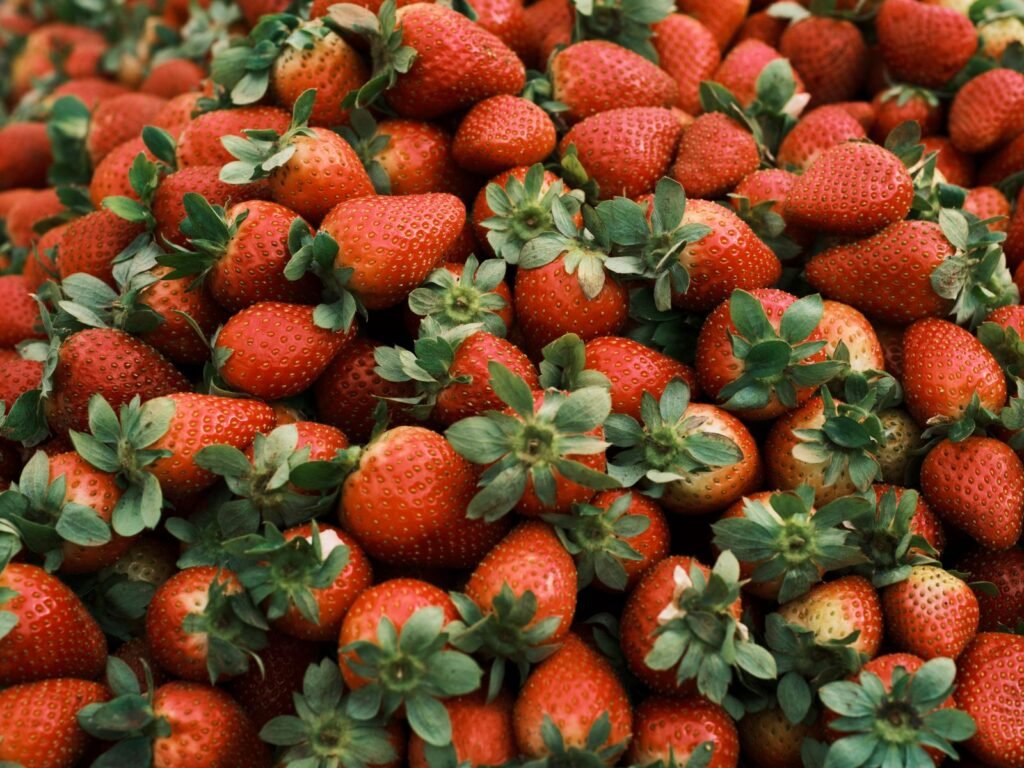
Can Dogs Eat Strawberries? Benefits, Risks & Safe Serving Guide
Yes, dogs can eat strawberries. Fresh strawberries are generally safe for most healthy dogs when served plain, washed, hulled, and cut into small pieces — and only in moderation. They are a sweet, low-calorie treat that many dogs love, but they are still a treat, not a part of your dog’s everyday diet. The problems with strawberries almost always come from portion size or from the wrong kind of strawberry product, not from a fresh berry itself.
Why Strawberries Can Be a Good Treat
Strawberries are low in calories and fat, and rich in fibre, vitamin C, and antioxidants, with potassium and other vitamins in small amounts. That makes them a much better choice than biscuits or sugary snacks — provided the portion stays small.
Vitamin C supports the immune system, and fibre supports healthy digestion, but your dog’s complete dog food already covers their nutritional needs. Think of strawberries as a bonus snack, not a nutritional requirement.
Like all treats, strawberries should stay within the widely used 10% rule: treats and extras together should make up no more than about 10% of daily calories.
The Risks: Sugar and Too Many Berries
The main risk is sugar. Too much sugar — even from fruit — can upset a dog’s stomach, causing soft stools or diarrhoea, and can contribute to weight gain and dental problems over time.
That is why portion size matters more than the berry itself: a dog that eats a whole punnet is far more likely to have an upset stomach than one that eats two or three berries. Dogs with diabetes, weight problems, or sensitive stomachs should only have strawberries if your vet approves.
Strawberries do not appear on the ASPCA’s lists of foods toxic to dogs — unlike grapes and raisins, onions, and the sweetener xylitol, which are genuinely dangerous. “Not toxic” does not mean “unlimited,” however.
What to Avoid: Canned, Sweetened, and Processed Strawberries
Fresh strawberries are the only safe version. Avoid these:
Canned strawberries and strawberries in syrup. These are packed with added sugar, which can upset your dog’s stomach and add empty calories.
Sweetened strawberry products. Strawberry jam, jelly, sweetened yoghurt, ice cream, sweets, and strawberry-flavoured drinks are high in sugar and not suitable for dogs.
Anything containing xylitol. Xylitol (also listed as birch sugar) is highly toxic to dogs, even in small amounts. Always check the ingredients on processed and “sugar-free” products. If your dog eats xylitol, contact your vet or an animal poison control centre immediately — do not wait for symptoms.
Chocolate-covered strawberries. Chocolate is toxic to dogs, so chocolate-covered strawberries are doubly unsuitable. Keep them well out of reach.
Dried strawberries, even unsweetened, are concentrated in sugar and calories and can stick to teeth, so fresh is the better choice.
How to Serve Strawberries Safely
Serving strawberries safely takes less than a minute:
- Choose ripe, fresh berries and wash them thoroughly to remove dirt and pesticide residue.
- Remove the green leafy top (the hull) and the stem. The leaves are not considered toxic, but they can be hard to digest and may cause stomach upset or a choking risk, especially for small dogs.
- Cut each berry into small, bite-sized pieces so your dog cannot gulp a whole berry. This is important for small dogs and for dogs that tend to swallow food without chewing.
- Offer a small portion first — one or two small pieces — and watch for any stomach upset over the next day before making strawberries a regular treat.
- Serve them plain, at room temperature or lightly chilled. Frozen pieces can be refreshing, but keep them small and supervise your dog.
As a rough guide, small dogs can have one or two small strawberries, medium dogs a few, and larger dogs a small handful, all cut into pieces and within the 10% treat rule. Your vet can tailor the amount to your dog’s size, weight, and health.
Puppies eating solid food can have a tiny taste of soft, cut-up strawberry. Very young puppies, and dogs with any ongoing health condition, should only try new foods with your vet’s approval.
What If Your Dog Ate Too Many Strawberries?
If your dog raids a punnet of fresh strawberries, do not panic — fresh strawberries are not toxic. Watch for vomiting, diarrhoea, or a reduced appetite over the next day, and contact your vet if symptoms persist, if your dog is small and ate a large amount, or if your dog has diabetes or another health condition.
If your dog ate a processed product containing xylitol or chocolate, contact your vet or poison control immediately, even if your dog seems fine.
If you want to explore other safe fruits, our guides to can dogs eat watermelon and can dogs have apples cover two more popular choices, and what human foods dogs can eat gives the broader picture.
The Bottom Line
Fresh strawberries, served washed, hulled, cut up, and in moderation, are a safe occasional treat for most dogs. Keep portions small, stay within the 10% treat rule, and skip canned, sweetened, and processed products entirely — especially anything containing xylitol or chocolate. When in doubt, consult a vet.
FAQ
Can dogs eat strawberries every day?
They can have strawberries as an occasional treat, but daily large portions are not a good idea because of the natural sugar. Keep all treats under about 10% of daily calories.
How many strawberries can a dog eat?
As a rough guide, small dogs can have one or two small strawberries, medium dogs a few, and larger dogs a small handful, all cut into pieces. Check with your vet if your dog has diabetes or a sensitive stomach.
Are strawberry leaves and stems safe for dogs?
The green tops are not considered toxic, but they can be hard to digest and may cause stomach upset or choking, so remove the hull and stem before serving.
Can dogs eat canned strawberries or strawberry jam?
No. Canned strawberries in syrup, jam, and other sweetened products are high in added sugar and are not suitable for dogs. Stick to fresh, plain berries.
Are strawberries toxic to dogs?
No. Strawberries do not appear on the ASPCA’s lists of foods toxic to dogs. They are safe in moderation, unlike grapes, raisins, onions, and xylitol, which dogs must never eat.
Can puppies eat strawberries?
Puppies eating solid food can have a tiny taste of soft, cut-up strawberry. Keep the piece very small and check with your vet first for very young puppies.
What should I do if my dog ate strawberries with xylitol?
Contact your vet or an animal poison control centre immediately, even if your dog seems fine. Xylitol is highly toxic to dogs.
Sources
- American Kennel Club, “Can Dogs Eat Strawberries?”: https://www.akc.org/expert-advice/nutrition/can-dogs-eat-strawberries/
- PetMD, “Can Dogs Eat Strawberries?”: https://www.petmd.com/dog/nutrition/can-dogs-eat-strawberries
- ASPCA Animal Poison Control Center, “People Foods Pets Should Never Eat”: http://www.aspcapro.org/resource/people-foods-pets-should-never-eat
This article is for general information only and is not a substitute for veterinary advice. If you are unsure whether a food suits your dog, consult a vet first.
Related reading: Can Dogs Eat Raspberries? Benefits, Risks & Safe Serving Guide — another berry dogs can enjoy in moderation.
Pingback: Can Dogs Eat Popcorn? Safety, Risks & Safe Serving Guide - PawMeridian
Pingback: Can Dogs Eat Raspberries? Benefits, Risks & Safe Serving Guide - PawMeridian