
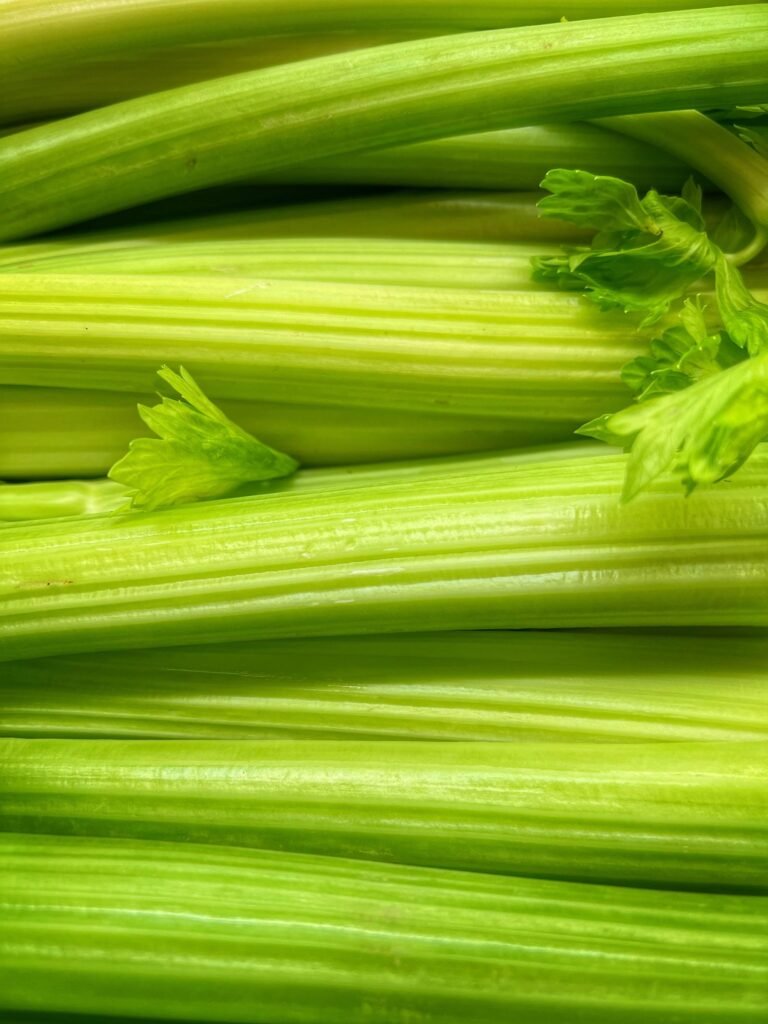
Can Dogs Eat Celery? Benefits, Risks & Safe Serving Guide
Yes, dogs can eat celery. Plain, raw celery is a safe, low-calorie treat for most healthy dogs when washed, cut into small pieces, and fed in moderation. It is not on the ASPCA’s lists of foods that are toxic to pets, unlike onions, grapes, and chocolate — with a few sensible precautions around choking and portion size.
Celery will never replace your dog’s regular food, and it does not need to. Think of it as a crunchy, hydrating snack: a useful option for training rewards or for dogs that need to watch their weight, as long as treats overall stay within about 10% of your dog’s daily calories.
Why Celery Can Be a Good Treat
Celery is roughly 95% water, which makes it one of the most hydrating vegetables you can offer a dog. A medium stalk contains only about 6 calories, so it is a genuinely low-calorie choice compared with most commercial treats and biscuits.
Nutritionally, celery provides fibre, vitamin K, vitamin C, potassium, and folate, plus small amounts of vitamin A and B vitamins. These nutrients are a bonus rather than a reason to feed large amounts: a complete dog food already covers your dog’s daily nutritional needs, and celery should stay in the treat category.
The Risks to Know Before You Share
Celery is safe, but it is not risk-free. The main risks are practical ones, and all of them are easy to manage.
Choking and stringy fibres. Celery stalks contain long, tough, fibrous strings. A dog that gulps food down can choke on a long piece, and the strings can be hard to swallow. Always cut celery into small, bite-sized pieces — no longer than about an inch for a medium dog, smaller for toy breeds — and remove the toughest outer strings if you can. Never hand a whole stalk to a small dog or a fast eater, and always supervise the first few times you offer it.
Stomach upset from too much. Celery is high in fibre and water. A large amount at once, especially for a dog that has never had it, can cause loose stools or gas. Introduce it gradually: start with one or two small pieces and watch your dog’s digestion for a day before offering more.
Sodium and seasoning. Plain celery is fine. Celery served with dips, salt, seasoning, or as part of a cooked dish is a different story. Avoid celery sticks dipped in ranch dressing, cheese spread, or anything containing onion or garlic powder, and never offer celery from a dish cooked with onions. Plain and unseasoned is the only safe way to serve it.
Allergies are rare but possible. Food allergies to celery are uncommon in dogs, but any new food can disagree with an individual dog. If you notice vomiting, diarrhoea, itching, or swelling after feeding celery, stop offering it and consult a vet.
How to Serve Celery Safely
Follow these steps and celery becomes a straightforward, safe treat:
- Wash thoroughly. Rinse stalks under running water to remove dirt and any pesticide residue. Organic celery still needs washing.
- Cut small. Chop into bite-sized pieces suited to your dog’s size, and trim away long strings where possible.
- Serve plain and raw. Raw is best — it keeps the crunch and avoids any added ingredients. Cooked celery without seasoning is also safe, but it loses its crunch and is less appealing as a treat.
- Keep portions small. A few pieces a few times a week is plenty. All treats combined, including celery, should stay within roughly 10% of your dog’s daily calorie intake.
- Supervise, especially at first. Watch how your dog chews it, and remove any piece that seems too large.
For puppies, the same rules apply with extra caution: pieces should be very small, and portions even smaller, because a puppy’s stomach is more sensitive and its airway is narrower. If your puppy has a sensitive stomach or is on a veterinary diet, ask your vet before adding any new treat.
What About Celery Leaves and Celery Juice?
Celery leaves are safe for dogs in small amounts but are bitter and fibrous, so most dogs prefer the stalks. Celery juice is best avoided: juicing concentrates sugars and removes most fibre, and shop-bought celery juice often contains added salt. The plain stalk is the safest, simplest option.
Foods to Compare: Safe Crunch vs. Dangerous Foods
Other crunchy vegetables that are generally safe for dogs include cucumbers and carrots, which make similar low-calorie treats. On the other side of the line, foods such as onions and grapes are genuinely toxic to dogs and must never be shared. If you are unsure about any food, check the ASPCA’s toxic food lists or ask your vet before offering it.
For a broader guide to what your dog can and cannot eat, see our article on what human foods dogs can eat. If you want another crunchy, hydrating option, read about cucumbers for dogs and cantaloupe for dogs. And for a clear example of a food to avoid entirely, see why onions are dangerous for dogs.
When to Skip Celery and Call Your Vet
Skip celery if your dog has a sensitive stomach, is recovering from digestive illness, or is on a restricted veterinary diet — unless your vet says otherwise. Seek veterinary advice promptly if your dog chokes, coughs persistently after eating celery, vomits repeatedly, or has ongoing diarrhoea. These are not typical reactions to a small amount of celery, so they deserve professional attention. This article is general information only and is not a substitute for veterinary advice — when in doubt, consult a vet.
Frequently Asked Questions
Can dogs eat celery every day?
A few small pieces daily are fine for most healthy dogs, as long as total treats stay within about 10% of daily calories. A few times a week is plenty for most owners.
Is raw or cooked celery better for dogs?
Raw is better: it keeps the crunch dogs enjoy and adds no extra ingredients. Cooked, unseasoned celery is safe too, but softer and less appealing as a treat.
Can puppies eat celery?
Yes, in very small pieces and small amounts. Supervise closely, since puppies are more prone to choking and stomach upset.
Can celery help a dog lose weight?
It can help as a low-calorie replacement for richer treats, but weight loss should always be guided by your vet, who can set a safe calorie target and diet plan.
What should I do if my dog eats a whole celery stalk?
Watch for choking, gagging, or distress. If your dog seems fine, monitor for stomach upset over the next day. If your dog coughs persistently, vomits, or seems uncomfortable, contact your vet.
Another crunchy green vegetable dogs can enjoy plain is covered in our green beans for dogs guide.
Another green dogs can have in small plain portions is covered in our spinach for dogs guide — small amounts only, and dogs with kidney issues should skip it.
Sources
- ASPCA — People Foods to Avoid Feeding Your Pets (aspca.org)
- ASPCA — Toxic and Non-Toxic Plants and Foods guidance (aspca.org)
- PetMD — Can Dogs Eat Celery? (petmd.com)
- American Kennel Club — Can Dogs Eat Celery? (akc.org)
- University of California, Davis, Veterinary Medicine — nutrition and pet food guidance (ucdavis.edu)
Related reading: Can Dogs Eat Popcorn? Safety, Risks & Safe Serving Guide — a snack that is only safe when plain and air-popped.
Pingback: Can Dogs Eat Brussels Sprouts? Benefits, Gas & Safe Serving Guide - PawMeridian
Pingback: Can Dogs Eat Green Beans? Benefits, Risks & Safe Serving Guide - PawMeridian
Pingback: Can Dogs Eat Popcorn? Safe Serving Guide