
Can Dogs Eat Onions? Safety, Benefits & Risks Explained
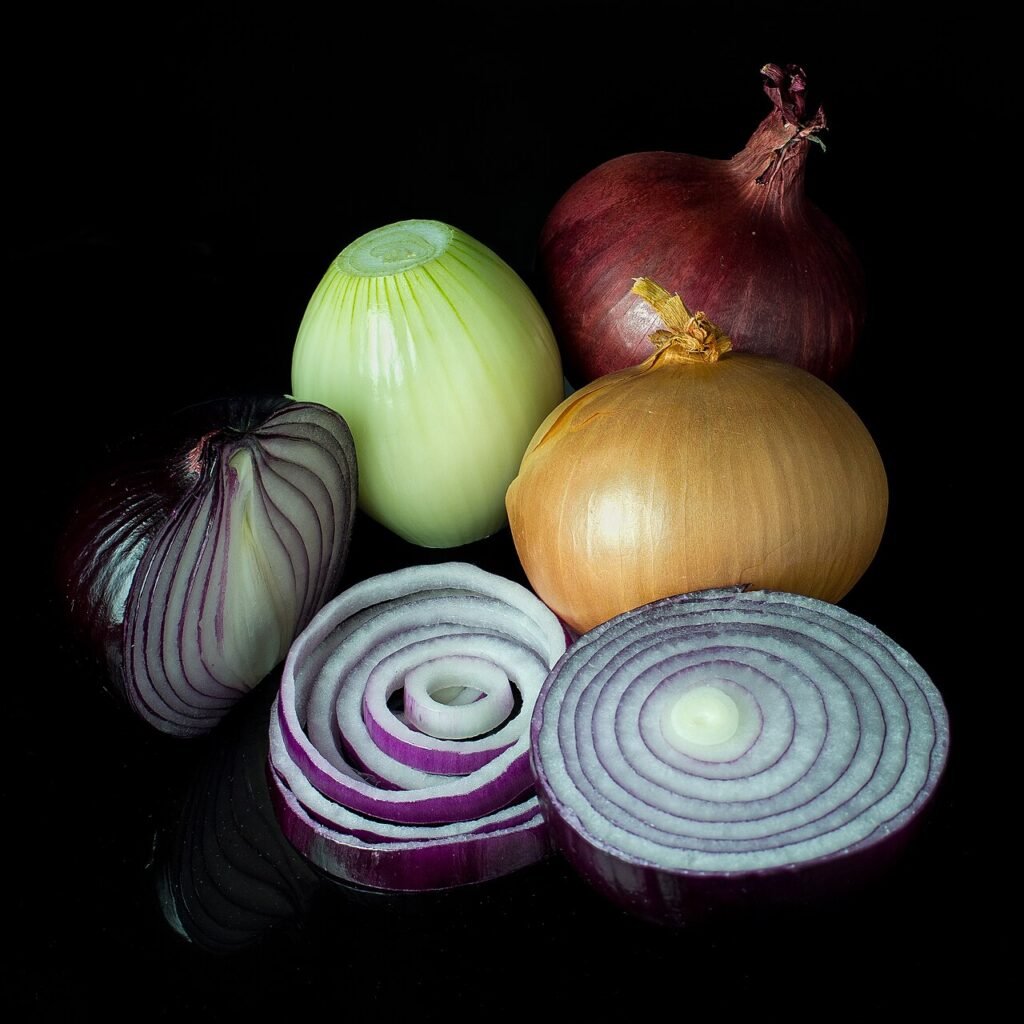
No — dogs must never eat onions. Onions are toxic to dogs in every form: raw, cooked, powdered, and dehydrated. There is no safe amount and no safe way to prepare them. Onions contain compounds that damage a dog’s red blood cells, and enough exposure causes hemolytic anemia — a serious, sometimes life-threatening condition.
This is one of the clearest “never feed” foods in dog nutrition — if your dog has eaten onion in any real quantity, call your vet immediately; do not wait for symptoms.
Why Are Onions Toxic to Dogs?
Onions belong to the Allium family, along with garlic, chives, leeks, and shallots. They contain sulfur compounds, notably N-propyl disulfide, that dogs cannot process the way humans do. These compounds damage red blood cells, producing Heinz bodies — damaged cells the body then destroys — and losing enough red blood cells causes hemolytic anemia: too few oxygen carriers left in circulation.
Three details every dog owner should know:
- Cooking does not help. Heat does not neutralize the toxic compounds. Cooked onions, onion rings, and dishes made with sautéed onion are just as dangerous as raw onion.
- Concentrated forms are worse. Onion powder, dried onion, and soup or gravy mixes pack far more onion per gram than fresh onion, so small amounts of powder can matter. This is why broths, baby food, and seasoned leftovers are common hidden sources.
- The whole family counts. Garlic is actually more potent per gram than onion, and chives, leeks, shallots, and green onions all carry the same risk.
Are There Any Benefits of Onions for Dogs?
No. Onions offer a dog no benefit at all, and there is no safe serving size. The nutrients a dog needs come from a complete and balanced dog food, and there is nothing in an onion that a dog needs or can safely use.
If you want to share a savory or crunchy food with your dog, choose something from the safe list instead — plain cooked chicken, carrots, green beans, or cucumber are all easy options.
How Much Onion Is Dangerous?
Onion toxicity is dose-dependent, but no amount is guaranteed safe. The Merck Veterinary Manual reports clinical signs after eating 15–30 grams of onion per kilogram of body weight, and many vets treat anything above about 0.5% of body weight — roughly a quarter of a medium onion for a 20-pound dog — as the call-the-vet threshold. Symptoms can take days to appear, so any real quantity, or any amount of onion powder or soup mix, means a call to your vet.
Smaller dogs face a higher risk from the same amount, and Japanese breeds such as Shiba Inus and Akitas have red blood cells that are more fragile, making them prone to faster and more severe reactions. But no breed is immune, and size matters more than genetics.
Hidden Sources of Onion to Watch For
Most onion poisonings do not come from a dog eating a raw onion, but from ordinary human foods where onion is hiding. Check labels and leftovers for these:
- Baby food, especially meat varieties, which often contain onion powder
- Broths, stock cubes, soup mixes, and gravy
- Pizza, pasta sauce, and other dishes cooked with onion
- Seasoned leftovers and takeaway food
- Some dog treats and table scraps with “natural flavors”
As a rule, if a dish was cooked with onion, garlic, or chives, do not share it with your dog. When in doubt, skip sharing human food entirely.
Symptoms of Onion Poisoning
Onion toxicity does not cause immediate symptoms — the damage to red blood cells builds up over days, which creates a dangerous false sense of security:
- First 12–24 hours: Vomiting, diarrhea, or abdominal pain — though these are not always present.
- 1–3 days: Lethargy, weakness, decreased appetite, and pale gums.
- 3–5 days: Rapid breathing, dark or reddish urine, elevated heart rate, and collapse in severe cases.
Blood tests are the only definitive way to diagnose onion poisoning, since the anemia develops silently — if you know your dog ate onion, call your vet right away.
What to Do If Your Dog Eats Onions
Call your veterinarian or the ASPCA Animal Poison Control Center at (888) 426-4435 immediately, and tell them how much your dog ate, what form it was in, and when it happened. Do not try to induce vomiting at home unless your vet specifically tells you to.
Treatment depends on how much was eaten and how quickly your dog is seen — vets may give IV fluids and oxygen, and severe cases may need a blood transfusion. With early treatment, most dogs recover fully in two to four weeks, but delayed treatment risks permanent organ damage or death.
Never cook eggs or other foods for your dog with onion or garlic in the pan — even the residue can be a problem. Our guide on whether dogs can eat eggs explains how to serve eggs safely, and for a full list of safe and unsafe kitchen foods, see what human foods dogs can eat.
Frequently Asked Questions
Can dogs eat cooked onions?
No. Cooking does not neutralize the toxic compounds in onions. Cooked onions, onion rings, and dishes made with sautéed onion are just as dangerous as raw onion.
Can dogs eat onion powder?
No — onion powder is actually more dangerous per gram than fresh onion, because it is concentrated. Even a small amount of onion powder in baby food, broth, or soup mix can matter, especially for small dogs.
How much onion is toxic to dogs?
Clinical signs have been reported after 15–30 grams per kilogram of body weight, and many vets treat anything above about 0.5% of body weight as the call-the-vet threshold. There is no guaranteed safe amount, so any real quantity means a call to your vet.
What are the symptoms of onion poisoning in dogs?
Early signs include vomiting, diarrhea, lethargy, weakness, and pale gums, usually appearing 1–3 days after eating onion. Later signs include rapid breathing, dark urine, and collapse. Symptoms can take days to appear, so do not wait for them — call your vet as soon as you know your dog ate onion.
When to Call a Vet
Call your vet or the ASPCA Animal Poison Control Center at (888) 426-4435 immediately if your dog eats onion in any form or any real amount — raw, cooked, powdered, or in broth. Call right away if your dog shows lethargy, weakness, pale gums, rapid breathing, or dark urine, even days after the exposure. Do not wait for symptoms and do not try home remedies. If you are ever unsure, a quick call to your vet is always the right move — and for a genuinely safe crunchy snack, you can also read whether dogs can have cucumbers safely.
Onions are not the only common food that is toxic to dogs — grapes are toxic too, even in small amounts, so know the warning signs and what to do.
Onions are not the only risky food in the kitchen — can dogs eat mushrooms? Plain store-bought ones, yes, but wild mushrooms can be toxic.
Sources
- https://www.petmd.com/dog/nutrition/can-dogs-eat-onions
- https://www.akc.org/expert-advice/nutrition/can-dogs-eat-onions
- https://www.aspca.org/pet-care/animal-poison-control/people-foods-avoid-feeding-your-pets
Related reading: Can Dogs Have Tomatoes? Safety, Risks & What to Avoid — a food where ripe vs unripe makes all the difference.
Pingback: Can dogs have turkey? Safety, Benefits & Risks Explained - PawMeridian
Pingback: Is Cinnamon Bad for Dogs? Why One Type Is Riskier Than the Other - PawMeridian
Pingback: Can Dogs Have Grapes? Toxicity, Risks & What to Do