
Is Cinnamon Bad for Dogs? Safety, Benefits & Risks
No — cinnamon is not toxic to dogs, so a small accidental taste is unlikely to poison your dog. But here is the detail the search results leave out: the jar in your kitchen is almost always cassia cinnamon, not true cinnamon — and cassia carries a compound called coumarin that can stress your dog’s liver in large amounts. So the real question is not just “is cinnamon bad for dogs?” but which cinnamon, how much, and in what form. This guide settles all three, including the amount that should make you call your vet.
Is Cinnamon Toxic to Dogs?
Cinnamon is listed as non-toxic to dogs by the ASPCA, and the American Kennel Club (AKC) confirms it. But “non-toxic” is not the same as “safe to feed”: the AKC warns cinnamon can cause skin and digestive irritation and sensitisation, especially in large quantities — so while it will not poison your dog like chocolate or xylitol, too much can still make them unwell.
How Much Cinnamon Is Too Much?
The Pet Poison Helpline says it takes more than one teaspoon of cinnamon powder to cause problems for most pets. Two caveats: essential oils can cause problems at much lower doses, and small-breed dogs may be sensitive to smaller amounts. A large overdose can lead to vomiting, diarrhoea, changes in heart rate, low blood sugar, and liver disease, and inhaling the powder can cause coughing, choking, and difficulty breathing.
There is no officially established safe daily amount. If you use it in treats at all, keep it to a tiny pinch — well under a quarter of a teaspoon — in a whole batch, only occasionally, and only after asking your vet.
Cinnamon Powder vs Cinnamon Oil vs Cinnamon Sticks
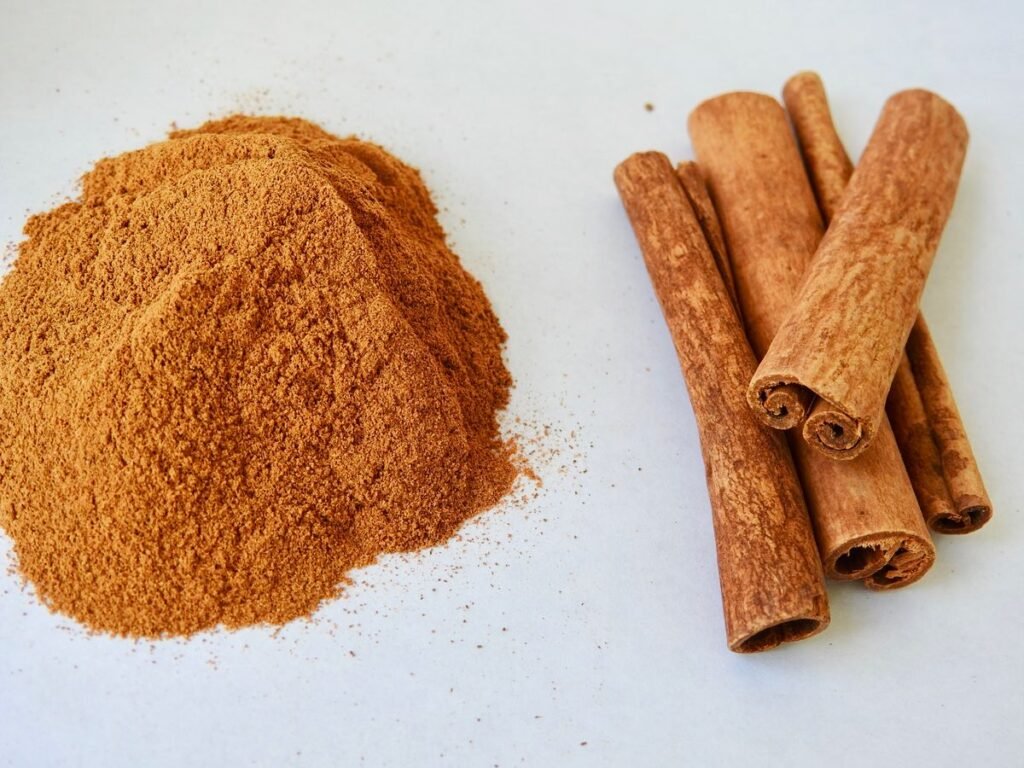
Ground cinnamon powder is the least dangerous form in small amounts: a lick of cinnamon-dusted food or a pinch baked into a treat is unlikely to cause harm. The main risks are eating a large quantity, such as getting into an open spice jar, or inhaling the fine powder, which irritates the airways.
Cinnamon essential oil is the form to worry about. PetMD lists cinnamon among the essential oils considered toxic to dogs, and the AKC states that cinnamon essential oil can be toxic. Concentrated oil can irritate the mouth and airways and cause vomiting, diarrhoea, and liver problems even in small amounts. Never add it to your dog’s food or water, never apply it to their skin, and do not diffuse it in a room your dog cannot leave.
Cinnamon sticks can irritate your dog’s mouth and cause sores, and a stick can choke a dog or cause a blockage if swallowed. There is no reason to offer a cinnamon stick to a dog — keep them in a closed container your dog cannot open.
Can Dogs Eat Cinnamon in Baked Goods?
A little cinnamon, like the amount used in most baked goods, is not going to hurt your dog, according to the AKC. The real danger is everything else in the food: human baked goods are often high in fat, sugar, and unnecessary calories, which can lead to obesity, diabetes, and pancreatitis. Worse, some contain xylitol, which is very toxic to dogs even in small amounts, or chocolate or raisins, which are also toxic. Share such foods only in small quantities and very rarely, and always check for xylitol, chocolate, or raisins first.
Cinnamon vs Nutmeg: Do Not Confuse Them
Cinnamon and nutmeg are often used together in baking, but they are very different for dogs: cinnamon is not toxic; nutmeg is. Nutmeg contains myristicin, which can cause hallucinations, increased heart rate, disorientation, high blood pressure, abdominal pain, dry mouth, and even seizures, according to the AKC. Symptoms can last up to 48 hours.
It takes a large amount of nutmeg to cause problems, and the small amount in baked goods is generally safe — but if your dog eats a large amount by accident, call your vet straight away. Never use nutmeg in dog treats, and be careful with “pumpkin spice” blends, which almost always contain nutmeg. For a genuinely toxic spice, see our guide on whether dogs can eat onions — onions damage red blood cells and are dangerous even in small amounts.
Are There Any Health Benefits?
Cinnamon is praised for antioxidant and anti-inflammatory effects in people, but these have not been proven conclusively even in humans. The AKC cautions against assuming the same benefits for dogs, and there is no solid evidence it improves a dog’s digestion, blood sugar, or joints. Talk to your vet before giving it as a supplement — and never use it as a home remedy.
What to Do If Your Dog Eats Cinnamon
If your dog eats a large amount of cinnamon, do not panic — but call your veterinarian. Cinnamon is not fatal to dogs, but the side effects can be uncomfortable. Remove the source, work out how much they ate, and watch for vomiting, diarrhoea, drooling, coughing, or difficulty breathing.
Call your vet, especially if your dog ate more than a teaspoon of powder, any oil, or a whole stick — or if your dog is small, a puppy, or has diabetes or liver disease. Do not induce vomiting unless your vet or poison control tells you to. You can also call the ASPCA Animal Poison Control Center at (888) 426-4435.
Safer Alternatives
Safer options include plain pumpkin puree, blueberries, and apples (without the core and seeds). For a full overview, see our guide to what human foods dogs can eat. Treats should make up no more than about 10% of your dog’s daily calories.
For everyday feeding, plain cooked egg is a much simpler protein treat (see our guide to can dogs eat eggs), and if you use peanut butter in homemade treats, check our guide to is peanut butter good for dogs first — the xylitol check there matters far more than any spice.
Cassia vs Ceylon: The Difference That Matters
Most cinnamon sold in grocery stores is cassia cinnamon (Cinnamomum cassia). True cinnamon, or Ceylon cinnamon (Cinnamomum verum), is lighter, more crumbly, and usually sold in spice shops or labelled as Ceylon. The difference matters because cassia contains coumarin, a compound linked to liver stress in sensitive animals, while Ceylon contains only negligible amounts.
That does not make cassia poisonous in a pinch, and it does not make Ceylon a health food for dogs. It means the type changes the risk of repeated use: a dog that regularly gets cassia in homemade treats is getting far more coumarin than a dog that gets Ceylon. If you ever add cinnamon to dog treats at all, Ceylon is the safer choice — and even then, only occasionally, in a tiny amount, and only after asking your vet.
| Type | What it is | Coumarin | For dogs |
|---|---|---|---|
| Cassia | The common grocery-store cinnamon | High | Fine as a rare trace; avoid regular use |
| Ceylon | “True” cinnamon, lighter and crumbly | Negligible | Safer type, still no proven benefit — ask your vet |
What Happened? What to Do
Use this table in the moment, instead of guessing. When in doubt, call your vet — a phone call costs nothing and the advice is specific to your dog’s size and health.
| What happened | Risk | What to do |
|---|---|---|
| Licked a spill or a cinnamon-dusted crumb | Very low | Monitor for vomiting or drooling; no vet visit usually needed |
| A pinch baked into a treat | Low | Unlikely to cause harm; watch for stomach upset |
| Ate around a teaspoon of powder or more | Call your vet | Especially urgent for small dogs, puppies, or dogs with diabetes or liver disease |
| Ate any cinnamon oil, or inhaled powder | Call your vet now | Oil is toxic even in small amounts; inhaled powder can cause coughing and breathing difficulty |
| Chewed or swallowed a cinnamon stick | Call your vet | Risk of mouth sores, choking, or blockage |
Cinnamon in Everyday Foods and Around the House
Cinnamon toast. The cinnamon on toast is rarely the problem. The butter, sugar, and toppings are — and some breads contain raisins or xylitol, both toxic to dogs. A tiny piece of plain cinnamon toast is unlikely to harm a healthy dog, but it is not a good treat choice.
Cinnamon applesauce and oatmeal. Plain applesauce or oatmeal with a dusting of cinnamon is low risk in a small amount. Sweetened versions, or mixes containing nutmeg, xylitol, or raisins, are not — check the label before sharing.
Candles, diffusers, and air fresheners. A scented candle in a ventilated room is a lower risk than an oil diffuser, but never use a cinnamon essential oil diffuser in a room your dog cannot leave, and never leave a burning candle near your dog. If your dog starts coughing, sneezing, or pawing at its face around a scented product, move the dog to fresh air and call your vet if breathing looks difficult.
FAQ
Is cinnamon bad for dogs?
Cinnamon is not toxic to dogs, according to the ASPCA and the AKC, so small amounts are unlikely to cause serious harm. But large amounts can cause vomiting, diarrhoea, and liver problems, and cinnamon essential oil can be toxic.
How much cinnamon can a dog eat?
The Pet Poison Helpline says it takes more than one teaspoon of powder to cause problems for most pets, but essential oils can cause problems in lower doses, and small breeds may be sensitive to smaller amounts. There is no officially recommended safe amount.
Is cinnamon essential oil safe for dogs?
No. PetMD lists cinnamon among the essential oils considered toxic to dogs. Never add cinnamon oil to your dog’s food or apply it to their skin.
Can dogs eat cinnamon rolls?
The small amount of cinnamon in a cinnamon roll is not the main problem — the sugar, fat, and other ingredients are. Many cinnamon rolls also contain xylitol, chocolate, raisins, or nutmeg, which are toxic to dogs. Do not share them with your dog.
Is nutmeg safe for dogs like cinnamon?
No. Unlike cinnamon, nutmeg contains myristicin, which can cause hallucinations, rapid heart rate, disorientation, and seizures. Never use nutmeg in dog treats.
Can dogs eat cinnamon toast?
A tiny piece of plain cinnamon toast is unlikely to harm a healthy dog, because the amount of cinnamon is small. The real risks are the toppings: butter and sugar, and especially raisins, nutmeg, or xylitol in some breads. Check the ingredients before sharing, and do not make it a habit.
Is Ceylon cinnamon safe for dogs?
Ceylon (“true”) cinnamon is safer than cassia because it contains negligible coumarin, the compound linked to liver stress. But safer does not mean beneficial: there is no proven health benefit for dogs, and the oil form is still off-limits. Ask your vet before adding it to treats on purpose.
Are cinnamon candles and air fresheners safe around dogs?
A scented candle in a ventilated room is lower risk than an essential oil diffuser, but cinnamon essential oil diffusers should never be used around dogs. If your dog coughs, sneezes, or has breathing difficulty around a scented product, move it to fresh air and call your vet.
If the cinnamon was on toast, see our guide to cinnamon toast for dogs for the toast ingredients and what to do after an accidental bite.
For cinnamon in the air rather than in food, see our guide to cinnamon diffusers, candles and scents around dogs.
Sources
- American Kennel Club — “Can Dogs Eat Cinnamon?”: https://www.akc.org/expert-advice/nutrition/can-dogs-eat-cinnamon/
- ASPCA — Toxic and Non-Toxic Plant List, Dogs (Cinnamon, Cinnamomum zeylanicum, listed as non-toxic to dogs): https://www.aspca.org/pet-care/animal-poison-control/dogs-plant-list
- PetMD — “Essential Oils Safe for Dogs: 7 To Use and 12 To Avoid”: https://www.petmd.com/dog/general-health/are-essential-oils-safe-for-dogs
- Critter Care Collective — “Nutmeg”: https://www.crittercarecollective.com/toxicities/nutmeg
Cinnamon itself is safe in small amounts when it is the right type — our can dogs have cinnamon guide explains the Ceylon vs Cassia difference, safe amounts by dog size, and the cinnamon foods to never share.
Pingback: Cinnamon Diffusers, Candles & Scents Around Dogs: What's Safe and What to Avoid - PawMeridian
Pingback: What human foods can dogs eat? Explained Simply - PawMeridian