
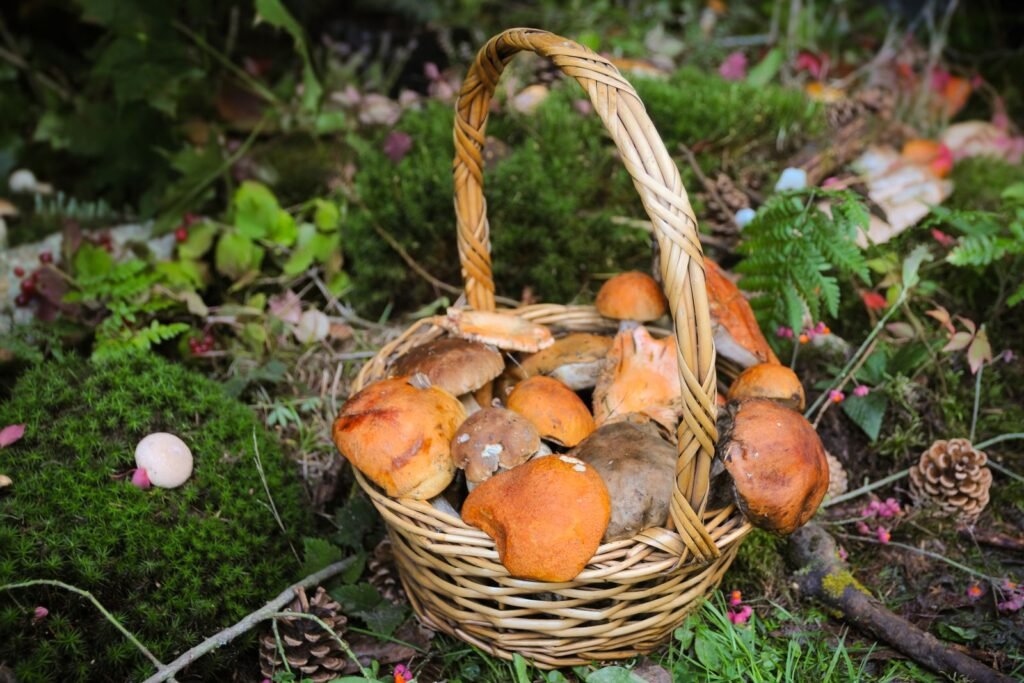
Can dogs eat mushrooms? It depends entirely on which mushroom. Plain store-bought mushrooms — white button, cremini, portobello, shiitake and oyster — are not toxic and are safe as an occasional treat. Wild mushrooms are different: some can kill a dog, and even experts misidentify them.
One rule: only ever feed mushrooms from the shop, served plain and cooked. Never let your dog eat a mushroom from the garden, park or walk — and if one already has, call your vet immediately, even if your dog looks fine.
Which Mushrooms Are Safe for Dogs?
The safe list is short — supermarket mushrooms, and no others.
| Mushroom | Safe? | Notes |
|---|---|---|
| White button | Yes, plain and cooked | Most common; mild, easy to digest cooked |
| Cremini (baby bella) | Yes, plain and cooked | Young portobello |
| Portobello | Yes, plain and cooked | Serve in small pieces |
| Shiitake | Yes, plain and cooked | Never serve raw shiitake |
| Oyster | Yes, plain and cooked | Cook until soft |
| Wild mushrooms, any kind | No — never | Some are lethal |
PetMD, the AKC and the ASPCA agree on this list — and that mushrooms offer dogs very little nutrition and are not necessary in a dog’s diet. Raw white mushrooms are only about 22 calories per 100 grams: harmless as a treat, but not a health food. UC Davis advises against feeding mushrooms at all.
Cooked vs Raw Mushrooms
If you offer mushrooms, cooked is safer: raw store-bought mushrooms are harder to digest and can upset the stomach.
Serve them steamed, boiled or dry-fried, with nothing added — no butter, oil, salt, garlic or onion. Garlic and onion are toxic to dogs and damage red blood cells, so a dish seasoned with them is dangerous even if the mushroom is safe. Our guide on can dogs eat onions explains the risk in detail.
Canned, fried, breaded, stuffed or seasoned mushrooms are out: canned are high in sodium, fried add unneeded fat. Mushrooms from pizza or soup do not count as safe — they are almost always cooked with garlic, onion, butter or salt.
How Many Mushrooms Can a Dog Eat?
Mushrooms are a treat: all treats combined should stay under 10% of daily calories. A few small pieces of plain cooked mushroom, once or twice a week at most. Start with one small piece and wait 24 hours.
How to Serve Mushrooms to Your Dog
To offer mushrooms:
- Buy from the shop only. Use white button, cremini, portobello, shiitake or oyster from a supermarket. Never use mushrooms picked outdoors.
- Wash and trim. Rinse and trim stems; discard any slimy or mouldy ones.
- Cook plain. Steam, boil or dry-fry until soft — no butter, oil, salt, garlic, onion or seasoning.
- Cut small. Chop into pieces sized to your dog’s mouth.
- Start with one piece. Offer a single small piece, wait 24 hours, and repeat only if there was no stomach upset.
If your dog is not interested, do not push it. Our guide on can dogs eat green beans covers a safer vegetable treat — low-calorie and far less risky.
Can Puppies Eat Mushrooms?
Puppies can have a tiny piece of plain cooked store-bought mushroom once they are eating solid food, but there is no reason to offer it — a puppy’s stomach is more sensitive, and mushrooms add nothing a puppy needs. Keep puppies away from mushrooms growing outdoors: a small body means a smaller toxic dose.
Which Wild Mushrooms Are Poisonous to Dogs?
Only about 1% of species are highly toxic, but a single death cap can be fatal, and roughly 20 wild species are lethal to dogs and humans:
- Death cap (Amanita phalloides) — the most dangerous; amatoxins destroy liver and kidneys.
- Destroying angels (Amanita ocreata, Amanita bisporigera) — amatoxin poisoning.
- Galerina marginata — also amatoxins.
- Fly agaric (Amanita muscaria) — red cap with white spots; causes drooling, vomiting, tremors and seizures.
- Inocybe and Clitocybe species — drooling, tearing, vomiting, diarrhoea.
- False morels (Gyromitra species) — vomiting, seizures, liver damage.
Toxic and harmless mushrooms often grow side by side and look alike — even experienced foragers misidentify them. The rule is absolute: if it grew outside a shop, your dog does not eat it.
Symptoms of Mushroom Poisoning
Symptoms depend on the species, and the most dangerous ones are the most deceptive: early signs include vomiting, diarrhoea, drooling, weakness, tremors and seizures. With amatoxin species such as the death cap, symptoms may appear 6–24 hours after eating, then seem to improve — a false recovery — before liver and kidney failure sets in over 2–8 days. A dog that looks fine an hour after eating one can still be in serious trouble. Never wait for symptoms before acting.
What to Do If Your Dog Eats a Wild Mushroom
Act immediately — do not wait, and do not try to treat this at home.
- Call your vet or a poison helpline right away. Call your vet, the ASPCA Animal Poison Control Center at (888) 426-4435, or the Pet Poison Helpline at (855) 764-7661 — describe what happened and how much was eaten.
- Do not induce vomiting yourself. Never make your dog vomit unless a vet or poison control tells you to — it can make things worse.
- Collect a sample if it is safe. Photograph the mushroom or bag a sample, stem and cap included, so the vet can help identify it.
- Note the time. Tell the vet when it was eaten and how much. Bring the sample and your dog if asked.
- Watch closely, even if your dog seems fine. Amatoxin poisoning can take hours to show — follow your vet’s instructions and do not assume a quiet dog is a safe dog.
Do not try home remedies, and do not wait for symptoms. With mushroom poisoning, early veterinary care is the difference between a scare and a tragedy. If in doubt, consult a vet.
The Bottom Line
Plain store-bought mushrooms — white button, cremini, portobello, shiitake and oyster — are safe in small amounts, served plain and cooked. They add almost nothing to the diet, so they are an optional treat at best. Wild mushrooms are never safe, some are lethal, and a dog that eats one needs a vet immediately — even if it looks fine. Keep mushrooms out of seasoned dishes; garlic and onion are a separate danger. See our guide on what human foods can dogs eat for a broader view of kitchen safety.
Frequently Asked Questions
+ Can dogs eat raw mushrooms?
Raw store-bought mushrooms are not toxic, but harder to digest and can upset the stomach. Cooked is easier and safer. Raw shiitake should never be served. Wild raw mushrooms are never safe.
+ Can puppies eat mushrooms?
A puppy can have a tiny piece of plain cooked store-bought mushroom once it is eating solid food, but there is no reason to offer it.
+ What should I do if my dog eats a wild mushroom?
Call your vet or the ASPCA Animal Poison Control Center at (888) 426-4435 immediately — do not wait for symptoms. Do not induce vomiting yourself. Photograph or bag a sample if safe.
+ Are store-bought mushrooms safe for dogs?
Yes. Plain store-bought white button, cremini, portobello, shiitake and oyster mushrooms are not toxic. Serve them cooked and plain, in small amounts, as an occasional treat.
+ Which mushrooms are poisonous to dogs?
The most dangerous include the death cap (Amanita phalloides), destroying angels (Amanita ocreata and bisporigera), Galerina marginata, fly agaric (Amanita muscaria), Inocybe and Clitocybe species, and false morels (Gyromitra). Only about 1% of species are highly toxic, but one death cap can be fatal.
+ Can dogs eat cooked mushrooms with garlic or onion?
No. Garlic and onion are toxic to dogs and damage red blood cells, so a dish cooked with them is dangerous even when the mushroom is safe. Only ever serve mushrooms plain — steamed, boiled or dry-fried with nothing added.
Sources
- PetMD — Can Dogs Eat Mushrooms?: https://www.petmd.com/dog/nutrition/can-dogs-eat-mushrooms
- AKC — Can Dogs Eat Mushrooms?: https://www.akc.org/expert-advice/nutrition/can-dogs-eat-mushrooms/
- ASPCA Animal Poison Control Center: https://www.aspca.org/pet-care/animal-poison-control
- ASPCA — Toxic and Non-Toxic Plants: https://www.aspca.org/pet-care/aspca-poison-control/toxic-and-non-toxic-plants
Pingback: Can dogs eat onions? Safety, Benefits & Risks Explained - PawMeridian