
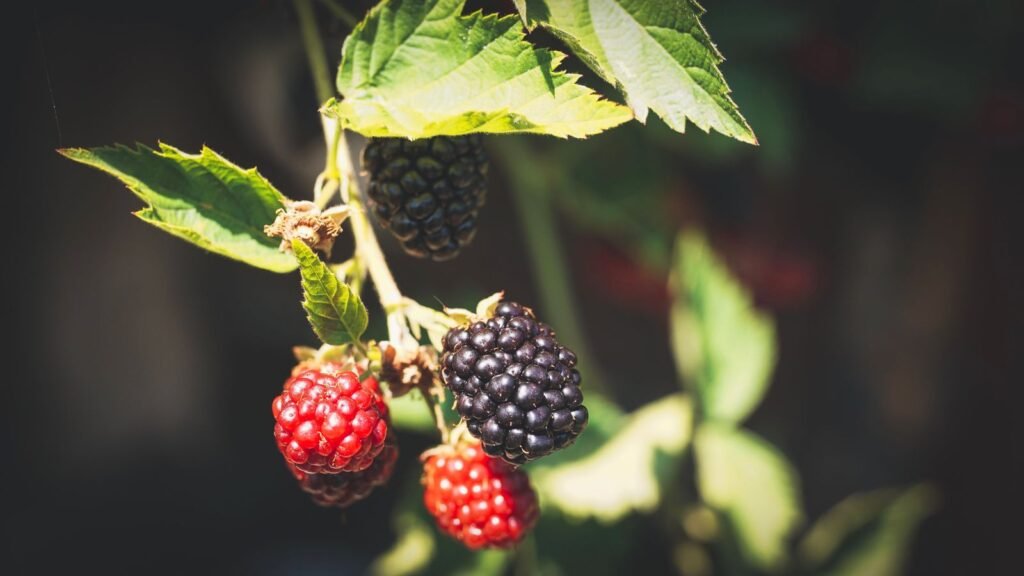
Can dogs eat blackberries? Yes — plain fresh or frozen blackberries are safe for most healthy dogs in small amounts. Low in calories, high in fibre and rich in antioxidants, they are one of the better fruit treats you can share.
One question stops many owners: blackberries contain xylitol. The amount is only a trace — far too small to harm a dog at treat-sized servings. The real danger is added xylitol in sugar-free jams, jellies and baked goods.
Why Blackberries Are Good for Dogs
Blackberries pack a lot of nutrition into very few calories. Per USDA FoodData Central, 100 grams of raw blackberries has about 43 calories and 5.3 grams of fibre, with under 5 grams of sugar. One cup is roughly 62 calories with around 8 grams of fibre, and a single berry has only about 2 calories.
Their dark purple colour comes from anthocyanins, antioxidants linked to brain and heart health. They also provide vitamins A, B, C, E and K and omega-3s. The fibre supports digestion, and the low sugar and calorie count suits dogs watching their weight.
Do Blackberries Contain Xylitol?
Yes, blackberries contain naturally occurring xylitol — but only in trace amounts. The Merck Veterinary Manual puts the danger threshold above roughly 0.1 grams per kilogram of body weight for low blood sugar, and around 0.5 grams per kilogram for liver damage. The natural xylitol in a handful of berries is a tiny fraction of that — a dog would have to eat an enormous quantity to be poisoned by it.
The genuine risk is added xylitol: sugar-free jam, jelly, syrup, yogurt and baked goods can contain concentrated xylitol, and even a small amount can be an emergency. If your dog eats anything sugar-free listing xylitol, call your vet or the ASPCA Animal Poison Control Center at (888) 426-4435 right away.
How Many Blackberries Can a Dog Eat?
All treats combined should stay under 10% of daily calories. Use these AKC, Chewy and Petful starting points.
| Dog size | Serving | How often |
|---|---|---|
| Extra-small (2–10 lb) | 1–2 berries | 2–3× a week |
| Small (10–25 lb) | 2–3 berries | 2–3× a week |
| Medium (25–50 lb) | 3–5 berries | 2–3× a week |
| Large (50–90 lb) | A small handful (5–8) | 2–3× a week |
| Giant (over 90 lb) | A handful (8–10) | 2–3× a week |
Petful’s rule: about 1 gram of berries per pound of body weight per day. Start with one or two berries and wait 24 hours.
How to Serve Blackberries to Your Dog
Follow these steps and blackberries become a simple, safe summer treat.
- Wash thoroughly. Rinse under cool running water to remove dirt, sprays and surface residue.
- Remove the stems. Pull off stems and discard damaged or mouldy berries — mould can carry mycotoxins.
- Cut or mash for small dogs. Halve or mash berries for toy breeds and puppies — whole berries can choke small mouths.
- Serve fresh or plain frozen. Frozen berries are fine as a cooling summer treat, as long as nothing has been added.
- Start small. Offer one or two berries, wait 24 hours, and increase gradually if stools stayed normal.
If your dog refuses blackberries, do not force it. Our guide on can dogs eat raspberries covers a close cousin with the same trace-xylitol theme, and can dogs eat strawberries covers another safe berry many dogs love.
Can Puppies Eat Blackberries?
Yes, puppies can eat blackberries once they are eating solid puppy food, usually from around 8 weeks old. Keep the portion tiny — one or two berries, halved or mashed — and wait 24 hours before offering more. Puppies have sensitive stomachs, so stop for a few days if stools go loose and restart with a smaller amount. When in doubt, consult your vet.
Can Dogs Eat Wild Blackberries?
Wild blackberries are fine only if you are certain what you picked — ripe, dark, soft berries from a bush you can positively identify are the same fruit as the shop ones. The danger is misidentification: dogs foraging in hedgerows can also eat toxic lookalikes such as holly, pokeweed, juniper and mistletoe berries. Avoid unripe red or green berries, and never let your dog graze unsupervised from wild bushes.
Blackberry Products to Avoid
Not everything blackberry-flavoured is safe. This table is the quick check.
| Product | Safe? | Why |
|---|---|---|
| Fresh blackberries, washed | Yes | Plain fruit, low calorie, high fibre |
| Plain frozen blackberries | Yes | Same fruit, no additives |
| Blackberry jam or jelly | No | High sugar; sugar-free versions may contain xylitol |
| Blackberry pie or cobbler | No | Sugar, butter and crust fat — pancreatitis risk |
| Canned berries in syrup | No | Added sugar and syrup |
| Berry mixes with added sugar | No | Added sugar or xylitol |
| Mouldy berries | No | Possible mycotoxins |
| Blackberry sweets or gum | No | Often contain xylitol |
Risks: Too Many Berries, Allergies and Dark Stools
Blackberries are safe in moderation, but overfeeding has real consequences: their high fibre can cause gas, loose stools, vomiting or diarrhoea. If your dog ate a whole punnet, expect a soft stomach for a day — call your vet if it does not settle.
Too many berries can also turn stool dark blue or black — usually just berry pigment, but call your vet if you are unsure whether it is blood. Diabetic dogs should only have blackberries with a vet’s approval. Allergy is rare but possible: watch for itching, hives, facial swelling or stomach upset after the first taste, and stop feeding them if any appear. Do not try home remedies — if in doubt, consult a vet.
The Bottom Line
Blackberries are one of the healthiest berries you can share with your dog: low in calories, high in fibre, and rich in antioxidants. The trace of natural xylitol is not a danger at treat-sized servings — the real risk is sugar-free jams and baked goods, which your dog should never eat. Keep portions small, treats under 10% of daily calories, and serve berries washed and plain. Not all berries are safe: our guide on can dogs have grapes explains why grapes are genuinely toxic, unlike blackberries.
Frequently Asked Questions
+ How many blackberries can a dog eat?
Keep all treats under 10% of daily calories: toy dogs 1–2 berries, small dogs 2–3, medium dogs 3–5, large dogs a small handful, 2–3 times a week. Start with one or two berries and wait 24 hours.
+ Do blackberries contain xylitol?
Yes, but only in trace amounts far below the toxic dose — the Merck Veterinary Manual puts the danger threshold above about 0.1 g per kg of body weight. The real risk is added xylitol in sugar-free jams and baked goods.
+ Can dogs eat wild blackberries?
Yes, only if you can positively identify them. Dogs foraging can also eat toxic lookalikes such as holly, pokeweed, juniper and mistletoe berries. Avoid unripe berries, and never let your dog graze unsupervised.
+ Can dogs eat blackberry jam?
No. Jam and jelly are high in sugar, and sugar-free versions may contain added xylitol, which is toxic to dogs. Offer plain fresh or frozen berries instead — never jam, preserves or syrupy canned berries.
+ Can puppies eat blackberries?
Yes, once they are eating solid puppy food, usually from around 8 weeks old. Offer one or two berries, halved or mashed, and wait 24 hours. Stop for a few days if stools go loose.
+ Can dogs eat raspberries and blackberries?
Yes, both are safe in small amounts — the natural xylitol in the fruit is far below any toxic dose. Serve both washed and plain, and never offer jam, jelly or sugar-free products made from them.
Sources
- AKC — Can Dogs Eat Blackberries?: https://www.akc.org/expert-advice/nutrition/can-dogs-eat-blackberries/
- PetMD — Can Dogs Eat Blackberries?: https://www.petmd.com/dog/nutrition/can-dogs-eat-blackberries
- Chewy — Can Dogs Eat Blackberries?: https://www.chewy.com/education/dog/food-and-nutrition/can-dogs-eat-blackberries
- Merck Veterinary Manual — Xylitol Toxicosis in Dogs: https://www.merckvetmanual.com/toxicology/food-hazards/xylitol-toxicosis-in-dogs
- ASPCA Animal Poison Control Center: https://www.aspca.org/pet-care/animal-poison-control