
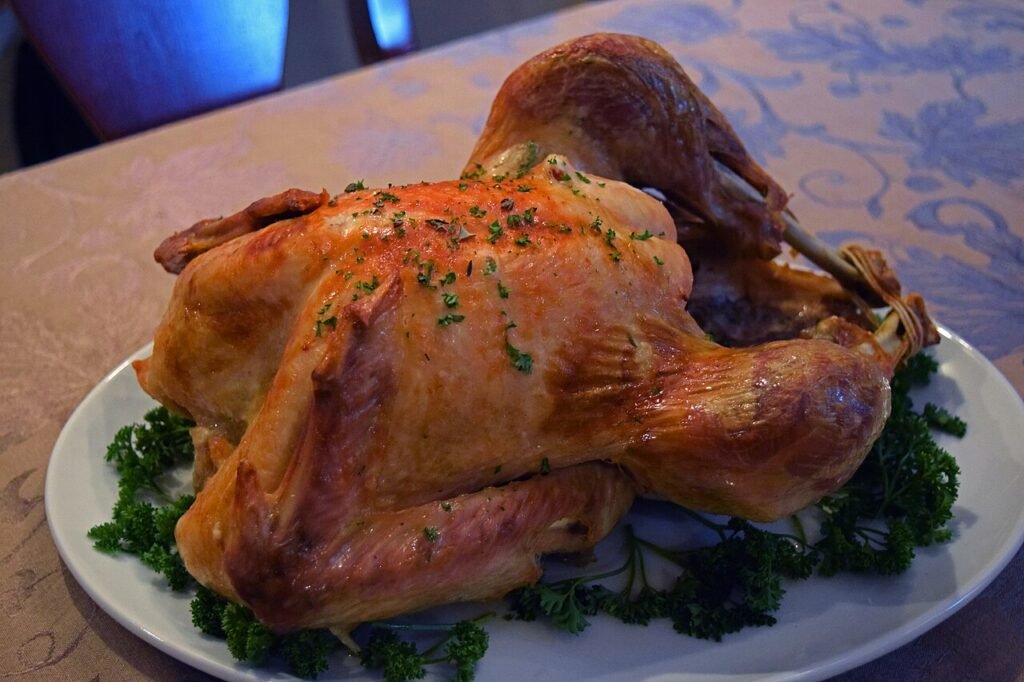
Can Dogs Have Turkey? Safety, Benefits & Risks Explained
Yes — dogs can have turkey, as long as it is plain, fully cooked, boneless, and skinless. A small piece of unseasoned white meat is a healthy, lean treat for most dogs. But turkey skin, bones, fat, seasoning, and deli turkey can cause stomach upset, pancreatitis, or worse.
Is Turkey Good for Dogs?
Turkey can be a healthy, occasional treat for dogs. It is a lean animal protein that is often a main ingredient in commercial dog foods, and it supplies protein, vitamin B6, vitamin B12, niacin, zinc, selenium, and phosphorus. The white breast meat is higher in protein and lower in fat than the darker leg and thigh meat — which makes plain breast meat the best choice.
That said, turkey is a treat, not a meal. It should never replace a balanced dog food, and all treats together should make up no more than 10% of your dog’s daily calories. See our guide on what human foods dogs can eat for more safe kitchen foods.
Which Turkey Is Safe for Dogs?
Not all turkey is equal. Use this quick guide:
- Plain cooked white meat (breast), skin and bones removed — yes. The safest choice: lean and easy to digest.
- Plain cooked ground turkey — yes. Choose lean meat and cook it fully, with no oil, salt, or seasonings.
- Plain cooked dark meat (legs and thighs) — small amounts only. Remove the skin, bones, and visible fat first — dark meat is much fattier.
- Raw or undercooked turkey — no. Raw poultry can carry salmonella and E. coli, which can make dogs sick and spread to people in the household. The CDC does not recommend feeding raw pet food or treats.
- Turkey bones, cooked or raw — no. Cooked bones can splinter and cut the mouth or intestines, and any bone can cause choking or a blockage that may need emergency surgery.
- Turkey skin and fat — avoid. Skin is very high in fat and can upset the stomach or trigger pancreatitis.
- Seasoned, buttered, or smoked turkey — avoid. Turkey is often seasoned with garlic and onions, which are toxic to dogs.
- Deli turkey, turkey bacon, sausage, or hot dogs — avoid. These are usually high in salt and preservatives, and many contain unsafe seasonings.
How Much Turkey Can Dogs Have?
Keep portions small. PetMD gives a useful example: a 25-pound dog can have about 40 grams of white meat, or 30 grams of dark meat — not including the skin. A few small pieces are enough for a small dog, a small handful for a medium dog, and a modest portion for a large dog — within the 10% treat rule.
Start with a tiny amount, then watch your dog for 24 hours. If there is no digestive upset or itching, you can offer the usual small portion as an occasional treat. Puppies have much more sensitive stomachs than adults, so keep their portions especially small. Some dogs are allergic to poultry — if yours is, skip turkey entirely. If your dog has a history of pancreatitis, diabetes, or a chronic digestive condition, check with your vet first.
The Risks of Feeding Turkey to Dogs
Plain turkey meat is safe, but the wrong parts and the wrong preparation carry real risks.
Fat, Skin, and Pancreatitis
The biggest everyday risk is fat. Skin, visible fat, and dark meat are high in fat, and a fatty meal can cause vomiting, diarrhea, and stomach pain. In some dogs it can trigger pancreatitis — an inflamed pancreas that causes severe pain and can lead to serious complications.
Bones
Turkey bones are dangerous in every form. Cooked bones splinter easily, and the sharp pieces can injure the intestines or cause bleeding. A swallowed bone can also cause a blockage that may require emergency surgery. Never give your dog a turkey bone, and keep the carcass out of reach.
Seasoning, Garlic, and Onions
Holiday turkey is usually seasoned, buttered, or brined, and that is where the danger hides. Garlic and onions are toxic to dogs, and the ASPCA lists them among the people foods to avoid feeding pets. Stuffing often contains onion and garlic too, so do not share that either. If you are unsure whether a piece was seasoned, do not give it to your dog. For more on foods that are never safe, read our guide on whether dogs can eat onions.
Turkey at Thanksgiving and Holidays
Thanksgiving is the riskiest time for turkey trouble — there is a lot of it around, and most of it is seasoned, buttered, and served with unsafe sides. A few holiday rules help:
- Set your dog’s plain portion aside before seasoning or buttering the bird.
- Do not share stuffing, gravy, or casseroles — they usually contain onion, garlic, butter, or heavy seasoning.
- Keep the carcass, bones, and string out of the trash or behind a closed door — a determined dog can get into an open bin in seconds.
- If your dog does get into seasoned turkey, skin, or bones, watch for vomiting, diarrhea, loss of appetite, or pain, and call your vet — sooner for a puppy or a dog with a health condition.
How to Serve Turkey Safely
- Cook it fully, with no butter, oil, salt, or seasoning on your dog’s portion.
- Remove the skin, bones, and all visible fat.
- Cut the meat into small, bite-size pieces.
- Serve it plain. Plain cooked rice makes a good, gentle pairing — see our guide on whether dogs can eat rice.
- Keep it an occasional treat, not a daily meal, within the 10% treat rule.
- If your dog has never had turkey, start with a very small piece and watch for any reaction.
FAQ
Can dogs eat turkey every day?
Most dogs do better with turkey as an occasional treat, not every day. Daily turkey adds extra calories and fat and can unbalance the diet — if you want to feed it regularly, ask your vet first.
Can dogs eat turkey bones?
No. Cooked turkey bones can splinter and injure the mouth or intestines, and any bone can cause choking or a blockage that may need emergency surgery. Never give your dog a turkey bone.
Can dogs eat deli turkey?
Best avoided. Deli turkey and lunch meat are high in sodium and contain preservatives and sometimes unsafe seasonings. A tiny piece used once to hide a pill is the usual exception — as a regular treat, it is unhealthy.
Can puppies eat turkey?
Yes, in very small amounts of plain, fully cooked, boneless, skinless meat — but puppies have much more sensitive stomachs than adults. Start with a tiny piece, watch for any upset, and ask your vet if unsure.
Can dogs eat raw turkey?
No. Raw poultry can carry salmonella and E. coli, which can cause vomiting, diarrhea, and serious infection in dogs and can spread to people. Always serve turkey fully cooked.