
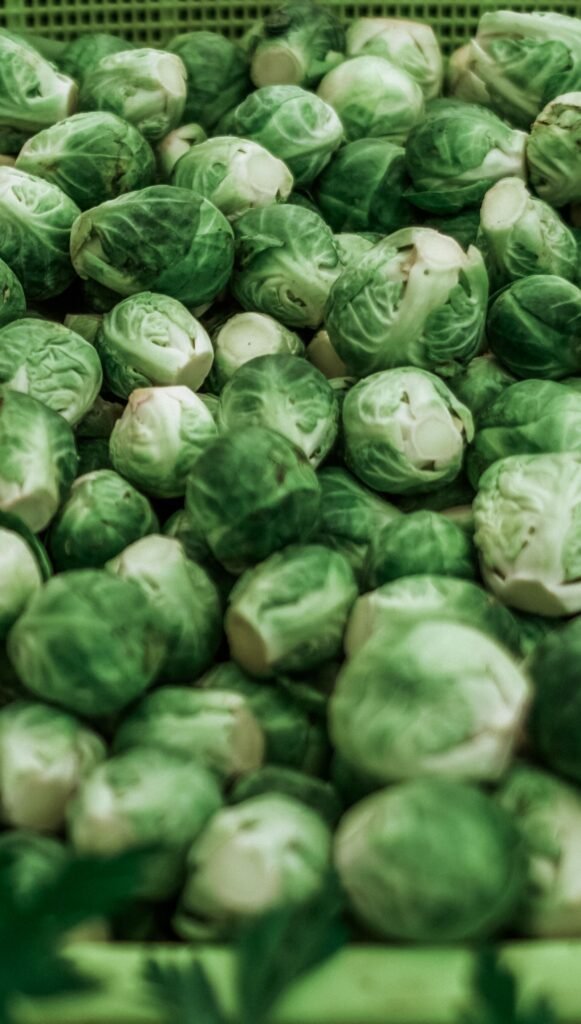
Yes, dogs can eat brussels sprouts — in small amounts, plain, and cooked. These mini-cabbages are nutritious, low in calories, and safe for most dogs when served correctly. But they come with a famous side effect: gas. Brussels sprouts belong to the cruciferous vegetable family, and their fiber and raffinose sugars ferment in the gut, producing flatulence and stomach upset when a dog eats too many. Small portions are the whole secret with this vegetable.
Brussels sprouts are a good occasional addition to a dog’s diet, not a daily staple. Think of them as a healthy treat or meal topper a few times a week, served plain and cut small. If your dog has a sensitive stomach, start with a single sprout and see how it goes before offering more.
Benefits of Brussels Sprouts for Dogs
Brussels sprouts pack a lot of nutrition into a tiny package. They are rich in vitamin K, which supports blood clotting and bone health, and vitamin C, which supports immune function. They also provide vitamin A, folate, manganese, and fiber, plus antioxidants that help protect cells from damage.
Like other green vegetables, brussels sprouts are low in calories and fat, so a few sprouts add nutrition without adding much to your dog’s calorie count. Their fiber supports healthy digestion in small amounts — the same fiber that causes gas in large amounts is genuinely beneficial in moderation.
Compared with other dog-safe vegetables, brussels sprouts sit in the middle of the pack: more nutritious than iceberg lettuce, less of an everyday staple than green beans. If your dog already enjoys vegetables, sprouts are a worthwhile addition. For other safe vegetable options, see our guides to can dogs eat celery and can dogs eat pineapple.
The Gas Problem: Why Brussels Sprouts Cause Flatulence
The gas issue is real and worth understanding before you serve sprouts. Brussels sprouts contain raffinose, a complex sugar that dogs (like humans) cannot fully digest in the small intestine. It passes to the large intestine, where gut bacteria ferment it — producing gas as a byproduct. Their high fiber content adds to the effect.
The result: a dog that eats too many sprouts will likely pass gas, sometimes impressively, and may develop a gurgling stomach or loose stools. This is uncomfortable and smelly, but it is not dangerous in itself for a healthy dog. It is a sign the portion was too big.
Three things keep gas under control. First, keep portions small — the table below gives safe ranges. Second, cook the sprouts well: steaming or boiling breaks down some of the fiber and makes them easier to digest than raw sprouts. Third, introduce them gradually. Start with half a sprout for a small dog or one sprout for a larger dog, and only increase if there is no gas or digestive upset the next day.
If your dog has chronic digestive problems, inflammatory bowel disease, or a history of pancreatitis, ask your vet before adding brussels sprouts or any cruciferous vegetable. And consult a vet promptly if gas comes with vomiting, diarrhea that lasts more than a day, abdominal pain, or loss of appetite — those signs point to something more than a large serving of sprouts.
Raw vs Cooked: How Should Brussels Sprouts Be Prepared?
Cooked is the clear winner for dogs. Steamed or boiled brussels sprouts are softer, easier to digest, and less likely to cause choking than raw ones. Cooking also reduces some of the gas-producing compounds, though it does not eliminate them entirely.
Raw brussels sprouts are not toxic, but they are hard, dense little balls. A dog that gulps food can choke on a whole raw sprout, and raw sprouts are harder to digest, so they are more likely to cause gas. If you do serve raw sprouts, cut them into small pieces and keep the portion even smaller than the cooked portion.
What you must never serve is seasoned sprouts from the dinner table. Roasted sprouts cooked in butter, bacon fat, or oil, and seasoned with salt, garlic, onion, or spices, are not dog food. The fat alone can upset the stomach or trigger pancreatitis in sensitive dogs, and onion and garlic are toxic to dogs. Holiday sprouts with bacon, cheese, or sweet glazes are completely off the menu. Your dog’s sprouts must be plain — no butter, no oil, no salt, no seasoning of any kind.
How to Serve Brussels Sprouts to Your Dog: Step by Step
Serving sprouts safely takes only a few minutes. Follow these steps:
- Choose fresh, firm sprouts. Pick bright green, tightly closed sprouts. Discard any that are yellowed, soft, or spoiled.
- Wash thoroughly. Rinse under running water and trim the tough stem end. Remove any loose or damaged outer leaves.
- Cut them small. Halve or quarter each sprout, especially for small dogs. Whole sprouts are a choking risk, and smaller pieces digest more easily.
- Cook plain. Steam or boil until tender — about 8 to 10 minutes for halved sprouts. No butter, oil, salt, or seasoning.
- Cool completely. Let the sprouts reach room temperature before serving so they cannot burn your dog’s mouth.
- Serve plain, in a small portion. Mix into kibble or offer as a treat, a few times a week at most.
- Start tiny. Offer half a sprout (small dog) or one sprout (larger dog) the first time, and watch for gas or loose stools over the next day before increasing.
How Many Brussels Sprouts Can a Dog Eat?
Brussels sprouts are a treat, so keep them within the 10% treat rule and keep portions deliberately small — smaller than you would for most vegetables, because of the gas factor.
| Dog size | Example breeds | Safe portion (a few times a week) |
|---|---|---|
| Small (under 10 lbs) | Chihuahua, Yorkie | 1/2–1 sprout, halved |
| Medium (10–50 lbs) | Beagle, Cocker Spaniel | 1–2 sprouts, halved |
| Large (over 50 lbs) | Labrador, German Shepherd | 2–3 sprouts, halved |
These are general guidelines for healthy adult dogs. Puppies can have a tiny taste — half a small cooked sprout — once they are eating solid food, but their digestive systems are more sensitive, so keep it rare and watch for gas or soft stools. If your dog develops persistent gas, bloating, or diarrhea after sprouts, stop serving them and consult a vet if symptoms last more than a day.
For a lower-gas vegetable treat, our can dogs eat watermelon guide covers a gentle fruit option, and can dogs eat shrimp covers a lean protein treat.
Frequently Asked Questions
+ Can dogs eat brussels sprouts?
Yes, dogs can eat brussels sprouts in small amounts, plain and cooked. They are nutritious and low in calories, but they cause gas if overfed, so keep portions small and introduce them gradually.
+ Do brussels sprouts give dogs gas?
Yes, brussels sprouts commonly cause gas in dogs. They contain raffinose and fiber that ferment in the gut. Small, well-cooked portions keep gas to a minimum, while large or raw servings make it much worse.
+ How should brussels sprouts be cooked for dogs?
Steam or boil them plain until tender, about 8 to 10 minutes for halved sprouts, with no butter, oil, salt, or seasoning. Cut them into small pieces and let them cool completely before serving.
+ How many brussels sprouts can a dog eat?
Keep it small: 1/2–1 sprout for small dogs, 1–2 for medium dogs, and 2–3 for large dogs, a few times a week at most, always within the 10% treat rule. Start with less and increase only if there is no gas or digestive upset.
+ Can dogs eat raw brussels sprouts?
Raw brussels sprouts are not toxic, but they are hard, harder to digest, and more likely to cause gas and choking than cooked ones. Cooked, cut-small sprouts are the safer choice. If you serve raw sprouts, cut them small and keep the portion even smaller.
A milder vegetable option without the gas risk is covered in our bell peppers for dogs guide — sweet peppers only, never spicy ones.
Sources
- American Kennel Club — Fruits and Vegetables Dogs Can and Can’t Eat: https://www.akc.org/expert-advice/nutrition/fruits-vegetables-dogs-can-and-cant-eat/
- ASPCA — People Foods to Avoid Feeding Your Pets: https://www.aspca.org/pet-care/animal-poison-control/people-foods-avoid-feeding-your-pets
- PetMD — Dog Nutrition: https://www.petmd.com/dog/nutrition
- PetMD — Can Dogs Eat Brussels Sprouts?: https://www.petmd.com/dog/nutrition/can-dogs-eat-brussels-sprouts