
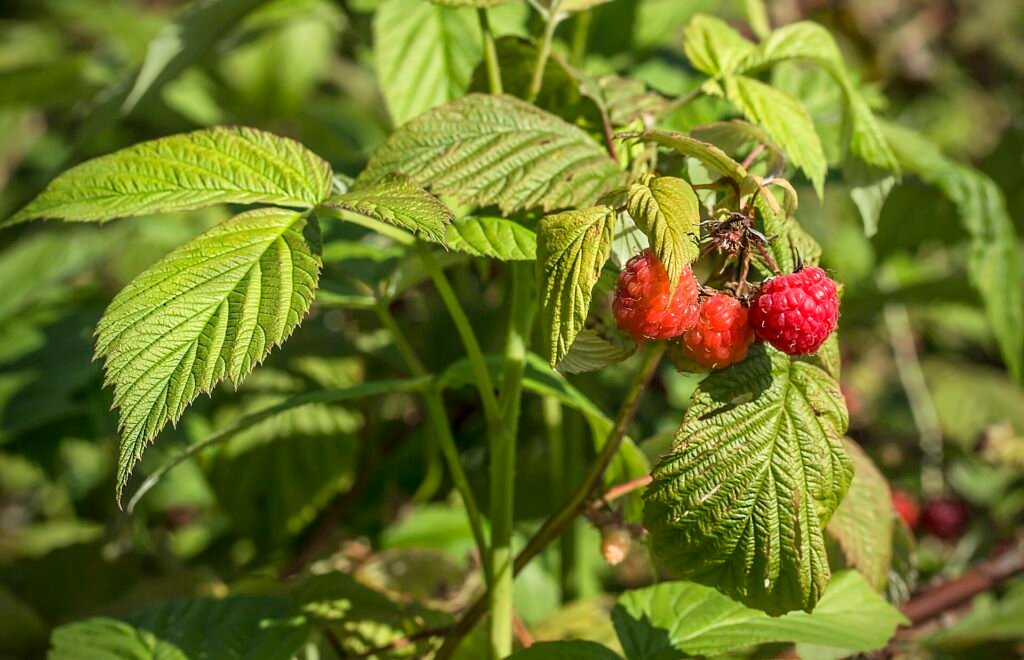
Yes — dogs can eat raspberries, but only in moderation. A few plain, fresh raspberries make a sweet, low-calorie treat for most healthy dogs. Keep portions small, offer them only occasionally, and never serve sweetened or processed raspberry products.
The American Kennel Club (AKC) and PetMD both classify raspberries as safe for dogs in small amounts. As with any new food, introduce them slowly and keep all treats within the 10% treat rule: treats of every kind should make up no more than 10% of your dog’s daily calories.
Are Raspberries Good for Dogs?
Raspberries are one of the lowest-sugar berries. Per 100 grams they contain only about 52 calories and around 6.5 grams of fibre, according to USDA nutrition data — a satisfying treat that adds very little to the waistline.
What raspberries offer:
- Fibre — supports normal digestion and regular bowel movements in small amounts.
- Vitamin C — an antioxidant that supports the immune system.
- Vitamin K and manganese — nutrients involved in bone health and normal metabolism.
- Antioxidants — anthocyanins and ellagic acid, with anti-inflammatory properties. The AKC notes these may be particularly welcome for senior dogs with stiff joints, although raspberries are a treat, not a treatment.
Raspberries are not essential: a good complete dog food already covers your dog’s needs. Think of them as a healthy way to vary the treat rotation, much like strawberries and other dog-safe berries.
The Xylitol Question: Are Raspberries Toxic to Dogs?
Raspberries contain naturally occurring xylitol, a sugar alcohol that is highly toxic to dogs in concentrated form. That sounds alarming, but the dose is what matters — and the dose in a few berries is tiny.
PetMD and the AKC both explain that a dog would need to eat an enormous, physically unrealistic quantity of raspberries (many cups, or even pounds) to approach a toxic dose. A small handful as a treat is not a xylitol risk.
The real danger is different: concentrated sweetener added to sugar-free products. Sugar-free raspberry jam, jelly, syrup, candy or baked goods can contain added xylitol at dangerous levels. Those products are never safe for dogs, even though fresh raspberries are.
Risks of Feeding Raspberries to Dogs
The genuine risks are far more ordinary than poisoning:
- Digestive upset — too many berries can cause loose stools, gas, vomiting or diarrhoea, because of their fibre and sugar load. Small dogs are affected most easily.
- Sugar and weight — raspberries are low in sugar for a fruit, but overfeeding any treat contributes to weight gain and dental problems.
- Allergy — uncommon, but possible. Watch for itching, facial swelling or stomach upset after the first taste.
- Diabetes — dogs with diabetes should only have fruit treats if their vet approves, since natural sugars still count.
- Choking — unlikely with soft, small berries, but supervise very small dogs and puppies, and halve large berries.
If your dog eats a whole punnet, do not panic about xylitol, but watch for digestive upset over the next day. If vomiting or diarrhoea is severe, or your dog seems lethargic or wobbly, contact your vet promptly. If your dog ate a sweetened or sugar-free product instead of plain berries, call your vet or an animal poison control centre right away — that is the genuinely dangerous scenario.
How Many Raspberries Can a Dog Eat?
| Dog size | Weight | Safe serving | How often |
|---|---|---|---|
| Toy / very small | Under 10 lbs (4.5 kg) | 1–2 berries | 2–3 times a week |
| Small | 10–30 lbs (4.5–14 kg) | 2–4 berries | 2–3 times a week |
| Medium | 30–60 lbs (14–27 kg) | 4–6 berries | A few times a week |
| Large | Over 60 lbs (27 kg) | Up to a small handful (6–8 berries) | A few times a week |
These are occasional-treat amounts, not daily rations. If your dog is on a prescription diet, skip extra treats unless your vet says otherwise.
How to Safely Serve Raspberries to Your Dog
- Wash the berries to remove dirt and pesticide residue.
- Serve them plain. No sugar, cream, syrup or chocolate coating. Fresh or thawed frozen raspberries are fine; canned, sweetened or jam versions are not.
- Start with one or two berries and wait a day or two. If there is no soft stool, vomiting or itching, move up to the serving size in the table above.
- Remove stems and leaves. Only the berry itself should be eaten.
- Supervise the first few times, especially with puppies and toy breeds.
- Use them as training rewards. Halved berries work well as low-calorie training treats.
- Keep the punnet out of reach. Dogs that raid a bowl on the counter can easily eat far more than the safe amount.
Frozen raspberries are safe once thawed, and some dogs enjoy them frozen as a crunchy summer snack. Serve the same small portions as fresh berries.
Can Puppies Eat Raspberries?
Yes, in small amounts. Puppies have more sensitive stomachs, so start with a single berry and watch for digestive upset. Keep treats minimal — a berry or two as an occasional taste is plenty. If your puppy is on a special diet, check with your vet first.
Can Dogs Eat Wild Raspberries?
Only if you are absolutely certain of the plant’s identification. Many wild berries look similar and some are toxic to dogs. Never let your dog eat berries from bushes near roadsides or sprayed fields, where pesticides may remain on the fruit. Fallen berries that have started to ferment can also upset the stomach in large quantities. If you cannot positively identify the berry, do not let your dog eat it.
Raspberry Products Dogs Should Never Have
- Raspberry jam and jelly — high in sugar, and sugar-free versions may contain added xylitol.
- Syrups, sauces and flavoured yogurts — usually sweetened and sometimes artificially flavoured.
- Pies and baked goods — the berries are not the problem, but sugar, fat, pastry and other ingredients (chocolate, raisins, xylitol) can be. If your dog raids a pie, watch for digestive upset and call your vet if symptoms persist.
- Sweetened dried raspberries — check the label; even unsweetened dried fruit is very concentrated in sugar.
When in doubt, stick to plain, fresh berries — the only raspberry form that is straightforwardly safe.
The Bottom Line
Can dogs eat raspberries? Yes — a few plain raspberries are a healthy, low-calorie, antioxidant-rich treat for most dogs. Keep servings small, introduce them gradually, skip every sweetened or sugar-free product, and consult a vet if your dog has diabetes, a sensitive stomach, or eats a large quantity and shows symptoms. For a broader view, see our guide to what human foods dogs can eat and whether dogs can have apples.
Another tart berry dogs can have plain and in moderation is covered in our cranberries for dogs guide — fresh berries only, never sweetened sauce.
Blackberries are another safe berry for most dogs — see can dogs eat blackberries for portions, the xylitol question and which blackberry products to avoid.
Sources
- American Kennel Club (AKC) — Can Dogs Eat Raspberries? https://www.akc.org/expert-advice/nutrition/can-my-dog-eat-raspberries/
- PetMD — Can Dogs Eat Raspberries? https://www.petmd.com/dog/nutrition/can-dogs-eat-raspberries
- Purina — Can Dogs Eat Raspberries? https://www.purina.com.sg/care-and-advice/dog/feeding-and-nutrition/can-dogs-eat-raspberries
- The Farmer’s Dog — Can Dogs Have Raspberries? https://www.thefarmersdog.com/digest/can-dogs-have-raspberries/
- USDA FoodData Central — Raspberries, raw (nutrition data)
- ASPCA Animal Poison Control Center https://www.aspca.org/pet-care/animal-poison-control
Frequently Asked Questions
+ Are raspberries safe for dogs?
Yes. Plain fresh or frozen raspberries are safe for most dogs in small amounts as an occasional treat. The trace natural xylitol in a few berries is far below a harmful dose.
+ How many raspberries can a dog eat in a day?
It depends on size: 1–2 berries for toy dogs, 2–4 for small dogs, 4–6 for medium dogs, and up to a small handful (6–8) for large dogs, a few times a week at most.
+ Are raspberries toxic to dogs because of xylitol?
No, not in normal treat amounts. A dog would need to eat an unrealistic quantity to reach a toxic dose. The real danger is added xylitol in sugar-free raspberry products, which should never be given to dogs.
+ Can puppies eat raspberries?
Yes, in very small amounts — start with a single berry and watch for stomach upset. Keep treats minimal for puppies and check with your vet if your puppy is on a special diet.
+ Can dogs eat frozen raspberries?
Yes. Frozen raspberries are safe once thawed, and some dogs enjoy them frozen as a summer snack. Serve the same small portions as fresh berries.
+ Can dogs eat raspberry jam or jelly?
No. Jam and jelly are high in sugar, and sugar-free versions may contain added xylitol, which is toxic to dogs. Stick to plain fresh or frozen berries.
+ What should I do if my dog eats too many raspberries?
Watch for vomiting, diarrhoea or lethargy over the next day. If symptoms are severe, or your dog ate a sweetened or sugar-free product, contact your vet or an animal poison control centre right away.
Pingback: Can Dogs Eat Strawberries? Benefits, Risks & Safe Serving Guide - PawMeridian
Pingback: Can Dogs Eat Blackberries? Benefits, Risks & Safe Serving Guide