
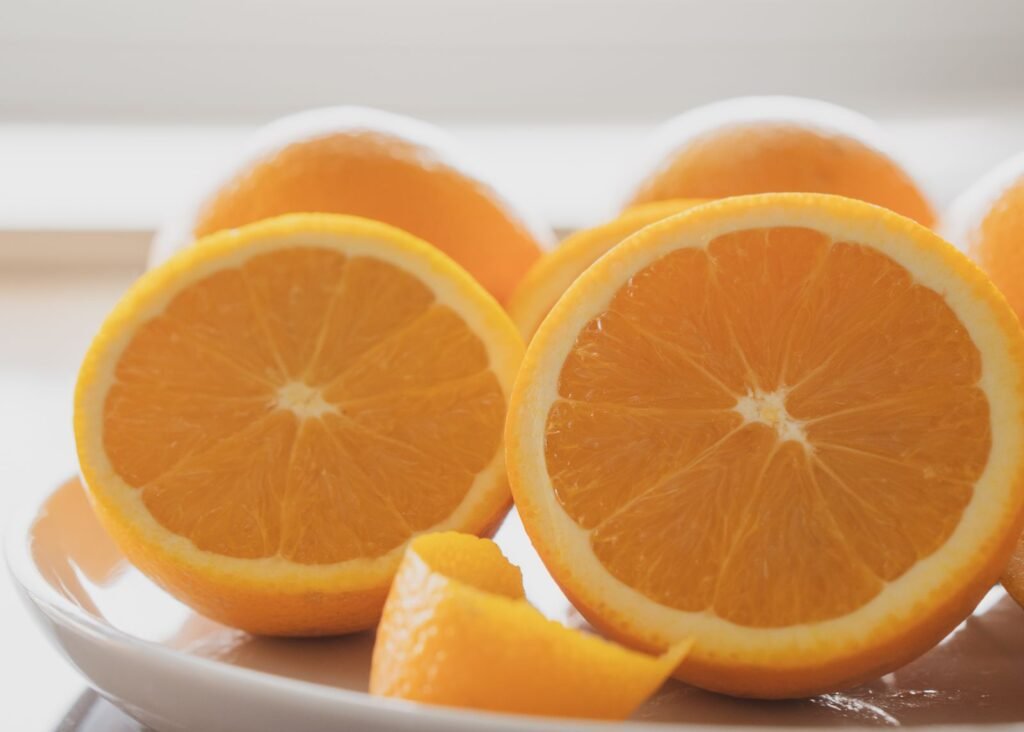
Can dogs have oranges? Yes — most healthy dogs can eat a small amount of peeled, seedless orange flesh as an occasional treat. Oranges are not toxic to dogs, and the juicy flesh offers vitamin C, fibre and potassium. But “safe in small amounts” is doing a lot of work in that sentence. Oranges are sugary and acidic, and the peel, pith and seeds must never be served.
Think of oranges as a sometimes-snack, not a health food or daily staple. Most dogs already get everything an orange offers from a balanced diet — and dogs produce their own vitamin C, so they do not depend on fruit for it. This guide covers the benefits, the real risks, serving sizes by dog size, and what to do if your dog steals a peel.
Are Oranges Good for Dogs?
In moderation, oranges offer a few genuine nutrients. None of them are essential for a dog eating a complete diet, but in a small treat they do no harm to a healthy dog:
- Vitamin C — supports immune function and acts as an antioxidant. Dogs make their own vitamin C, so this is a bonus, not a requirement.
- Fibre — the flesh provides dietary fibre that supports normal digestion in small amounts.
- Potassium — an electrolyte that supports normal muscle and nerve function.
- Hydration — oranges are mostly water, so a segment is a refreshing treat on a warm day.
- Low sodium — compared with many processed dog treats, plain orange flesh is low in salt.
That is the full benefit list, and it is deliberately modest. If a guide promises oranges will boost immunity or cure anything, it is overselling: oranges are fine, not medicine. For a broader view of safe everyday foods, see our guide to what human foods dogs can eat.
The Risks: Sugar, Acid, Peel, Pith and Seeds
The risks of oranges are about quantity and preparation, not poison. The flesh itself is non-toxic, but three things can cause trouble:
Natural sugar. Oranges are sweet, and sugar adds up fast in a small dog. Too much can contribute to weight gain, and dogs with diabetes should skip oranges entirely, because the sugar can disturb blood-sugar control. Always consult a vet before offering oranges to a diabetic or overweight dog.
Citric acid. The acidity that makes oranges tangy can irritate a sensitive stomach. Eating too much, or eating oranges too often, can cause vomiting, diarrhoea or gas, especially in dogs with sensitive stomachs.
Peel, pith and seeds. Never serve these. The tough peel is hard to digest and can cause stomach upset or, in larger pieces, a blockage risk; peel also contains citrus oils such as d-limonene that irritate the gut. The white pith is bitter and hard on sensitive stomachs, and seeds are a choking hazard. The ASPCA’s people-foods guidance likewise warns that citrus can cause gastrointestinal upset — which is why preparation matters so much.
| Orange part | Safe for dogs? | What to do |
|---|---|---|
| Flesh (peeled, seedless segments) | Yes, in small amounts | Serve as an occasional treat |
| Peel (rind) | No | Remove completely, bin it out of reach |
| White pith | No | Peel it away with the rind |
| Seeds | No | Pick out every seed before serving |
| Orange juice | Not recommended | Concentrated sugar and acid, no fibre |
| Canned mandarins in syrup | No | Added sugar and syrup |
How Much Orange Can a Dog Eat?
The golden rule for all treats applies: treats, including fruit, should make up no more than 10% of your dog’s daily calories. For oranges specifically, keep servings small and occasional — no more than once or twice a week.
| Dog size | Serving (peeled, seedless flesh) |
|---|---|
| Extra-small (under 10 lbs) | Half a small segment |
| Small (10–25 lbs) | 1 small segment |
| Medium (25–50 lbs) | 1–2 small segments |
| Large (over 50 lbs) | 2–3 small segments |
Start with half a segment the first time and watch for stomach upset over 24 hours. One segment holds roughly 10–15 calories, so even a “small” treat counts toward the 10% rule. Never hand your dog a whole orange unsupervised, however much it begs.
How to Serve Oranges Safely
Follow these steps every time:
- Wash the orange under running water to remove surface residues.
- Peel it completely, removing all rind and as much white pith as you can.
- Split into segments and remove every seed. Seedless varieties make this easier, but still check.
- Offer one segment at a time, and watch your dog eat it. Cut segments smaller for small dogs or dogs that gulp food.
- Stop at the serving size for your dog’s weight in the table above, and do not offer oranges daily.
- Dispose of peel and seeds where your dog cannot scavenge them from the bin.
Skip oranges entirely if your dog has diabetes, is overweight, has a sensitive stomach, is on a prescription diet, or is a young puppy still on milk or transitioning to solids — puppies’ digestive systems handle citrus more harshly than adults’. When in doubt, consult a vet before introducing any new food; this guide is general information, not dietary advice for your individual dog.
What About Tangerines, Clementines and Orange Juice?
The same rules cover tangerines, clementines and mandarins: fine in the same small, peeled, seedless amounts. Lemons, limes and grapefruit are far more acidic and bitter, and most dogs refuse them anyway — there is no reason to offer them.
Orange juice is a different story. Juice concentrates the sugar and acid of several oranges into one serving, without the fibre of whole segments, and commercial juice may contain added sugar. It is not toxic, but it is not a good treat — stick to whole segments. The same goes for canned mandarins in syrup, dried slices with added sugar, and orange-flavoured sweets or drinks.
What If My Dog Ate an Orange Peel?
Do not panic — a small piece of peel is rarely an emergency, but watch your dog closely. Mild stomach upset, vomiting or diarrhoea within 6–12 hours is the most common result and usually passes within a day. Offer fresh water and keep meals light, but consult a vet promptly for vomiting or diarrhoea lasting over 24 hours, lethargy, pain, or difficulty passing stools — and sooner if your dog ate a large amount of peel. Never try to induce vomiting or give a home remedy without veterinary advice.
Healthier Everyday Alternatives
If your dog loves fruit, gentler options include blueberries, banana slices and seedless watermelon. Our guides to can dogs eat strawberries and can dogs eat celery cover two more everyday options, and can dogs have apples explains another common fruit — served, like oranges, without seeds or core. The 10% treat rule still applies across all treats combined.
So, can dogs have oranges? Yes — a few peeled, seedless segments, occasionally, for a healthy adult dog. Keep the peel, pith and seeds out of the bowl, respect the serving size, and skip citrus for diabetic, overweight or sensitive-stomach dogs. Done that way, an orange segment is a perfectly pleasant, if entirely optional, treat.
Sources
- American Kennel Club — Can Dogs Eat Oranges? (https://www.akc.org/expert-advice/nutrition/can-dogs-eat-oranges/)
- PetMD — Can Dogs Eat Oranges? (https://www.petmd.com/dog/nutrition/can-dogs-eat-oranges)
- Petco — Can Dogs Eat Oranges? A Pet Parent’s Guide (https://www.petco.com/pet-education/dog/food-nutrition/can-dogs-eat-oranges)
- ASPCA Animal Poison Control — People Foods to Avoid Feeding Your Pets (https://www.aspca.org/pet-care/animal-poison-control/people-foods-avoid-feeding-your-pets)
- Spot Pet Insurance — Can Dogs Eat Oranges? Portions, Risks & Vet Tips (https://spotpet.com/blog/dog-tips/can-dogs-eat-oranges)
Frequently Asked Questions
+ Can dogs have oranges?
Yes, in moderation. Peeled, seedless orange flesh is non-toxic for most healthy dogs as an occasional treat. Remove the peel, pith and seeds first, and keep portions small.
+ How much orange can a dog eat?
Most dogs do well with 1–2 small segments, once or twice a week at most: half a segment for extra-small dogs, up to 2–3 segments for large dogs. All treats combined should stay under 10% of daily calories.
+ Can dogs eat orange peels?
No. Orange peels are hard to digest, can cause vomiting and diarrhoea, and larger pieces carry a blockage risk. Peel oils can also irritate the gut. Always remove the peel and bin it out of your dog’s reach.
+ Can dogs drink orange juice?
It is not recommended. Juice concentrates the sugar and acid of several oranges without the fibre of whole segments, making stomach upset more likely. Offer small pieces of whole peeled fruit instead.
+ Can puppies eat oranges?
Only once they are fully on solid food, and only a tiny piece to start — citrus is harsher on a puppy’s developing digestive system. Nursing puppies should not have oranges at all. When in doubt, consult a vet first.