
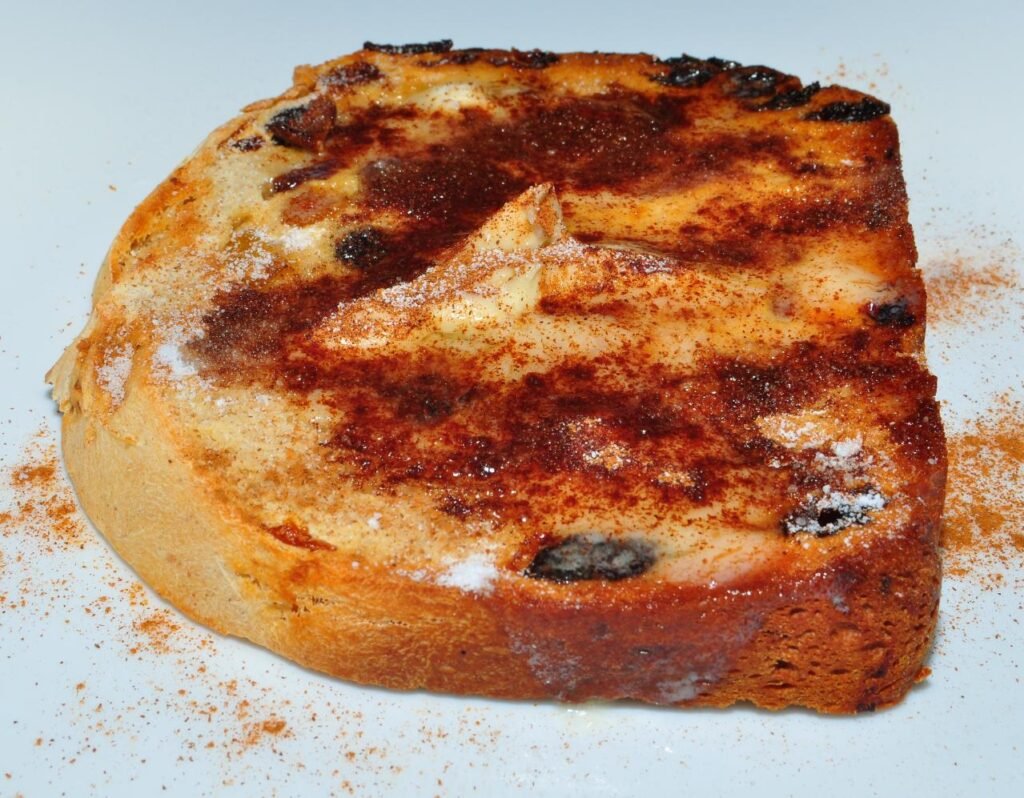
If your dog just snatched a piece of cinnamon toast off the breakfast table, you probably do not need to panic — but do not make it a habit. A small bite of plain cinnamon toast will most likely cause nothing worse than mild stomach upset. Yet cinnamon toast is still a poor treat, and some versions — raisin bread, sugar-free spreads, or toast made with nutmeg — change the situation completely.
Cinnamon Itself: The One Short Summary You Need
For the full story on cinnamon — Ceylon vs Cassia cinnamon, coumarin, and how much cinnamon powder is too much — see our main guide on is cinnamon bad for dogs. In brief: cinnamon in the small amounts on a slice of toast is not classed as toxic to dogs, but large amounts can irritate the mouth and stomach, cause vomiting or diarrhoea, and lower blood sugar. With cinnamon toast, though, the spice is the least of your worries. The bread, butter, sugar, and hidden extras matter more.
What Is Actually on Cinnamon Toast?
Cinnamon toast usually means toasted bread spread with butter and dusted with cinnamon sugar.
Bread. Plain, fully baked white or wholegrain bread is not toxic to dogs, and a small piece is generally fine. It has little nutritional value for dogs, though — mostly refined carbohydrate that adds calories without adding anything your dog needs. Raw bread dough must be kept away from dogs, because yeast dough can expand in the stomach and produce alcohol as it ferments. That applies to unbaked dough, not to a finished slice of toast.
Butter. Butter is not toxic, but it is high in fat. A thin spread on one slice is unlikely to harm a healthy adult dog, but a thick layer, or toast eaten regularly, can upset the stomach and, in sensitive dogs, contribute to pancreatitis risk over time.
Sugar and cinnamon sugar. The cinnamon-sugar coating is the main reason cinnamon toast is a poor choice. Dogs do not need added sugar, and a sugary coating adds empty calories, feeds dental problems, and can upset the stomach in larger amounts. For dogs with diabetes or weight problems, sugary toast is a definite no.
The Hidden-Ingredient Check: Read This Before You Relax
Most cinnamon toast is harmless in a small amount. A few common versions are not. Before you decide your dog is fine, check exactly what kind of bread and spread was involved.
| Hidden ingredient | Why it matters | What to do |
|---|---|---|
| Raisins, currants, or sultanas (raisin bread, fruit loaf) | Grapes and raisins can cause sudden kidney failure in dogs, and there is no known safe amount | Call your vet or a poison helpline immediately, even if your dog looks fine |
| Xylitol / birch sugar (sugar-free spreads, “no sugar added” products) | Xylitol triggers a rapid insulin release in dogs, causing dangerously low blood sugar within 30–60 minutes, and larger amounts can damage the liver | Call your vet or a poison helpline immediately — this is an emergency |
| Nutmeg | Nutmeg contains myristicin, which is toxic to dogs in larger amounts and can cause disorientation, increased heart rate, and seizures | Call your vet, especially if a large amount was eaten |
| Chocolate or cocoa (chocolate bread, chocolate spread) | Chocolate contains theobromine, which dogs cannot process safely | Call your vet and tell them the type and amount of chocolate |
| Macadamia nuts | Macadamia nuts are toxic to dogs and can cause weakness, vomiting, and tremors | Call your vet |
| Onion or garlic bread | Onion and garlic damage dogs’ red blood cells | Call your vet, especially for larger amounts |
If the toast was plain bread with butter and cinnamon sugar only, none of these apply, and the risk is low. If you cannot check the label — a bakery loaf, for example — and your dog ate a large amount, call your vet to be safe. With raisins and xylitol, early treatment matters far more than waiting for symptoms. The same xylitol check applies to spreads — see our is peanut butter good for dogs guide.
Store-Bought vs Homemade Cinnamon Toast
Store-bought cinnamon bread and bakery loaves are harder to judge. They may contain raisins, extra oils, preservatives, or sweeteners, and a vague “mixed spice” blend can include nutmeg alongside cinnamon. If your dog ate shop-bought cinnamon bread and you cannot confirm the ingredients, keep the packaging and call your vet with the brand name in hand. Cinnamon swirl bread and cinnamon rolls are the same, only richer: more sugar, more fat, and often icing on top.
Cinnamon Toast Crunch: A Brief Related Note
Cinnamon Toast Crunch is not cinnamon toast, and it is not a dog snack. The cereal is heavily sweetened, and a few pieces dropped on the floor will most likely cause only mild stomach upset. A whole bowl, or a dog that raids the box, is different: the sugar load alone can cause vomiting and diarrhoea. Keep the box out of reach.
What to Do If Your Dog Eats Cinnamon Toast: Step by Step
- Stay calm and take the toast away. Remove any remaining toast so your dog cannot eat more, and keep the packaging or recipe if you have it.
- Work out what your dog actually ate. Plain bread, butter, and cinnamon sugar? Or raisin bread, a sugar-free spread, nutmeg, or chocolate?
- Estimate how much, and note the time. One small corner is very different from three whole slices. Your vet will ask for your dog’s weight, what was eaten, how much, and when.
- If raisins, xylitol, chocolate, macadamia nuts, or a large amount of nutmeg were involved, call now. Contact your vet, an emergency clinic, or a poison helpline — ASPCA Animal Poison Control (888-426-4435) or Pet Poison Helpline (855-764-7661). Do not wait for symptoms, and do not try to make your dog vomit unless a vet tells you to.
- If it was plain cinnamon toast, watch your dog for 24 hours. Offer fresh water and their normal food. Mild stomach upset often settles on its own, but call your vet if it does not.
- Watch for warning signs, and never induce vomiting. Repeated vomiting, severe or bloody diarrhoea, lethargy, weakness, wobbliness, difficulty breathing, drooling, or loss of appetite all mean a vet visit, even if the toast looked plain. Never make your dog vomit unless a vet or poison helpline tells you to.
Puppies, small dogs, and dogs with diabetes, pancreatitis, or sensitive stomachs deserve a lower threshold for calling: a small dog eats a much larger dose relative to its body weight.
How Much Cinnamon Toast Is Too Much?
There is no safe daily allowance for cinnamon toast, because it is not a food dogs need. A single small bite of plain cinnamon toast, eaten by accident, is low-risk for a healthy adult dog. A whole slice may upset the stomach but is unlikely to poison a medium or large dog. Several slices, or any amount of a raisin or xylitol version, is too much. Keep all treats within the 10% rule: treats should make up no more than 10% of your dog’s daily calories.
Safer Alternatives to Cinnamon Toast
If your dog begs at breakfast, you do not have to give them toast to share the moment:
- A small piece of plain, dry toast. If you must share toast, plain with nothing on it is the safest version.
- Plain cooked pumpkin or sweet potato. Soft, naturally sweet, and far more useful nutritionally than bread.
- Apple slices (no seeds) or banana. Sweet, dog-safe fruit in small amounts, served plain. See our guide to what human foods can dogs eat for more safe ideas.
- A dog biscuit or a carrot stick. Crunchy, satisfying, and made for dogs.
- A tiny sprinkle of cinnamon on dog-safe food, only if your vet agrees. A pinch on plain pumpkin is very different from a cinnamon-sugar slice, but ask your vet first, especially for puppies, small dogs, or dogs with health problems.
The bottom line: do not feed your dog cinnamon toast on purpose. If they steal a plain piece, check the ingredients, watch them for a day, and call your vet if anything on the hidden-ingredient list was involved — or if you are unsure at all.
Frequently Asked Questions
+ Can dogs eat cinnamon toast?
A small bite of plain cinnamon toast is rarely an emergency, but cinnamon toast is not a good treat for dogs. Butter and sugar add fat and empty calories, and some versions contain raisins, xylitol, or nutmeg, which are dangerous. Do not feed it on purpose.
+ What should I do if my dog ate cinnamon toast?
Take the toast away, check whether it contained raisins, xylitol, nutmeg, or chocolate, and note how much your dog ate and when. If any of those ingredients were involved, call your vet or a poison helpline immediately. For plain toast, watch your dog for 24 hours and call your vet if vomiting, diarrhoea, lethargy, or loss of appetite appear. Do not induce vomiting unless a vet tells you to.
+ Is Cinnamon Toast Crunch safe for dogs?
No, Cinnamon Toast Crunch is not a dog snack. A few dropped pieces will most likely cause only mild stomach upset, but the cereal is heavily sweetened and offers dogs nothing useful, and a large amount can cause vomiting and diarrhoea.
+ Can dogs eat cinnamon bread or raisin bread?
Plain cinnamon bread is similar to cinnamon toast: not toxic in a small amount, but sugary and not recommended. Raisin bread is different and dangerous, because grapes and raisins can cause sudden kidney failure in dogs at any amount. Treat raisin bread ingestion as an emergency and call your vet immediately.
+ What is a safer alternative to cinnamon toast for dogs?
A small piece of plain, dry toast with nothing on it is the safest toast option. Better still are plain cooked pumpkin or sweet potato, apple slices without seeds, banana, a dog biscuit, or a carrot stick. Always check with your vet if your dog has diabetes, pancreatitis, or a sensitive stomach.
Sources
- ASPCA — People Foods to Avoid Feeding Your Pets: https://www.aspca.org/pet-care/animal-poison-control/people-foods-avoid-feeding-your-pets
- ASPCA — Xylitol: The Sweetener That Is Not So Sweet for Pets: https://www.aspca.org/news/xylitol-sweetener-not-so-sweet-pets
- PetMD — What Can Dogs NOT Eat?: https://www.petmd.com/dog/nutrition/what-can-dogs-not-eat
- Cornell University College of Veterinary Medicine — Xylitol Toxicities: https://www.vet.cornell.edu/departments-centers-and-institutes/riney-canine-health-center/canine-health-information/xylitol-toxicities
- AKC Reunite / Pet Poison Helpline — Fall Toxins for Your Pet: http://www.akcreunite.org/fallpettoxins/