
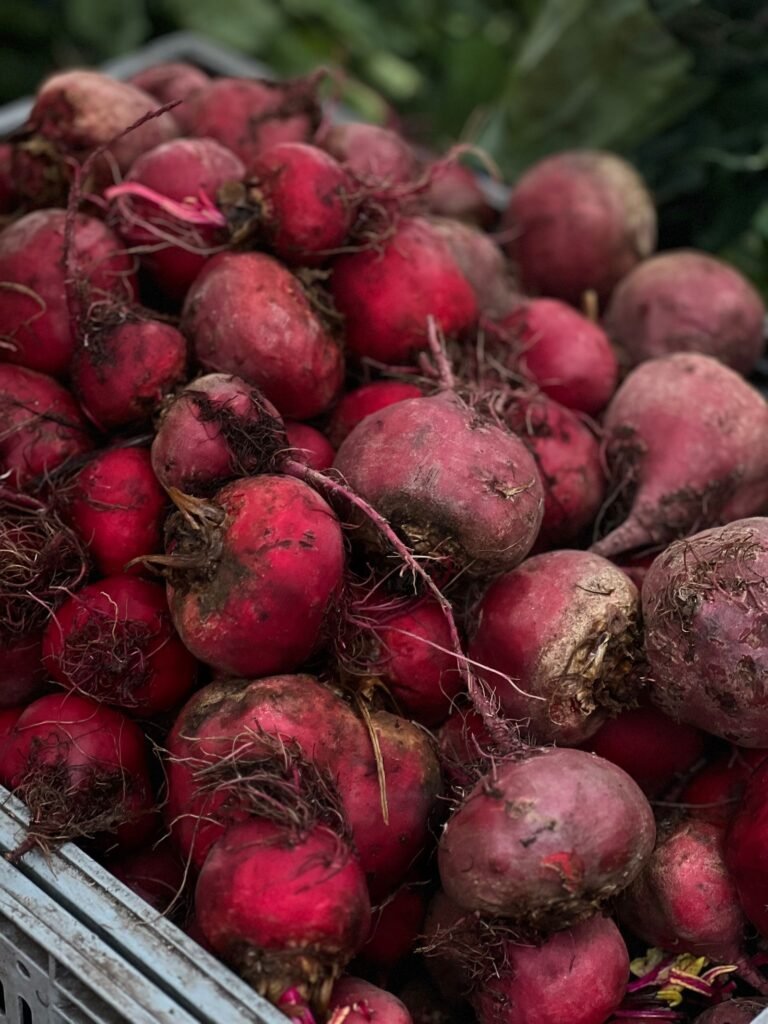
Yes, dogs can eat beets. Plain, fresh beets are not toxic to dogs, and the American Kennel Club says they are safe when served fresh and in moderation. The ASPCA lists beets (Beta vulgaris) as non-toxic to dogs.
But “safe” does not mean “unlimited.” Beets are sugary for a vegetable and high in oxalates, which matter for dogs prone to bladder or kidney stones. Keep them an occasional extra, never a daily staple — and never pickled, canned in brine, or seasoned.
Are Beets Good for Dogs?
Beets offer fiber, vitamin C, folate, potassium, magnesium and manganese, plus betalains — the pigments behind their deep red colour, studied for antioxidant and anti-inflammatory properties.
| Nutrient | What it does for your dog |
|---|---|
| Fiber | Supports regular digestion and healthy gut bacteria |
| Vitamin C | Antioxidant support (dogs also make their own, so this is a bonus) |
| Folate | Supports cell growth and red blood cell production |
| Potassium | Supports muscle and nerve function |
| Manganese | Involved in metabolism and bone health |
| Betalains | Natural antioxidants behind the red colour |
In moderation, beets can support your dog’s skin, coat and digestion. At about 44 calories per 100 grams, a small serving is light — but cooked beets hold about 8 grams of sugar per 100 grams, more than most vegetables dogs eat.
Beet pulp on a kibble label is the pressed-out fiber from sugar beets, not red table beets — it will not tint your dog’s urine pink.
The Risks: Oxalates, Sugar and Choking
Oxalates and urinary stones. Beets are high in oxalic acid, which can contribute to calcium-oxalate bladder and kidney stones and urinary crystals. The AKC warns owners of dogs prone to kidney stones, or with a calcium deficiency condition such as osteoporosis, to check with a vet first. Small breeds most often affected include Miniature Schnauzers, Shih Tzus, Lhasa Apsos, Yorkshire Terriers, Bichon Frises and Chihuahuas. If your dog has ever had a urinary stone or a prescription urinary diet, skip beets unless your vet says otherwise.
Sugar and weight. Beets are higher in natural sugar than most vegetables. A little is harmless, but regular large servings can add weight, and beets are a poor choice for diabetic dogs.
Digestive upset. Beets are an acidic vegetable, and too much at once commonly means gas, bloating or loose stools. Introduce new foods slowly.
Choking. Whole or large chunks of firm raw beet can be a choking hazard, especially for small dogs. Cut beets into bite-sized pieces or grate them.
Allergy. Beet allergy is rare — signs include itchy skin, hives, facial swelling, vomiting or diarrhea. If you notice any of these, stop and consult your vet.
Can Dogs Eat Beets Raw, Cooked, Pickled or Canned?
Cooked beets are the safest option. Boiled or steamed beets are softer, easier to chew and easier to digest. This is the form most vets recommend.
Raw beets are OK in small amounts if peeled and cut into small pieces or grated. Whole raw beets carry a choking risk, and some dogs find them harder on the stomach.
Pickled beets are not safe for dogs. Pickling brine usually contains salt, sugar, vinegar and sometimes onion or garlic — all unsuitable for dogs. Skip them.
Canned beets are usually best avoided. Most sit in salty brine. If you use canned beets, they must be plain, packed in water with no added salt — fresh is still better.
Beet juice is not a good idea — it concentrates the sugar without the fiber. Beet greens are best skipped too — the leafy tops are higher in oxalates than the root. Stick to the bulb.
How to Serve Beets to Your Dog
- Choose fresh beets. Pick firm, unblemished roots; organic is safest.
- Wash and peel. Scrub thoroughly and remove the skin.
- Cook them. Boil or steam until tender, then cool completely.
- Cut small. Dice into bite-sized pieces, or mash them for small dogs.
- Serve plain. No salt, butter, oil, seasoning or dressing — ever.
- Start tiny. Offer a small piece first and watch for 24 hours before serving a normal small amount.
- Keep it occasional. Two to three times a week at most, within the 10% treat rule.
For more safe root vegetables, see our guides on can dogs eat carrots and can dogs eat sweet potatoes — both follow the same plain-and-moderate rules as beets.
How Much Beet Can a Dog Eat?
There is no single official serving size — use this veterinary guidance as a rough guide, and ask your vet if your dog has any health condition.
| Dog size | Suggested serving, 2–3 times a week |
|---|---|
| Extra-small (under 10 lb) | About 1 teaspoon, diced |
| Small (10–25 lb) | About 1 tablespoon |
| Medium (25–50 lb) | About 2 tablespoons |
| Large (50–90 lb) | About 3 tablespoons |
| Giant (over 90 lb) | 4–5 tablespoons |
These amounts come from veterinary guidance quoted by Rover and Petful. Puppies under six months should not get beets, and dogs with kidney disease, bladder stones or diabetes should only have them if their vet approves.
Why Is My Dog’s Pee Red After Eating Beets?
Do not panic. After eating red beets, your dog’s urine, stool or both may turn pink or red. This is called beeturia — the betalain pigment (betacyanin) in beets passing through the body.
The AKC says not to panic if your dog pees dark pink or red for the next 12 to 24 hours; it usually clears within 24 to 48 hours. Golden beets do not cause this. The exception: if the red urine lasts more than two days, or your dog strains to urinate or seems in pain, see your vet.
The Bottom Line
Can dogs eat beets? Yes — plain, fresh beets, cooked and served in small amounts, are a safe, nutritious occasional treat for most healthy dogs. The risks are manageable: oxalates for stone-prone dogs, sugar for diabetic or overweight dogs, and choking from large raw pieces. Skip pickled and canned beets, skip the greens, keep portions small, and check with your vet first if your dog has kidney or bladder problems.
Frequently Asked Questions
+ Are beets safe for dogs?
Yes. Beets are not toxic to dogs — the ASPCA lists them as non-toxic, and the AKC says they are safe when served fresh and in moderation. The main cautions are oxalates for stone-prone dogs, sugar for diabetic dogs, and choking from large raw pieces.
+ Are beets good for dogs?
In small amounts, yes. Beets bring fiber, folate, potassium, manganese and a little vitamin C, at about 44 calories per 100 grams. They are a treat, not a staple — they should never replace your dog’s regular balanced food.
+ Can dogs eat raw beets?
Yes, but cooked is safer. Raw beets are firm and can be a choking hazard, especially for small dogs. If you serve them raw, peel them and cut them into small pieces or grate them.
+ Can dogs eat pickled beets?
No. Pickled beets sit in brine that usually contains salt, sugar, vinegar and sometimes onion or garlic — all unsuitable for dogs. Serve fresh beets only.
+ Why is my dog’s pee red after eating beets?
That is beeturia — the red betalain pigment in beets passing through the body. It turns urine or stool pink or red for 12 to 24 hours and is harmless. If the red colour lasts more than two days, or your dog strains to urinate, see your vet.
+ How much beet can I give my dog?
About 1 teaspoon for extra-small dogs up to 4–5 tablespoons for giant breeds, two to three times a week at most, within the 10% treat rule. Dogs with kidney disease, bladder stones or diabetes should only have beets if their vet approves.
Sources
- American Kennel Club — Can Dogs Eat Beets?: https://www.akc.org/expert-advice/nutrition/can-dogs-eat-beets/
- ASPCA — Beet (Beta vulgaris), non-toxic to dogs: https://www.aspca.org/pet-care/animal-poison-control/toxic-and-non-toxic-plants/beet
- Petful — Can Dogs Eat Beets?: https://www.petful.com/food/can-dogs-eat-beets/
- DogTime — Can Dogs Eat Beets?: https://dogtime.com/dog-health/dog-food-dog-nutrition/95607-can-dogs-eat-beets-safe