
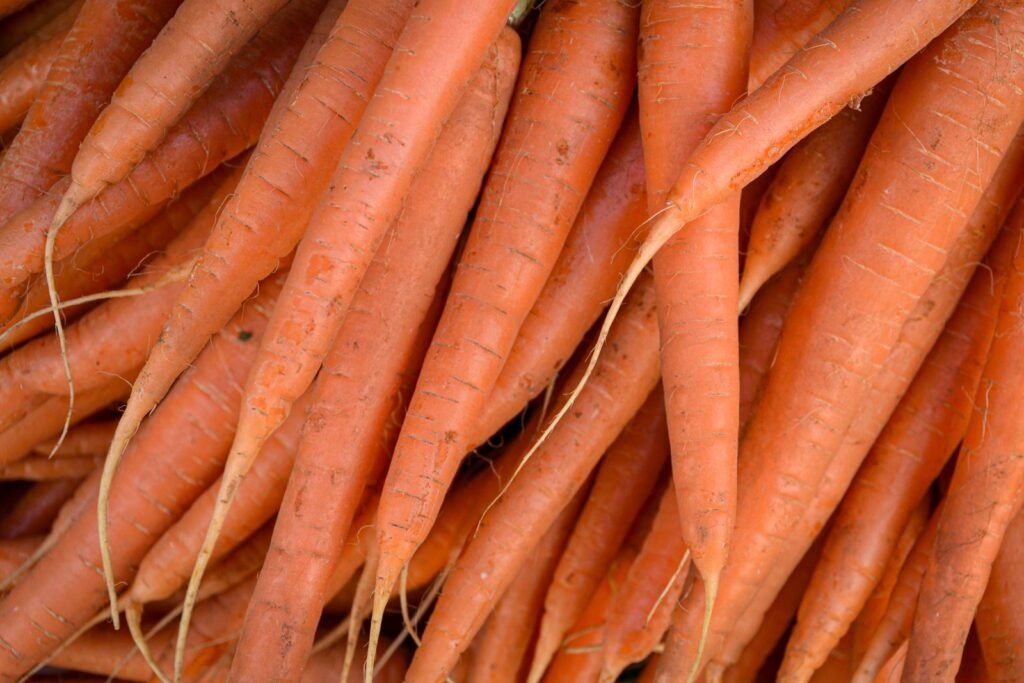
Can dogs eat carrots? Yes — carrots are one of the safest and healthiest treats you can share with your dog. Low in calories and rich in beta-carotene and fibre, they are listed by the American Kennel Club among vegetables dogs can eat.
A medium raw carrot has only about 25 calories, and a baby carrot about 4 — a smart swap for processed biscuits. But size, amount and preparation still matter: a whole carrot handed to a small dog that gulps its food is a choking risk.
Why Carrots Are Good for Dogs
Their headline nutrient is beta-carotene, which the body converts into vitamin A for healthy vision, immune function, and skin and coat health. They also provide vitamin K, vitamin B6, potassium and fibre for normal digestion and firm stools.
Raw vs Cooked Carrots: Which Is Better?
Both raw and cooked carrots are safe, but they suit different dogs. Raw carrots give the crunch, and chewing a firm raw carrot helps scrape some plaque from the tooth surface — a bonus, not a substitute for brushing or professional cleanings. Beets work the same way — see our guide to can dogs eat beets for portions, oxalate risks and whether raw or cooked is better.
Cooked carrots are softer and easier to chew and digest — the better choice for older dogs, dogs with dental problems, and very young puppies — and cooking makes more beta-carotene available. Steam or boil them plain until a fork goes through easily, let them cool, and serve with nothing added: no butter, salt, oil, garlic or onion, which are toxic to dogs. A whole frozen carrot is also a popular supervised teething chew — replace it once chewed down to a swallowable size.
| Form | Best for | Watch out for |
|---|---|---|
| Raw, cut into pieces | Healthy adult dogs, dental crunch | Choking if pieces are too large |
| Cooked (steamed or boiled, plain) | Seniors, puppies, sensitive stomachs | Never add butter, salt or seasonings |
| Frozen, whole | Teething puppies, supervised | Take away once chewed small |
| Baby carrots | Handy pre-sized treats | Slice them — whole ones can choke small dogs |
How Many Carrots Can a Dog Eat?
All treats combined, including carrots, should stay under 10% of daily calories. Use these PetMD and Chewy-based starting points, and scale down for the first taste.
| Dog size | Serving | How often |
|---|---|---|
| Extra-small (2–10 lb) | 1–2 baby carrots, chopped, or ¼ small carrot | 2–3× a week |
| Small (10–25 lb) | 2–4 baby carrots or ½ small carrot | 2–3× a week |
| Medium (25–50 lb) | ½–1 medium carrot | 2–3× a week |
| Large (50–90 lb) | 1 medium carrot | 2–3× a week |
| Giant (over 90 lb) | 1–2 medium carrots | 2–3× a week |
Small daily amounts are fine as long as the 10% rule holds — give less if your dog gets other treats that day. Cut slices about ¼-inch thick and size every piece to your dog’s mouth.
How to Serve Carrots to Your Dog
Follow these steps the first time, and you will know within a day whether carrots agree with your dog.
- Wash thoroughly. Rinse the carrot under cool running water to remove dirt and surface residue. Peeling is optional but removes the most residue.
- Cut to size. Slice into ¼-inch coins or small pieces matched to your dog. Never hand a whole baby carrot to a small dog or a gulper.
- Start small. Offer one or two small pieces only, wait 24 hours, and offer a little more next time if stools and energy stayed normal.
- Serve plain. No dips, dressings, salt, butter, honey or seasonings — carrot cake, glazed carrots and onion- or garlic-cooked carrots are not dog food.
- Supervise every time. Stay with your dog while it eats any hard treat, and take away pieces chewed down to a swallowable size.
If your dog refuses carrots, do not force it — plenty of dogs prefer other vegetables. Our guide on can dogs eat pumpkin covers another orange vegetable that many dogs love, served cooked and plain.
Can Puppies Eat Carrots?
Yes, puppies can eat carrots — one of the best first vegetables to try. Once your puppy is eating solid puppy food, usually from around 8 weeks old, a few tiny pieces of plain carrot are generally fine. Start with grated carrot or one or two pea-sized pieces of soft-cooked carrot, then wait 24 hours and check stools.
For teething puppies (3–6 months), a whole chilled or frozen carrot can soothe sore gums — supervise closely and take it away once it shrinks to a swallowable size.
Risks: Choking, Sugar and Too Much Fibre
Carrots are safe for most dogs, but three risks are worth knowing. The first is choking: whole baby carrots and large chunks can lodge in a small dog’s throat or cause a blockage if swallowed whole. Cutting to size and supervising removes almost all of this risk.
The second is digestive upset: a sudden large serving can cause gas, loose stools or diarrhoea. Introduce carrots gradually, and if stools go soft, stop for a few days and restart with a smaller amount.
The third is sugar. Carrots contain natural sugars, which are fine in moderation — but talk to your vet before making carrots a daily habit for a diabetic or overweight dog. A few dogs are also sensitive to carrots and may vomit or develop loose stools on first exposure, so the 24-hour test above matters. Carrot tops and greens are not listed as toxic by the ASPCA, but offer them only in small amounts, if at all.
If your dog swallows a whole carrot, watch for vomiting, retching, loss of appetite or a swollen belly, and call your vet. Do not try home remedies — if in doubt, consult a vet.
The Bottom Line
Carrots are one of the best treats you can share with your dog: low in calories, rich in beta-carotene and fibre, and safe raw or cooked. Keep pieces small, keep all treats under 10% of daily calories, serve them plain, and supervise — especially with puppies and small breeds. Skip carrot cake, glazed carrots and anything cooked with onion or garlic. Another crunchy, low-calorie option is can dogs eat green beans.
Frequently Asked Questions
+ How many carrots can a dog eat a day?
Keep all treats, including carrots, under 10% of daily calories. As a starting point: extra-small dogs 1–2 baby carrots, medium dogs half to one medium carrot, large dogs one medium carrot, 2–3× a week. Start with less the first time.
+ Can dogs eat raw carrots?
Yes. Raw carrots are safe, and the crunch helps scrape plaque from teeth. Wash them, cut them into small pieces (about ¼-inch slices), and supervise — whole raw carrots can choke small dogs or dogs that gulp food.
+ Can puppies eat carrots?
Yes, once they are eating solid puppy food, usually from around 8 weeks old. Start with one or two tiny pieces of grated or soft-cooked carrot and wait 24 hours. A whole frozen carrot is a good supervised teething chew — take it away once chewed small enough to swallow.
+ Are carrots good for dogs’ teeth?
To an extent, yes. Chewing a crunchy raw carrot helps scrape some plaque off the tooth surface — a helpful bonus, not a substitute for brushing or professional cleanings.
+ Can dogs eat carrot tops and greens?
Carrot tops and greens are not listed as toxic by the ASPCA, so small amounts are generally safe. Offer them only in small quantities, washed, and skip them if your dog has a sensitive stomach.
Sources
- PetMD — Can Dogs Eat Carrots?: https://www.petmd.com/dog/nutrition/can-dogs-eat-carrots
- Chewy — Can Dogs Eat Carrots?: https://www.chewy.com/education/dog/food-and-nutrition/can-dogs-eat-carrots
- Purina UK — Can Dogs Eat Carrots?: https://www.purina.co.uk/articles/dogs/feeding/what-dogs-eat/can-dogs-eat-carrots
- Petco — Can Dogs Eat Carrots? Yes — Here’s How to Serve Them: https://www.petco.com/pet-education/dog/food-nutrition/can-dogs-eat-carrots
- ASPCA — Toxic and Non-Toxic Plants: https://www.aspca.org/pet-care/aspca-poison-control/toxic-and-non-toxic-plants
Pingback: Can Dogs Eat Beets? Benefits, Risks & Safe Serving