
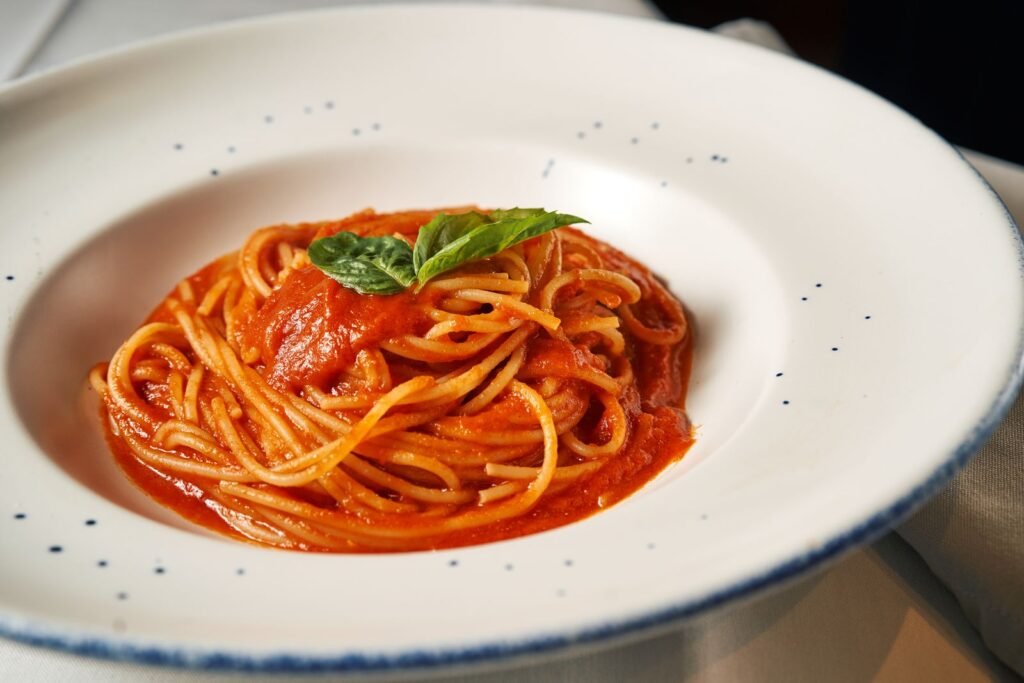
Your dog is staring at your plate of spaghetti, and a spoonful of red sauce is right there at the edge. It looks harmless — it is mostly tomato, after all, and tomatoes are a fruit dogs can eat. So can dogs eat tomato sauce?
The short answer is: usually no. A ripe tomato and a jar of tomato sauce are two very different foods. The tomato itself is rarely the problem. The problem is everything that goes into the sauce — garlic, onion, salt, sugar, chilli and sometimes even xylitol. This guide explains which sauces are the worst, what to do if your dog already ate some, and what to offer instead.
Can Dogs Eat Tomato Sauce? At a Glance
| Question | Short answer |
|---|---|
| Can dogs eat tomato sauce? | No, not as a food — most sauces contain ingredients that are toxic or harmful to dogs |
| Is plain tomato sauce safe? | A tiny lick of plain sauce made only from ripe tomatoes is low risk, but it is still not recommended as a treat |
| What makes sauce dangerous? | Onion and garlic (toxic), salt, sugar, xylitol, chilli and other spices |
| Is a ripe tomato safe? | Yes, in small amounts — the AKC says ripe red tomatoes are non-toxic to dogs as an occasional snack |
| Are green tomatoes, leaves or stems safe? | No — they contain solanine and tomatine, which can poison dogs |
| My dog ate sauce — what now? | Take it away, read the label, call your vet if it contained garlic or onion |
| Safest swap | A small piece of plain ripe tomato, or a dog-safe treat like pumpkin |
The Tomato Is Not the Problem — the Sauce Is
A ripe red tomato is a mild, low-calorie fruit. The American Kennel Club says ripe tomatoes are considered non-toxic to dogs and can be fed in moderation as an occasional snack, and PetMD agrees. Ripe tomatoes offer fibre, vitamin C, vitamin K, potassium and the antioxidant lycopene — which is one reason tomato appears as an ingredient in many commercial dog foods.
But sauce breaks every part of that simple picture. Cooking does not remove garlic or onion. Powdering concentrates them. And a jar hides its ingredients behind a label most people never read. The AKC puts it plainly: the tomato sauce on your pizza or spaghetti likely contains garlic and onions. PetMD is blunter still: skip tomato-based foods, because sauces or soups may contain toxic ingredients.
So when someone asks “can dogs eat tomato sauce”, the honest answer separates the two foods: the tomato is fine in a small amount; the sauce almost never is.
What Is Actually in Tomato Sauce? 5 Risks
1. Onion and garlic — the real danger
Onions and garlic belong to the allium family, and they are toxic to dogs in every form: raw, cooked, powdered or dried. They contain compounds (thiosulfates and N-propyl disulfide) that damage red blood cells, causing a condition called hemolytic anemia — the body destroys its own red blood cells faster than it can replace them.
This is the biggest reason tomato sauce is off-limits. Almost every commercial pasta sauce — marinara, spaghetti sauce, pizza sauce — is built on onion and garlic. Powdered garlic and onion powder are more concentrated than fresh, so even a sauce that lists them far down the label can carry a meaningful dose. The ASPCA Animal Poison Control Center lists onion and garlic as toxic to dogs, and the Pet Poison Helpline warns that symptoms can be delayed, so a dog can look fine on the day it ate the sauce and become ill days later.
Signs of allium toxicity include vomiting, diarrhoea, lethargy, weakness, pale gums, a fast heartbeat and dark or reddish urine. If the sauce your dog ate listed onion, garlic, onion powder or garlic powder, call your vet the same day — do not wait for symptoms.
2. Salt — too much, too easily
A single serving of jarred pasta sauce can contain 300–500 mg of sodium. Dogs need very little salt, and a salty meal can cause excessive thirst, vomiting and diarrhoea. In large amounts, salt can cause sodium ion poisoning, with tremors, seizures or worse. A dog that licks a plate is unlikely to reach a dangerous dose from salt alone, but a small dog that finishes a spilled bowl of sauce is a different story.
3. Sugar and xylitol
Manufacturers add sugar to cut the acidity of tomatoes, and sugar contributes to obesity and dental problems over time. Worse, some “sugar-free” or “low-sugar” sauces use xylitol (also called birch sugar). Xylitol is extremely toxic to dogs: it triggers a rapid release of insulin, which can cause hypoglycaemia and liver failure within hours. Any sauce listing xylitol should be treated as an emergency — call your vet immediately.
4. Chilli and spices
Hot spices, chilli flakes, black pepper and other seasonings irritate a dog’s digestive system. They rarely cause lasting harm in small amounts, but they commonly cause drooling, stomach pain, vomiting or loose stools — and they are one more reason a “spicy” sauce like arrabiata is worse than a plain one.
5. Acidity and green tomato parts
Tomatoes are acidic, and acidity alone can upset a sensitive stomach or trigger acid reflux. And while ripe red tomatoes are safe, the green parts of the tomato plant — leaves, stems and unripe green tomatoes — contain solanine and tomatine. Tomatine poisoning is rare in dogs and usually not fatal, according to the AKC, but small breeds and puppies can be affected by a smaller amount. Keep dogs away from tomato plants in the garden, and never let them eat green tomatoes.
Which Sauces Are Worst? A Quick Verdict Table
Verdicts reflect the usual recipe. Always read the label on your own jar, because recipes vary.
| Sauce | What it usually contains | Verdict for dogs |
|---|---|---|
| Marinara sauce | Garlic, onion, salt, herbs, oil | Do not feed — most recipes include garlic or onion |
| Jarred spaghetti sauce | Garlic, onion, salt, sugar, spices, oil | Do not feed — assume it is seasoned |
| Pizza sauce | Garlic, onion, salt, herbs, sometimes sugar and oil | Do not feed — the pizza around it adds cheese and fatty toppings |
| Ketchup | Sugar, salt, vinegar, seasonings, sometimes onion or garlic powder | Do not feed on purpose — a small lick is rarely an emergency |
| Tomato paste | Concentrated tomato, sometimes salt, sugar or seasonings | Only a tiny smear of a plain product — plain tomato is simpler |
| Salsa | Onion, garlic, chilli, salt, lime | Do not feed |
| Homemade plain sauce | Ripe tomatoes only, if you make it that way | The only sauce worth offering, in a very small amount |
My Dog Ate Tomato Sauce — What Should I Do? 5 Steps
Do not panic. A single lick rarely causes a crisis, but the right response depends on what was in the sauce and how much your dog ate.
- Take the sauce away. Remove the plate, jar or pan so your dog cannot eat more. Note roughly how much was eaten and which brand or recipe it was.
- Read the label. Look for onion, garlic, onion powder, garlic powder, xylitol, and the salt and sugar levels. Photograph the ingredients list — your vet will want to see it.
- Call your vet if it contained garlic or onion. Even if your dog looks fine, call now and tell them the brand, the ingredients and the amount. Red blood cell damage can take days to show, so waiting for symptoms is the wrong move. If you cannot reach your vet, call the ASPCA Animal Poison Control Center on (888) 426-4435.
- Watch for 24 to 48 hours. If the sauce was plain, with no garlic or onion, and only a lick or a spoonful, monitor your dog closely. Call your vet the same day — or an emergency vet if yours is closed — if you see repeated vomiting, diarrhoea that will not settle, loss of appetite, weakness, pale gums or red-coloured urine.
- Do not induce vomiting. Never try to make your dog vomit at home unless your vet specifically tells you to. Tomato acidity can worsen irritation on the way back up, and some situations make vomiting more dangerous, not less.
Puppies, small breeds, senior dogs and dogs with kidney problems are affected by smaller amounts than a healthy large adult, so lower your threshold for calling the vet with them.
Can Dogs Eat Tomatoes Instead? Yes — the Right Way
If your dog loves the taste, skip the sauce and offer the fruit itself. Our guide to can dogs have tomatoes covers this in detail, but the short version is:
- Offer only fully ripe, red tomatoes — never green tomatoes, leaves or stems.
- Remove all green parts and dice the flesh into small pieces.
- Start with a bite-sized portion and watch how your dog reacts.
- Keep it as an occasional treat, not a regular food.
Tomatoes are one of many fruits dogs can enjoy in small amounts — our what fruits can dogs eat guide lists the safe options and the ones to avoid. And if you want a genuinely dog-friendly topper for your dog’s bowl, plain cooked pumpkin is a safer choice than any sauce: fibre-rich, gentle on the stomach and vet-approved in the right amounts.
A Dog-Safe “Tomato Sauce” You Can Make at Home
If you really want to share a tomato moment with your dog, make a separate tiny batch with nothing else in it: ripe tomatoes only, simmered and cooled, with no salt, no garlic, no onion, no sugar, no spices and no oil. Offer no more than a teaspoon for a small dog or a tablespoon for a large dog, once in a while — and only for a healthy adult dog. Puppies, dogs with sensitive stomachs and dogs with kidney issues should skip it entirely. Honestly, plain ripe tomato pieces are simpler and safer than any sauce, homemade or not.
The Bottom Line
Can dogs eat tomato sauce? No — not as a food. The tomato in it is fine, but the sauce is a different food: almost every jar carries garlic, onion, salt, sugar or chilli, and garlic and onion can cause life-threatening anemia. A tiny accidental lick of plain sauce is rarely an emergency, but a bowl of seasoned sauce — especially for a small dog — is a call-your-vet situation. Read the label, watch for delayed symptoms for two days, and when in doubt, call your vet rather than waiting. Your dog will not miss the sauce; a piece of ripe tomato or pumpkin is a far better treat.
Frequently Asked Questions
+ Can dogs eat tomato sauce?
No, dogs should generally not eat tomato sauce. Plain ripe tomatoes are safe in small amounts, but sauce is a different food — almost every jar contains onion, garlic, salt, sugar or chilli. The AKC warns that the tomato sauce on pizza or spaghetti likely contains garlic and onions, and PetMD advises skipping tomato-based foods because sauces may contain toxic ingredients.
+ Can dogs eat spaghetti sauce?
No. Traditional spaghetti sauce is not safe for dogs. It is made from crushed tomatoes plus garlic, onion, salt, sugar and spices — and garlic and onion are toxic to dogs in every form, including powdered. Even a small amount can contribute to hemolytic anemia, and symptoms can be delayed by days.
+ Can dogs eat marinara sauce?
No. Marinara sauce is one of the worst options because most recipes are built on garlic and onion, with salt and oil on top. Do not feed marinara to your dog, even in small amounts, unless you made it yourself from ripe tomatoes only with no seasonings at all.
+ Can dogs eat ketchup?
Not on purpose. Ketchup is a tomato sauce with added sugar, salt, vinegar and seasonings, sometimes including onion or garlic powder. A small lick is rarely an emergency, but ketchup should never be given as a treat — and sugar-free ketchup sweetened with xylitol is extremely toxic and needs an immediate vet call.
+ My dog ate tomato sauce — what should I do?
Take the sauce away, read the label and note how much was eaten. If it contained garlic, onion, onion powder, garlic powder or xylitol, call your vet immediately — even if your dog looks fine, because red blood cell damage can take days to show. If it was plain sauce and only a lick or a spoonful, watch your dog for 24 to 48 hours and call the vet if you see vomiting, diarrhoea, weakness, pale gums or red urine. Never induce vomiting unless your vet tells you to.
+ Can dogs eat tomatoes instead of sauce?
Yes, in small amounts. The AKC says ripe red tomatoes are non-toxic to dogs as an occasional snack. Offer only fully ripe red flesh with all green parts removed, diced small, and start with a bite-sized portion. Never feed green tomatoes, leaves or stems — they contain solanine and tomatine.
Sources
- American Kennel Club — Can Dogs Eat Tomatoes?: https://www.akc.org/expert-advice/nutrition/can-dogs-eat-tomatoes/
- Dogster — Can Dogs Eat Tomato Sauce? Vet-Verified Risks & Safety Tips: https://www.dogster.com/dog-nutrition/can-dogs-eat-tomato-sauce/
- Hepper — Can Dogs Eat Spaghetti Sauce? Vet-Reviewed Health Facts & Safety Advice: https://articles.hepper.com/can-dogs-eat-spaghetti-sauce/
- DogsBread — Can Dogs Eat Tomato Sauce? Verdicts, Labels and What to Do If Your Dog Ate It: https://dogsbread.com/can-dogs-eat-tomato-sauce/
- MasterClass — Can Dogs Eat Tomato Sauce? 3 Risks for Dogs: https://www.masterclass.com/articles/can-dogs-eat-tomato-sauce
- ASPCA — Toxic and Non-Toxic Plants for Dogs: https://www.aspca.org/pet-care/animal-poison-control/toxic-and-non-toxic-plants
- VCA Hospitals — Onion, Garlic, Chive, and Leek Toxicity in Dogs: https://vcahospitals.com/know-your-pet/onion-garlic-chive-and-leek-toxicity-in-dogs
- Pet Poison Helpline — onion and garlic toxicity guidance (symptoms may be delayed): https://www.petpoisonhelpline.com/
Pingback: Can Dogs Have Tomatoes? Ripe vs Green Tomato Safety
Pingback: What Fruits Can Dogs Eat? Safe, Risky & Toxic Fruits Explained