
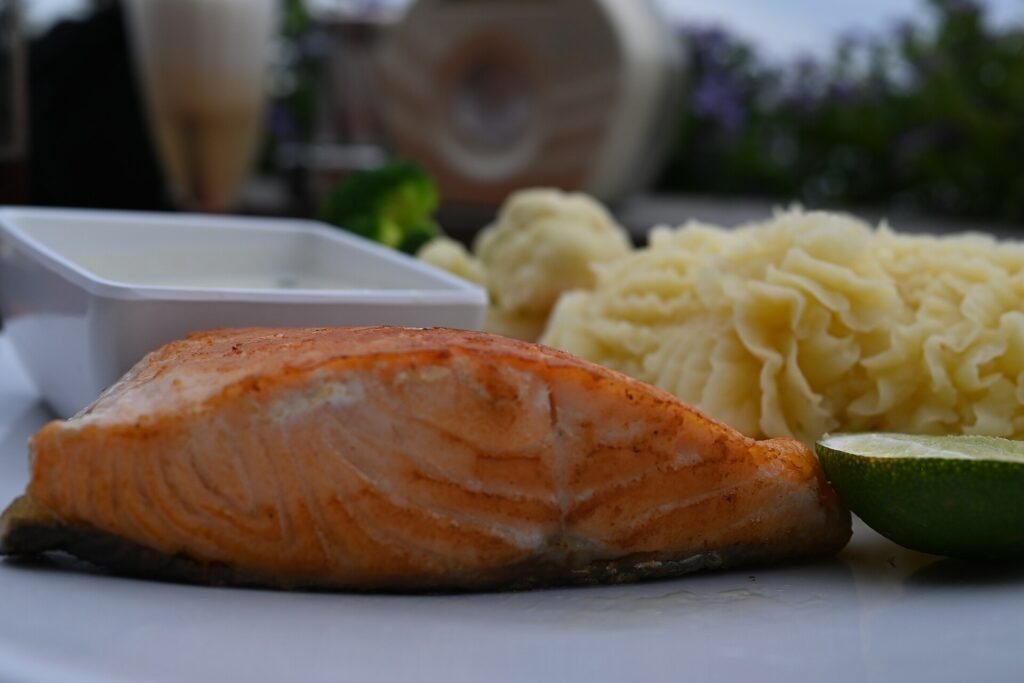
Yes, dogs can have salmon — but only when it is fully cooked, served plain, and completely free of bones. Cooked salmon is one of the most nutritious foods you can share with your dog: it is rich in omega-3 fatty acids, high-quality protein and vitamins that support skin, coat, joints and brain health.
Raw salmon is a different story: it can carry a parasite that causes salmon poisoning disease, a serious illness that can be fatal if untreated.
Is Salmon Good for Dogs?
Cooked salmon is genuinely good for dogs, and it is a common ingredient in quality commercial dog foods. A 100-gram serving of cooked salmon provides about 22 grams of complete protein, along with long-chain omega-3 fatty acids (EPA and DHA) that dogs cannot make efficiently on their own.
The omega-3s are the headline benefit. They help keep skin healthy and coats shiny, calm the inflammation behind itchy skin, and support joint health and heart health. DHA also supports brain and eye development in puppies. Salmon also supplies vitamin D, B vitamins including B12 and niacin, and selenium.
For dogs allergic to common proteins such as chicken or beef, salmon can be a useful alternative. One caution: salmon is a fairly fatty, energy-dense fish — fine in small amounts, but a treat, not a meal replacement. All treats together should stay within about 10% of your dog’s daily calories.
If your dog enjoys other plain cooked proteins, our can dogs eat chicken guide covers another safe option with the same plain-and-boneless rules.
The Raw Salmon Rule: Salmon Poisoning Disease
Never feed your dog raw or undercooked salmon. Raw salmon — especially salmon, trout and steelhead from the Pacific Northwest — can carry a tiny flatworm called Nanophyetus salmincola. Some of those flukes carry a bacterium, Neorickettsia helminthoeca, and a dog that swallows an infected fluke can develop salmon poisoning disease.
This is not a mild stomach upset. Signs usually appear five to seven days after the dog eats the fish, and can include fever, vomiting, diarrhea (sometimes bloody), loss of appetite, weakness and swollen lymph nodes. Without treatment, the disease is fatal in about 90% of dogs, usually within two weeks. With prompt veterinary treatment it is very treatable — which is why acting fast matters so much. Cold-smoked salmon, lox and gravlax are banned too — cold smoking never heats the fish enough to kill the fluke. Thorough cooking destroys both fluke and bacterium.
How to Serve Salmon to Your Dog Safely
Follow these steps every time you share salmon with your dog:
- Cook it all the way through. Bake, steam, grill, poach or boil until the flesh is opaque and flakes easily. The internal temperature should reach at least 145°F (63°C).
- Serve it plain. No salt, butter, oil, garlic, onion, sauces or seasoning. Garlic and onion are toxic to dogs, and rich sauces can upset the stomach.
- Remove every bone. Even small salmon bones can choke a dog or injure the digestive tract. Check the fillet carefully with your fingers after cooking.
- Remove or limit the skin. Plain cooked skin is not toxic, but it is very fatty — a large portion can trigger stomach upset or pancreatitis in predisposed breeds. When in doubt, take it off.
- Start small. Offer a teaspoon for a small dog or a tablespoon for a large dog first, and watch for stomach upset over the next day before making it a regular treat.
How Much Salmon Can Dogs Eat?
Offer salmon as an occasional treat, once or twice a week at most. PetMD’s weekly guidelines for fresh, cooked, boneless salmon:
| Dog size | Weight | Cooked salmon per week |
|---|---|---|
| Extra-small | 2–20 lb | 1–2 oz |
| Small | 21–30 lb | 2–3 oz |
| Medium | 31–50 lb | 3–4 oz |
| Large | 51–90 lb | 4–6 oz |
| Extra-large | Over 90 lb | 6–8 oz |
These are general guidelines, not a prescription. If your dog is overweight, on a prescription diet, or has pancreatitis or another health condition, ask your vet before adding any new food.
Can Dogs Eat Salmon Skin?
Plain, fully cooked salmon skin is safe in small amounts — it is not toxic. The problem is the fat: a large serving can cause vomiting, diarrhea or pancreatitis, especially in breeds prone to the condition. Raw salmon skin carries the same parasite risks as raw flesh, so never serve it.
Can Dogs Eat Canned, Smoked or Raw Salmon?
- Canned salmon in water: acceptable. Choose plain salmon canned in water with no added salt, drain and rinse it before serving. Avoid salmon canned in oil or brine.
- Smoked salmon and lox: no. Cold-smoked salmon is not fully cooked, so the parasite risk remains, and it is very high in salt.
- Raw salmon and sushi: no, never — including sushi-grade fish. Freezing and “sushi-grade” labels do not make raw salmon safe for dogs.
- Salmon in commercial dog food: yes. Salmon in kibble or canned dog food is cooked during processing and is safe by design.
For another safe-food comparison, see our can dogs eat celery guide — a low-calorie crunchy option that pairs well with a protein treat.
What to Do If Your Dog Eats Raw Salmon
If your dog steals raw salmon or eats raw fish of any kind, do not wait for symptoms — call your vet right away and say what your dog ate and how much. Early treatment makes a very big difference. Watch for fever, vomiting, diarrhea, loss of appetite, weakness or swollen lymph nodes over the next one to two weeks. Never try home remedies for a suspected poisoning.
Cats can eat salmon too, but their rules differ slightly — see our can cats eat salmon guide for the feline version.
The Bottom Line
Cooked, plain, boneless salmon is a safe and nutritious treat for most dogs. Raw or undercooked salmon is never safe. Cook it to 145°F, keep it plain, remove the bones, and serve a small portion once or twice a week. When in doubt, ask your vet.
Frequently Asked Questions
+ Can dogs eat raw salmon?
No — never feed your dog raw or undercooked salmon. Raw salmon can carry a fluke infected with the bacterium Neorickettsia helminthoeca, which causes salmon poisoning disease. Untreated, it is fatal in about 90% of dogs.
+ Is cooked salmon safe for dogs?
Yes — as long as it is plain (no salt, oil or seasoning), fully cooked to at least 145°F, and completely deboned. Baked, steamed, grilled or boiled salmon is fine in small amounts once or twice a week.
+ How much salmon can dogs eat?
PetMD’s weekly guide is 1–2 oz for extra-small dogs, 2–3 oz for small dogs, 3–4 oz for medium dogs, 4–6 oz for large dogs, and 6–8 oz for extra-large dogs. Keep all treats within 10% of daily calories.
+ Can dogs eat salmon skin?
Plain cooked salmon skin is not toxic, but it is very fatty, so only small amounts. A large portion can cause stomach upset or pancreatitis in predisposed breeds. Raw salmon skin should never be served.
+ Can dogs eat smoked salmon?
No. Smoked salmon and lox are not fully cooked, so the salmon poisoning parasite risk remains, and they are very high in salt. Canned salmon in water, rinsed, is a safer option.
+ What should I do if my dog eats raw salmon?
Call your vet immediately — do not wait for symptoms. Salmon poisoning disease is very treatable when caught early, but signs can take 5–7 days to appear.
Sources
- PetMD — Can Dogs Eat Salmon?: https://www.petmd.com/dog/nutrition/can-dogs-eat-salmon
- American Kennel Club — Can Dogs Eat Salmon?: https://www.akc.org/expert-advice/nutrition/can-dogs-eat-salmon/
- Merck Veterinary Manual — Salmon Poisoning Disease and Elokomin Fluke Fever in Dogs: https://www.merckvetmanual.com/dog-owners/disorders-affecting-multiple-body-systems-of-dogs/salmon-poisoning-disease-and-elokomin-fluke-fever-in-dogs
- ASPCA — Animal Poison Control: https://www.aspca.org/pet-care/animal-poison-control