
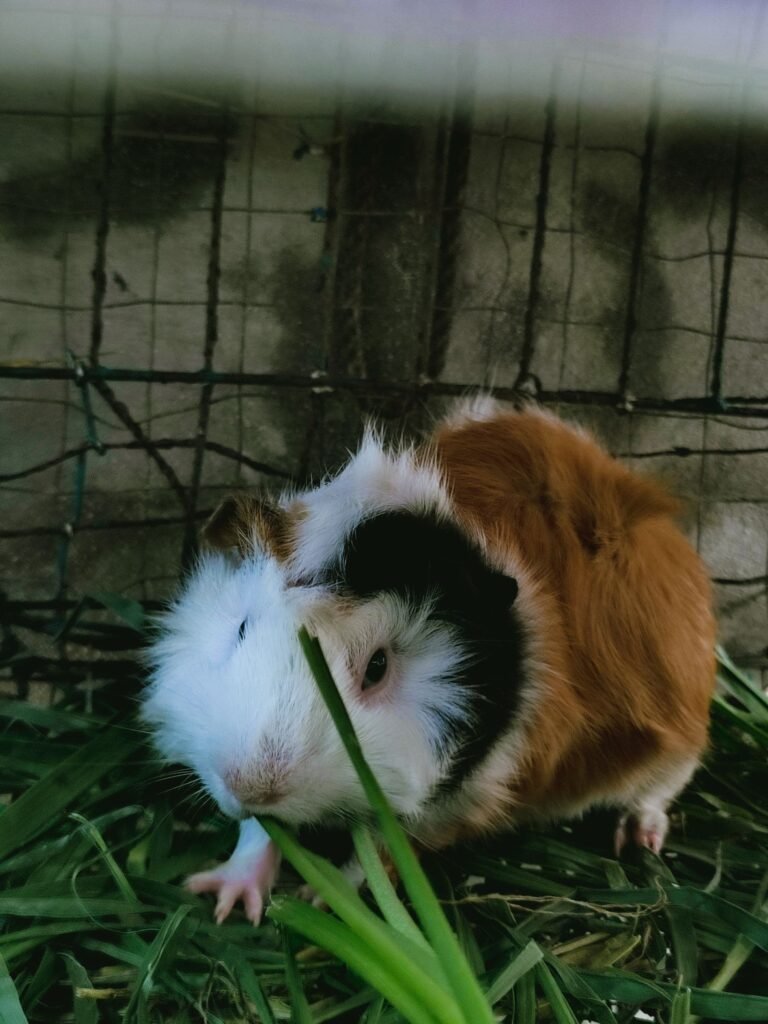
Can guinea pigs eat celery? Yes — in small portions, once or twice a week. Chewy’s vet-reviewed guide says all parts are safe in moderation: one or two bite-size pieces, strings removed, chopped no bigger than your thumbnail. Grapes follow the same occasional-treat rule — see our guide to can guinea pigs eat grapes for portions, seed safety and the sugar limit.
But the sources genuinely disagree about the leaves: some vet-claimed sources say they are unsafe — only stalks — because of the calcium and oxalates and the bladder-stone risk. This article gives both sides honestly, then the conservative rule that keeps your pig safe either way.
Can Guinea Pigs Eat Celery Stalks and Leaves?
It depends on the part. Both sides agree on the essentials: celery is a treat, not a daily food; portions must be small; the strings must come off; too much causes digestive upset and diarrhoea. They disagree only on the leaves.
| Celery part | Chewy (vet-reviewed) | Cautious vet-claimed sources |
|---|---|---|
| Stalks | Safe in moderation | Safe in moderation, small pieces only |
| Leaves | Safe in moderation | Avoid — calcium/stone risk |
| Strings | Remove before feeding | Remove before feeding |
| Frequency | 1–2 times a week | 1–2 times a week, 1-inch piece |
| Pigs with stone history | In moderation | Avoid entirely |
What the Sources Disagree On: Celery Leaves
Celery leaves are the green tops of the plant. Chewy’s vet-reviewed guide treats them like the stalks: safe in moderation, washed and chopped small. Other vet-claimed sources say the leaves should not be fed at all — they concentrate more calcium and oxalates than the stalks, and guinea pigs are unusually prone to bladder stones.
Why does calcium matter? Guinea pigs absorb it very efficiently and excrete the excess in urine. Too much over time — especially with oxalates, compounds in many leafy vegetables — can form bladder crystals that become stones. Stones are painful, often need surgery, and can recur.
So who is right? The evidence is not settled. Celery is not a high-calcium food by USDA measures — about 40 mg of calcium per 100 g, far less than kale or parsley — but the leaves carry more minerals than the pale stalks, and no study has settled the leaves question for guinea pigs. Until it is settled, be conservative: small pieces of stalk only, strings removed, once or twice a week at most, no leaves. If your pig has ever had bladder stones or urinary problems, skip celery altogether and ask your exotic vet first.
How Much Celery Can a Guinea Pig Eat?
Portion size is where most owners go wrong: a pig will happily eat far more celery than is good for it. Offer 1–2 bite-size pieces, no bigger than your thumbnail, once or twice a week at most, never daily. For a first taste, offer one small piece and watch the droppings for 24 hours. The cautious sources advise waiting until six months, and pigs with a stone history should not get celery at all.
Vegetables should stay a small part of the diet. Unlimited grass hay should make up the great majority of what your pig eats — it wears the teeth down and keeps the gut moving — with about a cup of fresh vegetables a day and a few pellets. Celery fits inside that cup as an occasional extra. Our how to take care of a guinea pig guide covers the full diet, hay and housing for a first cage.
How to Serve Celery Safely
Serving celery right takes two minutes: wash the stalk under running water and peel off damaged layers; pull the long strings off the back — guinea pigs can choke on them; chop into thumbnail-size pieces; offer one piece first and watch for soft droppings over the next day; serve raw and plain, never cooked, salted or dressed; and remove leftovers after a few hours so they do not wilt and grow bacteria.
Is Celery Good for Guinea Pigs?
Celery’s benefits are real but modest: about 95% water, around 16 calories per 100 g, with fibre and crunch that help wear down ever-growing teeth. Per 100 g of raw celery (USDA figures): water ~95 g, fibre ~1.6 g, vitamin C ~3 mg, calcium ~40 mg, potassium ~260 mg.
The weak point is vitamin C. Guinea pigs cannot make their own, and they need roughly 10–30 mg per kilogram of body weight every day — without it they can develop scurvy. Celery’s 3 mg per 100 g barely helps, so it must never be your pig’s vitamin C source. Bell pepper is the classic choice: rich in vitamin C, low in calcium, and safe daily as part of the vegetable cup. Think of celery as a crunchy, hydrating extra — not a health food. Guinea pigs live 5 to 7 years on average; our guinea pig lifespan guide covers the care that gets them there.
Risks of Feeding Celery to Guinea Pigs
Celery is safe in small amounts, but the risks are real when portions creep up. Too much, or any new vegetable introduced too fast, can upset a sensitive gut — soft droppings or diarrhoea mean the portion was too big or too frequent. Its calcium and oxalates are linked to bladder stones when fed in excess, which is why the 1–2 times a week limit matters and pigs with a stone history should avoid it. The long fibres can catch in a small throat, so remove the strings and chop small. And celery is mostly water, so a pig that fills up on it eats less hay — slower tooth wear and a slower gut.
If your pig stops eating, passes very soft or no droppings, strains to urinate, or shows blood in the urine after a new food, stop the food and consult an exotic vet promptly; do not diagnose or treat at home.
What Vegetables Can Guinea Pigs Eat Daily?
Celery is a once-or-twice-a-week treat; the daily vegetable cup instead holds bell pepper (the best vitamin C source), romaine lettuce, cucumber, zucchini, cilantro and green beans. Rotate two or three each day, about a cup in total. Parsley, spinach, kale and celery are occasional only, for their calcium or oxalates. Never offer potatoes, onions, garlic, iceberg lettuce, or human snack food. Our can guinea pigs eat watermelon rind guide covers another occasional treat with its own portion rules.
Can Baby Guinea Pigs Eat Celery?
Pups are weaned at around three weeks and eat the same hay, pellets and vegetables as adults from then on, but introduce new foods slowly, one at a time, in tiny amounts, to see how the pup’s gut reacts. The cautious sources advise waiting until six months for celery, because young pigs are still developing and the calcium question matters more for them. There is no settled rule here either, so wait and ask your exotic vet. Never offer celery to a nursing pup, and never let any vegetable replace the hay and pellets a growing pup needs.
Frequently Asked Questions
+ Can guinea pigs eat celery leaves?
Sources disagree. Chewy’s vet-reviewed guide says the leaves are safe in moderation; other vet-claimed sources say avoid them — more calcium and oxalates, higher bladder-stone risk. The conservative rule: stalk pieces only, no leaves.
+ How much celery can a guinea pig eat?
One to two thumbnail-size pieces, once or twice a week at most. Remove the strings, wash and chop the stalk. Never feed celery daily.
+ Is celery bad for guinea pigs?
No — not in small, occasional portions. But too much can cause digestive upset and diarrhoea, and its calcium and oxalates can feed bladder stones if offered often. It is a treat, not a daily food.
+ What vegetables can guinea pigs eat daily?
Bell pepper, romaine lettuce, cucumber, zucchini, cilantro and green beans — about a cup a day, on top of unlimited hay. Bell pepper is the best daily vitamin C source; guinea pigs cannot make their own.
+ Can baby guinea pigs eat celery?
Pups are weaned at around three weeks and eat adult foods from then on, but introduce new vegetables slowly, in tiny amounts. Cautious sources advise waiting until six months for celery — ask your exotic vet first.
Sources
- Small Pet Select — Can Guinea Pigs Eat Celery?: https://smallpetselect.com/can-guinea-pigs-eat-celery/
- Guinea Pig Tube — Can Guinea Pigs Eat Celery? (Benefits, Risks, Serving Size & More): https://www.guineapigtube.com/can-guinea-pigs-eat-celery/
- Pet Food Guide — Can Guinea Pigs Eat Celery?: https://petfood.guide/can-guinea-pigs-eat-celery/