
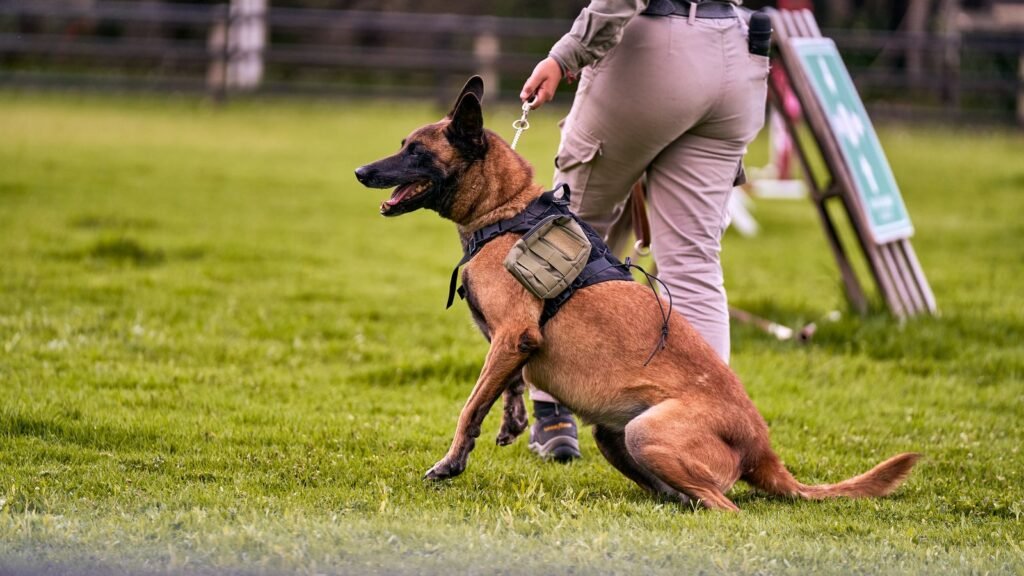
The Belgian Malinois is one of the smartest, fastest-learning dogs on the planet — and one of the most demanding. The American Kennel Club rates the breed 5 out of 5 for trainability, the top score, which means a Malinois can learn in days what takes other breeds weeks. The catch is that the same brain needs a job every single day. Without training, structure and an outlet for all that drive, a bored Malinois will invent its own work — and you will not like its choice of projects.
So how do you train a Belgian Malinois? Start the day your puppy comes home, usually at around 8 weeks old. Keep sessions short and positive, use food or toy rewards, socialize heavily in the first few months, and teach a clear set of rules the whole household follows. This guide walks you through it step by step, in the order that works best for beginners.
Dog Training for Belgian Malinois at a Glance
| Fact | Detail |
|---|---|
| Height | 22–26 inches (males 24–26 in, females 22–24 in) |
| Weight | 40–80 pounds (males 60–80 lb, females 40–60 lb) |
| Lifespan | 14–16 years |
| AKC trainability rating | 5 out of 5 — the top score |
| AKC energy rating | 4 out of 5 — “daily walks are not enough” |
| Group | Herding Group (AKC recognized the breed in 1959) |
| When to start training | Day one at home, from about 8 weeks old |
| Session length | 5–10 minutes for puppies, up to 30–60 minutes for adults |
| Best method | Positive reinforcement — treats, toys, praise and play |
| Daily exercise needed | At least 2 hours of physical exercise plus mental work |
Why Training a Malinois Is Different
A Malinois is not a Labrador with a fancier coat. The breed was developed in Belgium as a herding and guarding dog, and today it is the dog of choice for police and military units around the world — a Malinois named Cairo served with the Navy SEALs in the 2011 operation that captured Osama bin Laden. That working heritage is still in every pet Malinois: intense focus, a powerful bite drive, lightning reactions and a deep need to work alongside a person.
Three things make training this breed different from training an average family dog:
- They learn fast — including bad habits. A Malinois that learns jumping on visitors gets a reaction will repeat it tomorrow, better. Every interaction is training, whether you planned it or not.
- They need a job, not just a walk. The AKC warns that “daily walks are not enough” for this breed. Obedience drills, scent games, tug with rules and dog sports are not extras — they are how a Malinois stays balanced.
- They are sensitive as well as tough. Trainers consistently describe Malinois as surprisingly handler-sensitive. Harsh, unfair corrections can damage trust or trigger defensive behaviour. Clear, fair and consistent beats loud and forceful every time.
None of this means a beginner cannot succeed. It means a beginner needs a plan, patience and honest self-assessment about the time available — most experienced owners and trainers put it at two to three hours a day of exercise, training and mental stimulation combined.
Step 1: Start on Day One
Training does not begin at six months, or when problems appear — it begins the moment your Malinois puppy walks through the door. At 8 weeks old a puppy is a baby, but it is already learning: where to sleep, what earns a reward, which behaviours get attention. Keep it gentle and brief. Five minutes before breakfast and five before dinner is a real start, according to the AKC.
Set the ground rules from the first day and keep them identical for everyone in the house: where the puppy sleeps, whether it is allowed on the sofa, what “no” means, and where it goes to the toilet. A Malinois that gets a different answer from each family member gets confused, and a confused Malinois makes its own rules. Our pad training guide for puppies covers the house-training routine that pairs well with this early stage.
Step 2: Socialize Early and Thoroughly
Socialization is the single most important training job in the first months. Between roughly 4 and 14 weeks old — some experts extend the window to 18 weeks — a puppy goes through a critical socialization period. What it meets calmly during this window becomes normal for life; what it never meets can become something to fear or chase later.
Expose your puppy, in short positive sessions, to many different people of all ages, friendly vaccinated dogs, traffic sounds, bicycles, umbrellas, vet clinics and busy streets. Carry a young puppy in public places before its vaccinations are complete rather than letting it walk on the ground. Enrol in a puppy kindergarten class — the American Belgian Malinois Club recommends one, and the AKC calls early socialization and puppy classes a necessity for this breed. Malinois can be wary of strangers and territorial towards other animals, and early, extensive socialization is what keeps those instincts in check.
Step 3: Use Positive Reinforcement and a Marker
Malinois respond best to reward-based training: a treat, a favourite toy or a game the instant they do the right thing. Pair every reward with a clear marker — a clicker, or a consistent word such as “Yes!” — so your dog knows exactly which behaviour earned the pay-off. This precision matters because a Malinois learns so fast that a reward delivered a second late can mark the wrong behaviour entirely.
Find what your dog will work for. Most Malinois are strongly food-motivated, toy-motivated, or both. Use small, high-value treats for training and save ordinary kibble for meals. Then gradually mix in praise and play so the dog does not become dependent on food alone. Never use fear or pain to train a Malinois: it erodes trust, and a fearful high-drive dog is a dangerous combination.
Step 4: Teach the Core Commands First
Do not try to teach everything at once. Master these seven cues, one at a time, in a quiet room before adding distractions:
- Name recognition. Say your puppy’s name in a happy voice. The moment it looks at you, reward it. The name should mean “look at me, something good is coming.”
- Sit. Hold a treat close to the nose, move it slowly back over the head, and say “sit” as the bottom touches the ground. Reward immediately.
- Down. From a sit, lure the treat down to the floor between the front paws. A calm “down” is the foundation of the off-switch you will need later.
- Stay. Ask for a sit, hold up a flat palm, wait one second, then reward. Build duration and distance a little at a time.
- Come. Call your puppy often, just to hand over a treat — never only to end play or give a bath. Practice in a fenced area, jogging away and praising the follow.
- Heel / loose-leash walking. Reward every step the leash stays slack. A Malinois that pulls as a puppy becomes a very strong puller as an adult.
- Place. Teach your dog to go to a mat and settle there. Start by rewarding one paw on the mat, then all four, then add a release word and a down. The mat becomes the place where calm pays off.
Keep puppy sessions to 5–10 minutes, several times a day. An adult Malinois can handle sessions of 30 minutes to an hour, but short, varied and fun beats long and repetitive — this breed gets bored of drilling and will start anticipating commands and freelancing if sessions drag on.
Step 5: Give the Drive a Job
A Malinois with nothing to do is a demolition project waiting to happen. Give the drive a legal outlet every day:
- Tug with rules. Tug is a perfect Malinois game, but it needs rules: teeth never touch skin (mouth on your hand ends the game), the dog drops the toy when asked, and it waits for “take it” before grabbing. Play in bursts of 15 seconds to a minute.
- Scent work. Hide treats or a favourite toy and let your dog find them. Scent games tire a Malinois out faster than a long walk, and they build confidence.
- An off-switch. Malinois need to be taught to rest. Crate training gives your dog a safe den, and the “place” cue from Step 4 gives it a job called doing nothing. If your puppy struggles to settle at night, our guide to puppy crying at night explains the routine that helps most young dogs sleep through.
- A sport or class. Obedience, agility, rally, tracking or a breed club working group all count. A weekly class also gives you a trainer’s eye on your technique.
Step 6: Add Distractions Gradually
Once a cue works in your living room, it does not yet work in the real world. Practice each skill in slightly harder places: the garden, a quiet street, then a busier park. Add one distraction at a time — another person, a passing dog, a bicycle — and reward your dog for staying focused on you. If your Malinois fails, you moved too fast: go back a step, make it easier, and build up again. Focus and engagement are skills in themselves, and for this breed they matter as much as any command.
Step 7: Manage the Classic Malinois Problems
- Biting and mouthing (“the Maligator”). Malinois puppies are famously mouthy — Purina notes they are not nicknamed “Maligators” for nothing. Herding breeds nip heels by instinct. Never punish it with your hands; redirect to a toy or a tug game, and end play the moment teeth touch skin. If biting escalates or continues past adolescence, consult a vet or a certified professional dog trainer.
- Chasing. The high prey drive means a strong interest in moving objects — children, cars, cats and other animals. Teach a solid recall and “leave it” early, and manage the environment with fences and a leash until those cues are reliable.
- Barking. Malinois are vocal and will bark to alert you — and sometimes just to hear themselves. Teach a “quiet” cue by rewarding silence, and make sure the dog is getting enough exercise first: much problem barking is simply an under-exercised dog. Our guide to dog barking at night covers the nighttime version of this problem.
- Adolescent regression. Expect training to wobble between about 6 and 18 months. Your once-perfect puppy may suddenly forget its recall. This is normal. Stay consistent, keep sessions fun, and do not assume training is finished just because the puppy phase is over.
Common Mistakes to Avoid
| Mistake | Why it backfires | Do this instead |
|---|---|---|
| Waiting until 6 months to start | Bad habits are already set | Start at 8 weeks, on day one |
| One long session a day | Puppy loses focus; adult gets bored | Several 5–10 minute sessions |
| Punishing mistakes harshly | Damages trust; risks defensive behaviour | Reward the right behaviour; redirect the wrong one |
| Skipping socialization | Fear and reactivity towards strangers and dogs | Socialize heavily at 4–14 weeks, keep going after |
| Exercise without training | A fit Malinois with no manners is harder to live with | Pair physical exercise with obedience and mental work |
| Different rules per person | Confuses the dog | One set of rules, same words, whole household |
When to Get Professional Help
Book a professional trainer — ideally one experienced with herding or working breeds — if your Malinois shows persistent aggression, fear that is getting worse rather than better, resource guarding, or biting that does not improve with redirection. Puppy classes are worth it for almost every Malinois owner, and a good trainer will teach you as much as they teach the dog. If behaviour changes suddenly, or aggression appears out of nowhere, see your vet first: pain or illness can drive behaviour changes, and a vet can rule out medical causes before training begins.
The Bottom Line
Dog training for a Belgian Malinois is not a six-week course — it is a lifestyle. Start at 8 weeks, socialize hard in the first months, keep sessions short and reward-based, teach the seven core cues, and give your dog a real job every day. The breed will repay the effort like few others can: a Malinois that is trained, exercised and mentally satisfied is loyal, focused and an extraordinary partner. But be honest with yourself first. If you cannot give this dog two to three hours a day and the structure it needs, it is kinder to choose a different breed — and if you can, there is no smarter dog to train.
Frequently Asked Questions
+ Are Belgian Malinois easy to train?
Yes, in the sense that they learn extremely fast — the AKC rates the breed 5 out of 5 for trainability, and a Malinois can learn in days what takes other breeds weeks. But they are demanding to train: they need consistent, daily, reward-based training, heavy socialization and a real job, or their intelligence turns into destructive behaviour.
+ At what age should I start training a Belgian Malinois?
Start the day your puppy comes home, usually at about 8 weeks old. Keep early sessions gentle and brief — around five minutes — and focus on name recognition, house rules, socialization and simple cues such as sit. The AKC says training can start as soon as the puppy comes home.
+ Are Belgian Malinois good for first-time owners?
Generally no. The AKC, the breed club and most professional trainers say the Malinois is not a good choice for first-time owners because of its extreme energy, drive and need for constant training. Some first-timers do succeed, but they almost always research extensively, work with a professional trainer and commit two to three hours a day to the dog.
+ How long should training sessions be for a Belgian Malinois?
For puppies, keep sessions to 5–10 minutes, several times a day. For adult dogs, you can build up to 30 minutes to an hour per session. Short, varied and fun beats long and repetitive — Malinois get bored of drilling and start anticipating commands.
+ How much exercise does a Belgian Malinois need?
At least two hours a day combining hard physical exercise with real mental work — obedience, scent work, tug, agility or a dog sport. The AKC says “daily walks are not enough” for this breed. Without that outlet, a Malinois will find its own work, usually destroying things or patrolling the house.
+ Why does my Belgian Malinois bite so much?
Malinois puppies are famously mouthy — they are even nicknamed “Maligators” — because herding breeds nip by instinct and this breed has a very strong bite drive. Redirect the mouthing to a toy or a tug game with clear rules, and end play the moment teeth touch skin. If biting escalates or continues past adolescence, consult a vet or a certified professional dog trainer.
+ Can I train a Belgian Malinois myself, or do I need a professional trainer?
You can do the daily training yourself, and most owners should — but a professional trainer experienced with working breeds is strongly recommended, especially for first-time Malinois owners. Puppy classes and a trainer’s guidance on technique make a real difference, and you should get professional help promptly if you see persistent aggression, worsening fear or resource guarding.
Sources
- American Kennel Club — Is the Belgian Malinois the Right Dog Breed for You?: https://www.akc.org/expert-advice/dog-breeds/belgian-malinois-right-for-you/
- American Kennel Club — Belgian Malinois breed page: https://www.akc.org/dog-breeds/belgian-malinois/
- PetMD — Belgian Malinois: https://www.petmd.com/dog/breeds/belgian-malinois
- WikiHow — How to Train a Belgian Malinois: 12 Steps: https://www.wikihow.com/Train-a-Belgian-Malinois
- Hepper — How To Train A Belgian Malinois: 10 Expert Tips: https://articles.hepper.com/how-to-train-belgian-malinois/
- Dogster — How to Train Belgian Malinois: 11 Vet-Approved Tips: https://www.dogster.com/dog-training/how-to-train-belgian-malinois/
- Free Reign K9 — Dog Training for Belgian Malinois: https://www.freereignk9llc.com/dog-adventure-journal/dog-training-for-belgian-malinois
- SpiritDog Training — Belgian Malinois: Size, Temperament, Exercise and Training: https://spiritdogtraining.com/breeds/belgian-malinois/
- American Belgian Malinois Club: https://www.malinoisclub.com/
Pingback: Why Does My Dog Bark at Night? Causes & Fixes