
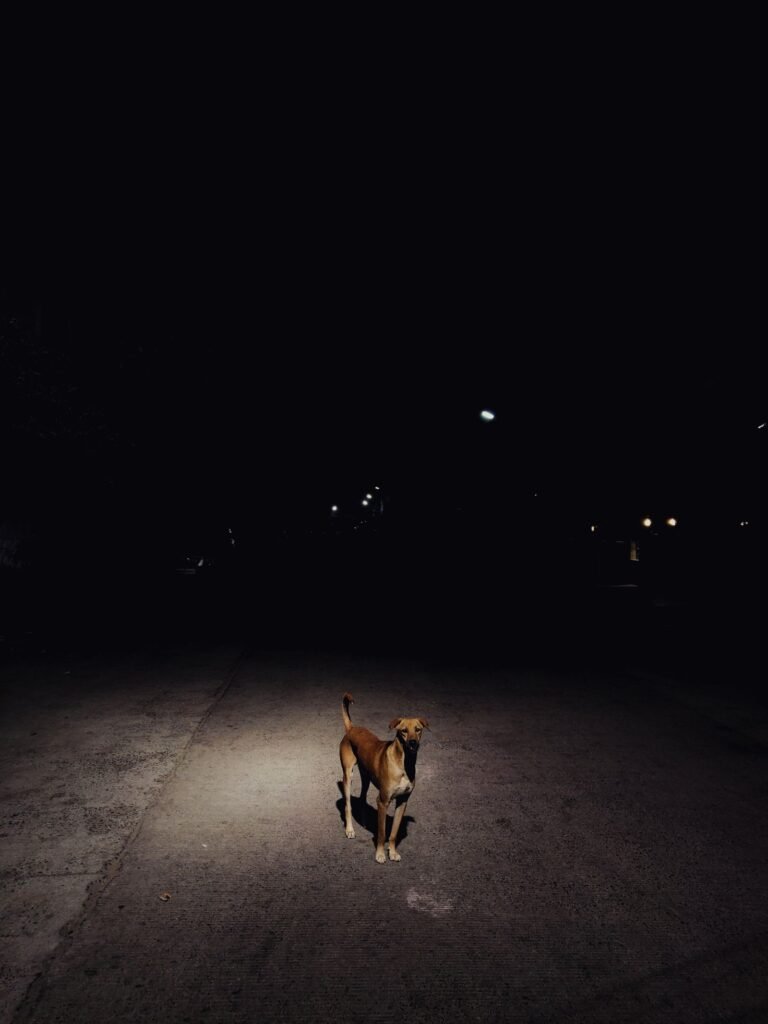
A dog barking at night is one of the most common behaviour problems owners face — and one of the most fixable once you know why. Night barking is almost never random: your dog is reacting to a sound you cannot hear, an unmet need, loneliness, or pain. Find the cause first, because a bored dog, an anxious dog and a dog in pain each need a completely different solution.
Why Does My Dog Bark at Night?
Outside triggers. Dogs hear and smell far better than we do, and see in low light far better than us. A fox, a cat or a car door can set them off even when you hear nothing.
Boredom and under-exercise. A dog that spent the day alone with nothing to do has energy left over at night, and barking becomes something to do. High-drive breeds feel this most: our guide to dog training for Belgian Malinois explains how structured daily training and a real job keep an energetic dog quiet at night.
Loneliness and separation anxiety. Dogs are pack animals, and being left alone in another room at night can feel like being abandoned. Barking here is distress, not misbehaviour.
Toilet, hunger or thirst. A dog that needs to go out will bark to tell you. Puppies have small bladders and genuinely cannot hold it all night, and older dogs may need a late toilet break too.
Discomfort or pain. This is the cause owners most often miss. Joint pain, a urinary infection, digestive upset or a cough can all keep a dog awake. A dog that coughs or reverse-sneezes through the night may have an irritation or infection, not a behaviour problem — see our guide on dog reverse coughing and sneezing. If the barking started suddenly, suspect pain or illness first.
Senior dogs and cognitive decline. Older dogs are the most likely to start barking at night out of nowhere. Joint pain makes it hard to settle, failing sight or hearing makes the dark confusing, and canine cognitive dysfunction — the dog version of dementia — often shows up first as night waking.
Find the Cause First: A Quick Diagnosis
The pattern usually points straight at the cause:
| What you notice | Most likely cause | Start with |
|---|---|---|
| Barking started suddenly | Pain, illness, or a new trigger | Vet check first |
| Senior dog, night waking, pacing, confusion | Joint pain or cognitive dysfunction | Vet check first |
| Young dog, barks nightly | Boredom or under-exercise | More exercise + routine |
| Barks at windows/doors, stops when you check | Outside triggers | Block the view, white noise |
| Barks when left alone | Loneliness or separation anxiety | Closer sleeping spot, trainer |
| Barks once, settles after a toilet break | Needs to go out | Final toilet break before bed |
| Puppy crying in the first weeks | New home, loneliness, small bladder | See our guide on puppy crying at night |
If two rows fit, treat the medical one first.
What NOT to Do: Punishment and Anti-Bark Collars
Do not punish night barking, and do not reach for an anti-bark collar. Scolding may stop the noise for a minute, but it teaches your dog nothing and adds fear to an already anxious or pained dog. Anti-bark collars (shock, citronella spray and ultrasonic) are worse: sources agree they increase fear and anxiety and can make the problem worse. The ASPCA warns never to punish barking that comes from fear or anxiety.
Ignoring the barking is also not a cure-all. It works only for purely attention-seeking barking — your dog has learned that barking brings you into the room. It does not work for pain, fear, anxiety or a full bladder.
How to Stop Dog Barking at Night
Work through these fixes in order — most dogs improve within a week or two.
1. Vet check for sudden or persistent barking. If the barking is new, or your dog is a senior, see a vet before you start training. Ask the vet to check for joint pain, urinary problems, digestive upset and cognitive decline.
2. Final toilet break and fresh water before bed. Take your dog out last thing at night, every night, at the same time. Puppies under five months old may still need a middle-of-the-night break — set an alarm.
3. A quiet, dark sleeping area. Bring your dog indoors at night, block the view of the street with blinds or curtains, and give your dog a comfortable bed in a warm, draft-free spot. Dogs that scratch and circle before settling are usually just getting comfortable — see our guide on why dogs scratch at their beds.
4. White noise or a fan to mask triggers. A white noise machine, a fan or soft classical music covers the small sounds — a neighbour’s door, a cat on the fence — that set your dog off.
5. Tire your dog out during the day. A long walk, play and mental stimulation (a puzzle feeder, a training session, a sniffy walk) are the cheapest cure for boredom barking. A tired dog sleeps.
6. A calm bedtime routine, and reward quiet. The same steps at the same time every evening teach your dog that night means sleep. Reward quiet, not barking: praise and a small treat when your dog settles. Teach a “quiet” cue in the daytime first — let your dog bark a few times, calmly say “Quiet,” and reward the moment it pauses.
A Calm Bedtime Routine (Step by Step)
Same steps, same time, every evening:
- Evening walk and play. Your dog’s longest walk of the day in the early evening, plus 10–15 minutes of play or a training game.
- Dinner at a fixed time. Feed at least two hours before bed so your dog has time to digest and toilet.
- Final toilet break. Take your dog out last thing, at the same time every night, and wait until it has actually gone.
- Fresh water and a comfortable bed. Check the water bowl; make sure the sleeping spot is warm, dark and quiet.
- Dim the lights and wind down. Ten minutes of gentle stroking, then lights out.
- White noise on. Switch on the fan or white noise machine as you leave the room.
- If your dog barks, wait before responding. If you have ruled out pain, toilet needs and anxiety, wait for a pause before going in.
Should I Let My Dog Sleep in the Bedroom?
For many owners this is the simplest fix. Letting your dog sleep in your bedroom — on its own bed, or in a crate nearby — often stops loneliness barking the very first night. It does not fix pain or outside triggers — but if loneliness is the cause, closeness is the cure.
When to Get Professional Help
If the barking continues after two weeks, or your dog shows signs of distress — pacing, panting, trembling or panic when left alone — consult your vet first, then a qualified dog trainer or veterinary behaviourist.
Frequently Asked Questions
+ Why does my dog bark at night?
Dogs bark at night because of outside triggers they can hear or smell (wildlife, other dogs, sounds you miss), boredom or under-exercise, loneliness or separation anxiety, a need to toilet, or discomfort and pain.
+ How do I stop my dog barking at night?
Rule out medical causes with a vet visit first, especially if the barking is sudden. Then give a final toilet break before bed, make the sleeping area quiet and dark, use white noise, tire your dog out during the day, and follow the same calm bedtime routine every evening.
+ Why is my old dog barking at night all of a sudden?
Sudden night barking in a senior dog is most often pain or cognitive decline: joint pain makes it hard to settle, failing sight or hearing makes the dark confusing, and canine cognitive dysfunction commonly shows up first as night waking and barking.
+ Should I ignore my dog barking at night?
Only if the barking is purely attention-seeking — your dog has learned that barking brings you into the room. Ignoring does not work for pain, fear, anxiety or a full bladder. Rule out medical causes first.
+ Do anti-bark collars work?
They may stop the noise briefly, but they do not fix the cause — and sources agree they increase fear and anxiety and can make the problem worse. The ASPCA warns never to punish barking that comes from fear or anxiety.
Sources
- Tractive — Dog Barking at Night: 6 Reasons Why & How To Stop It (vet-approved): https://tractive.com/blog/en/good-to-know/dog-barking-at-night
- AllBreeds — How to Reduce Your Dog’s Barking at Night: https://www.allbreeds.au/how-to-reduce-your-dogs-barking-at-night/
- Elanco — Why Is My Dog Barking at Night?: https://yourpetandyou.elanco.com/us/behavior/why-dogs-bark-at-night
- ASPCA — Common Dog Behavior Issues: Barking: https://www.aspca.org/pet-care/dog-care/common-dog-behavior-issues/barking