
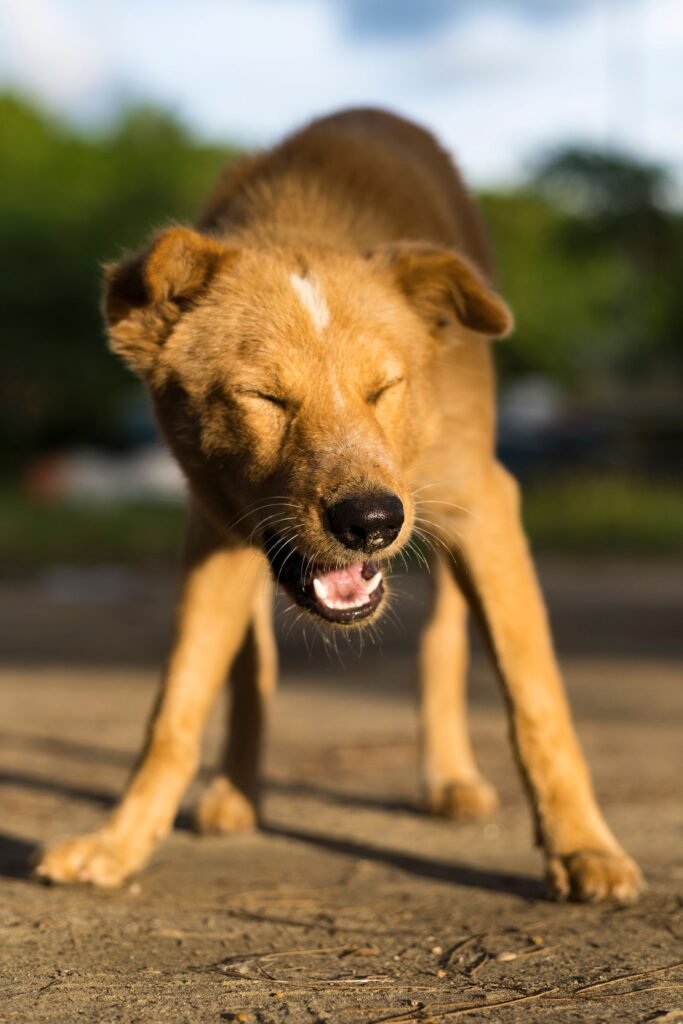
Your dog suddenly freezes, stretches its neck out, and starts making loud, rapid snorting sounds — as if it is trying to sneeze inwards and cannot catch its breath. It looks frightening, but in most cases it is a reverse sneeze: a common, usually harmless reflex in which a dog rapidly pulls air in through its nose instead of pushing it out. An episode normally lasts a few seconds to under a minute, and the dog is completely normal the moment it ends. This guide covers what it is, what causes it, how to tell it from choking, kennel cough and tracheal collapse, and when to see a vet.
What Is Reverse Sneezing in Dogs?
A normal sneeze forces air out through the nose to clear an irritant. A reverse sneeze does the opposite: the dog draws air in through the nose in fast, forceful inhalations. Vets call it paroxysmal respiration — a spasm of the throat and soft palate muscles, triggered by irritation at the back of the nose or throat, in the area called the nasopharynx.
It is not a disease — just a reflex, much like a normal sneeze, and most dogs experience it at some point. Small and flat-faced breeds reverse sneeze more often because of their airway shape, but any dog can do it. The key point: a reverse sneeze is noisy, but air is still moving, so the dog is breathing throughout the episode even though it sounds as if it cannot.
What Does a Reverse Sneeze Look and Sound Like?
During an episode, a dog usually stands still, extends its head and neck forward, and makes repeated loud snorting, honking or gagging sounds while pulling air in through the nose. The elbows may be spread apart, the lips drawn back, and the eyes wide or bulging. It typically lasts a few seconds to a minute, then stops on its own — and the dog goes straight back to what it was doing, as if nothing happened.
That instant return to normal is the most reassuring sign. If your dog is bright and acting like itself 30 seconds after the noise stops, it was almost certainly a reverse sneeze. Owners often describe the sound as snorting like a pig, or a snore played in fast-forward. Once you have seen one episode, later ones are easier to recognise — which is why filming the first one is so useful if you ever need to show your vet.
What Causes Reverse Sneezing in Dogs?
Anything that irritates the back of the nose or throat can set off an episode. The most common triggers are:
- Allergies. Pollen, dust, mould and other airborne allergens irritate the nasal passages, especially in spring and autumn, so allergic dogs often reverse sneeze more in certain seasons or places. Allergy-related itching can also show up as scratching — our guide on why dogs scratch at their beds explains the habit, and frequent sneezing plus itchy skin is worth mentioning to your vet.
- Nasal irritants. Cigarette smoke, perfumes, air fresheners, cleaning sprays and aerosols can all trigger an episode, and strong scents are a common cause in indoor dogs.
- Excitement and leash pulling. A burst of excitement, or a collar pressing on the throat when a dog pulls, can start an episode — often at the same moment every day, such as at the door or at mealtime.
- Sinus drainage and colds. Mucus draining from the sinuses can irritate the throat, so reverse sneezing sometimes appears with a mild cold or upper respiratory infection.
- Foreign material. A blade of grass or a small piece of food lodged at the back of the throat can cause repeated episodes until it clears.
- Nasal mites. These are uncommon, but the Merck Veterinary Manual notes nasal mites can cause sneezing and reverse sneezing — one reason a vet may investigate when episodes become frequent.
Often no single trigger is ever found, and that is fine — occasional reverse sneezing with no other symptoms is not a problem that needs solving.
Reverse Sneeze vs Choking vs Kennel Cough vs Tracheal Collapse
All four conditions make alarming noises, which is where most owners get confused. The table is the fastest way to tell them apart.
| Condition | Sound and direction | How long it lasts | Dog’s behaviour afterwards |
|---|---|---|---|
| Reverse sneeze | Rapid inward snorts, like a sneeze in reverse | Seconds to under a minute | Completely normal right away |
| Choking | Gagging, pawing at the mouth, drooling, panic | Continuous until the object clears | Distressed, may have blue or grey gums — emergency |
| Tracheal collapse | Outward “goose-honk” cough, often in small breeds | Comes in bouts, often with excitement or leash pressure | Coughing returns again and again |
| Kennel cough | Harsh hacking cough, often ending in a gag | Days, typically 7–10 days | Coughing persists, often after boarding or a dog park visit |
Choking needs instant action: a choking dog paws at its mouth, drools, panics, and may develop blue or grey gums — an emergency, so get to a vet immediately. A reverse sneezing dog, by contrast, stands still and is not in distress once the episode ends.
Kennel cough is a hacking cough that goes on for days, often picked up after boarding or a park visit. It is one of the infections vets discuss at routine visits — our puppy vaccine schedule guide explains what those check-ups cover. Tracheal collapse produces an outward honking cough and tends to affect small breeds; a soft cough that gets worse at night in an older dog lying down can also signal heart disease, which is another reason a persistent cough always deserves a vet check rather than a guess.
How to Stop a Reverse Sneezing Episode
You do not have to do anything — an episode stops on its own. If your dog looks stressed, these steps can help it pass faster:
- Stay calm. Your dog reads your reaction. Speak softly and do not grab or shake your dog.
- Gently massage the throat. Lightly stroking the front of it can trigger a swallow, which often ends the spasm.
- Cover the nostrils briefly. Pinching them closed for a second or two makes the dog swallow, which can stop the episode. Release immediately — never hold the nose closed.
- Offer a small treat or a lick of water. Swallowing breaks the reflex, so anything that makes your dog swallow can help.
- Move your dog to fresh air. If smoke, perfume or a cleaning spray triggered it, getting away from the smell helps.
- Film it. If this is the first episode, record a short video — far more useful to a vet than a description, and it helps rule out choking and tracheal problems.
Do not put your fingers in your dog’s mouth or throat, and do not try home remedies such as blowing into the nose. If the episode lasts more than a minute or two, or your dog seems to struggle to breathe, treat it as urgent and call your vet.
When Should I Take My Dog to the Vet for Reverse Sneezing?
Occasional reverse sneezing in an otherwise healthy dog is no reason to rush to the clinic — but book a vet visit promptly if you notice any of these:
- Episodes every day, or several times a day
- Nasal discharge, especially yellow, green or bloody, or nosebleeds
- Coughing or difficulty breathing between episodes
- Lethargy, loss of appetite, or low energy
- Facial swelling, or a sudden change in the sound of the breathing
- Episodes longer than a couple of minutes, or a dog that collapses or seems disoriented
At the appointment, your vet will usually start with a physical exam and questions about the episodes — when they happen and how long they last. Showing the video you filmed is often the most helpful thing you can do. If needed, the vet may look further for allergies, infection, nasal mites or a foreign body — but many dogs need no treatment beyond avoiding whatever triggers the episodes.
Checking your dog’s head and face regularly helps you spot changes early. Our guide on how to clean dog ears covers the same habit of looking closely at a healthy ear — the same kind of routine check, applied to the nose and breathing, catches a pattern before it becomes a problem.
Frequently Asked Questions
+ Is reverse sneezing dangerous for dogs?
Usually no. A reverse sneeze is a common reflex that lasts a few seconds to under a minute, and the dog is completely normal when it ends. It becomes a concern only if episodes are frequent, daily, or come with discharge, coughing, lethargy or breathing difficulty — then a vet should check for an underlying cause.
+ How do I stop my dog from reverse sneezing?
An episode stops on its own, but gently massaging the throat, briefly covering the nostrils so the dog swallows, or offering a treat or a lick of water can end it faster. Stay calm, never put your fingers in your dog’s mouth, and move the dog to fresh air if smoke or perfume triggered it.
+ How can I tell if my dog is choking or reverse sneezing?
A reverse sneezing dog stands still, extends its neck and makes rapid inward snorts, then is completely normal within a minute. A choking dog paws at its mouth, drools, panics and may develop blue or grey gums — that is an emergency and needs a vet immediately.
+ When should I take my dog to the vet for reverse sneezing?
See a vet if episodes happen daily or several times a day, last longer than a couple of minutes, or come with nasal discharge, nosebleeds, coughing, breathing difficulty, lethargy, appetite loss or facial swelling. Film an episode to show the vet — a video makes diagnosis much easier.
+ What causes reverse sneezing in dogs?
Irritation at the back of the nose or throat: allergies to pollen, dust or mould, smoke, perfumes and sprays, excitement, leash pulling, sinus drainage, foreign material such as a blade of grass, and — less commonly — nasal mites. Often no single trigger is found, and occasional episodes need no treatment.
Sources
- PetMD — Reverse Sneezing in Dogs: Is It Normal?: https://www.petmd.com/dog/general-health/reverse-sneezing-dogs-it-normal
- PDSA — Reverse sneezing in dogs: https://www.pdsa.org.uk/pet-help-and-advice/pet-health-hub/conditions/reverse-sneezing-in-dogs
- Walkerville Vet — Help! My Dog Makes Choking Gagging Noises: https://www.walkervillevet.com.au/blog/reverse-sneezing-dog/
Pingback: Why Does My Dog Bark at Night? Causes & Fixes