
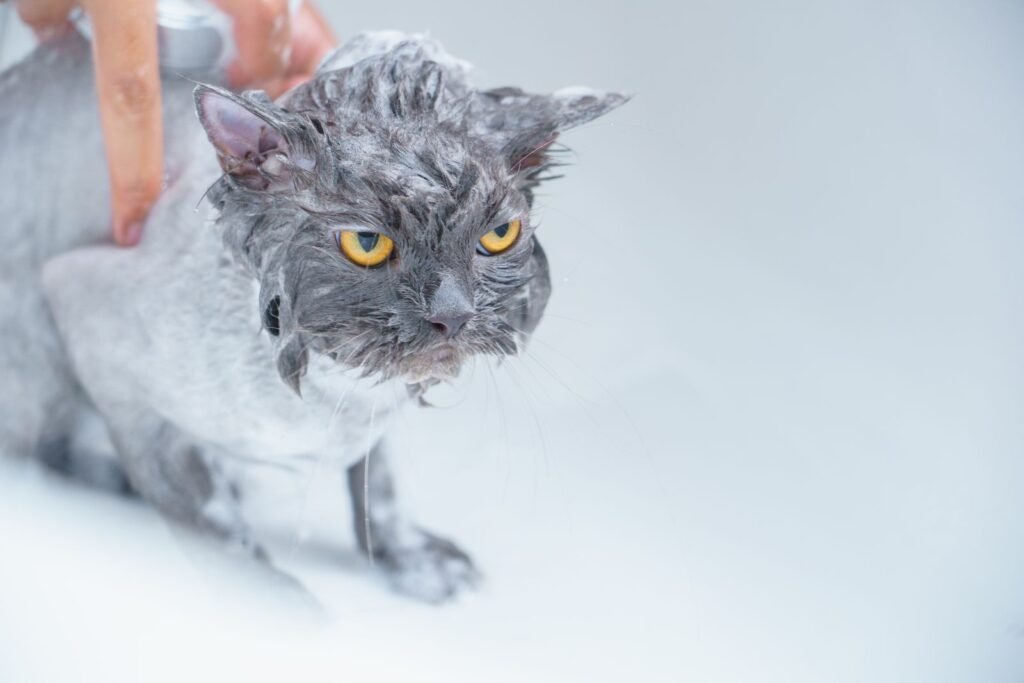
Do cats need baths? For most cats, no. Cats are skilled self-groomers — they spend hours a day licking their coats clean, and a healthy indoor cat rarely needs a bath at all. A bath becomes necessary only when there is a clear reason: your cat got into something sticky or toxic, has a skin condition your vet wants treated with a medicated wash, or can no longer groom itself because of age, obesity or illness.
That is the rule to remember: bath only when there is a reason, not on a schedule. Frequent bathing strips natural oils from the coat and skin, and it stresses most cats badly. This guide covers the decision, the step-by-step method for when a bath really is needed, and what to do instead when it is not.
When Does a Cat Actually Need a Bath?
Use this decision table before you run the water. If your situation is in the left column, a bath is justified. If it is in the right, skip the bath.
| Bath needed | No bath needed |
|---|---|
| Got into something sticky, oily or toxic (paint, oil, cleaning products) | Normal indoor cat, coat looks and smells fine |
| Vet prescribed a medicated shampoo for a skin condition | A little dust or loose fur — brushing handles this |
| Elderly, arthritic or very overweight cat that cannot reach parts of its coat | Cat groomed itself after a small mess |
| Long-haired cat with matted fur that brushing cannot fix | Kitten under 8 weeks old or a sick cat (ask your vet first) |
| Flea treatment that your vet specifically says to wash off | You just want the cat to smell “fresh” |
If your cat got into something toxic, do not wait: stop the cat from licking it off, and call your vet or a pet poison helpline first — they will tell you whether a bath is safe or whether the cat needs to come in. Our guide on why does my cat smell bad covers the cases where a strange smell means a vet visit, not a bath.
How Often Should You Bathe a Cat?
Most cats never need a bath in their lives. For cats that do need occasional baths — long-haired breeds, outdoor cats, or cats with skin conditions — a few times a year is usually plenty, and only as often as your vet advises. There is no weekly or monthly schedule to follow.
Over-bathing causes dry, flaky skin and a dull coat, because it strips the natural oils that keep the fur healthy. If you are bathing your cat every few weeks without a vet telling you to, you are almost certainly bathing too often. Regular brushing is the routine that actually keeps a coat clean — our how to groom a cat guide explains how often to brush short-haired and long-haired cats.
What You Need Before Bath Time
Gather everything first, before the cat gets anywhere near water. Once a wet cat is in the tub, you cannot leave it to fetch a towel.
- Cat-specific shampoo — never human shampoo, baby shampoo or dish soap. A cat’s skin has a different pH from ours, and human products dry and irritate it.
- Several large towels — one on the floor, one or two for drying.
- A non-slip mat for the bottom of the sink or tub. A slipping cat panics, and a panicking cat scratches.
- A plastic jug or cup for gentle pouring, or a handheld shower head on the lowest pressure.
- A brush or comb — brush before the bath, not after. Wet mats tighten and become painful.
- Treats for afterwards.
Trim your cat’s claws the day before, not right before the bath — a fresh trim right at bath time just adds one more stressful event. Close the bathroom door and the window, and warm the room: a cold, draughty room makes a wet cat miserable.
How to Bathe a Cat Step by Step
Keep the whole session short — ten minutes is enough. Work calmly and confidently: cats read your tension, and a nervous owner makes a nervous cat.
- Brush first. Brush the coat thoroughly and work out any loose mats with a comb. Never pull a mat — if you cannot work it out gently, ask a groomer or vet to deal with it. Our how to get mats out of cat fur guide explains the safe way to handle them.
- Prepare lukewarm water. Fill the sink or tub with just 2–3 inches of lukewarm water — about the depth of your cat’s belly. Test it on your wrist, as you would for a baby.
- Place the cat in calmly. Put the non-slip mat down first. Pick the cat up with confident hands, lower it into the water feet-first, and keep one hand on its shoulders so it feels secure. Talk in a low, steady voice.
- Wet the coat from the neck down. Use the jug or shower head to wet the body, starting at the neck and working down the back and sides. Do not pour water over the head, face or ears — water in the ears can cause infection, and a wet face terrifies most cats.
- Apply a small amount of shampoo. Squeeze a coin-sized amount into your hands, lather it, then massage it gently through the coat. A little goes a long way — too much soap is hard to rinse out. Avoid the belly if your cat hates it; the water and lather will clean it well enough.
- Rinse thoroughly. This is the most important step. Rinse until the water runs completely clear and the coat no longer feels slippery. Leftover shampoo residue irritates the skin and the cat will lick it off. Rinse the belly and paws too — they are the areas most often missed.
- Clean the face separately. If the face is dirty, wipe it with a soft, damp cloth — no soap, no running water. Clean around the eyes and chin gently.
- Dry and reward. Lift the cat onto a waiting towel, wrap it loosely, and pat — do not rub — until it is damp rather than dripping. Then let the cat finish drying in a warm room, and give treats and praise. Keep the cat indoors until it is fully dry.
If at any point the cat shows real panic — screaming, biting, or thrashing hard enough to injure itself — stop. A half-finished bath is better than an injured cat. Towel the cat dry, let it calm down, and try again another day or ask a professional groomer.
What If Your Cat Hates Water?
Most cats do, and that is normal. A cat that hates water does not need to be “taught to like it” — forcing the issue usually makes the next bath worse. For a cat that cannot tolerate a bath, use the alternatives:
- Spot-clean with a damp cloth. For a dirty patch, a warm damp cloth is usually enough. Wipe, then dry the area.
- Waterless cat shampoo. Grooming wipes and waterless foams made for cats can clean a coat without a single drop of bath water. Use only products made for cats.
- A professional groomer or your vet. Cats that need regular medicated baths, or that become dangerous when handled, are better bathed by a groomer who does this daily. There is no shame in that — it is safer for everyone.
Kittens introduced to water gently from a young age usually tolerate baths better as adults — but never force a kitten into water.
Mistakes to Avoid
- Human shampoo. It strips the coat’s oils and can irritate or damage cat skin. Use only cat-specific shampoo.
- Water on the face and in the ears. Keep the head dry and use a damp cloth for the face.
- Bathing a very young, elderly or sick cat without asking your vet. Kittens under 8 weeks cannot regulate their temperature well, and sick cats chill easily.
- Too much water. A deep bath frightens cats. Two to three inches is enough.
- Chasing a fleeing cat. If the cat escapes mid-bath, let it go, dry it as best you can, and try another day. Chasing turns a stressful event into a traumatic one.
- Bathing to fix a smell without finding the cause. A bad smell can mean dental disease or a skin infection — both vet jobs, not bath jobs.
Frequently Asked Questions
+ Do cats need baths?
Usually no. Most healthy cats groom themselves and never need a bath. A bath is only needed when there is a clear reason — the cat got into something sticky or toxic, a vet prescribed a medicated wash, or the cat can no longer groom itself.
+ How often should you bathe a cat?
Most cats never need a bath. Cats that do need occasional baths — long-haired breeds, outdoor cats, or cats with skin conditions — usually need only a few baths a year, and only as often as your vet advises. Over-bathing strips natural oils and dries the skin.
+ Is it bad to bathe a cat?
A bath is not harmful when it is genuinely needed and done gently, but unnecessary baths stress most cats and strip oils from the coat and skin. Never bathe a very young kitten, or a sick or elderly cat, without asking your vet first.
+ Can I use human shampoo on my cat?
No. Human shampoo has the wrong pH for a cat’s skin and can dry it out, irritate it, and damage the coat. Always use a shampoo made specifically for cats, and rinse it out completely — leftover residue irritates the skin and the cat will lick it off.
+ How do you bathe a cat that hates water?
Keep it short and gentle: 2–3 inches of lukewarm water, wet only from the neck down, and stop if the cat panics. If a full bath is impossible, spot-clean with a warm damp cloth or use a waterless cat shampoo — or ask a professional groomer. Never force a terrified cat.
Sources
- PetMD — How to Bathe a Cat: https://www.petmd.com/cat/general-health/how-to-bathe-a-cat
- ASPCA — Cat Grooming Tips: https://www.aspca.org/pet-care/cat-care/cat-grooming-tips
- VCA Animal Hospitals — Grooming and Coat Care for Your Cat: https://vcahospitals.com/know-your-pet/grooming-and-coat-care-for-your-cat