
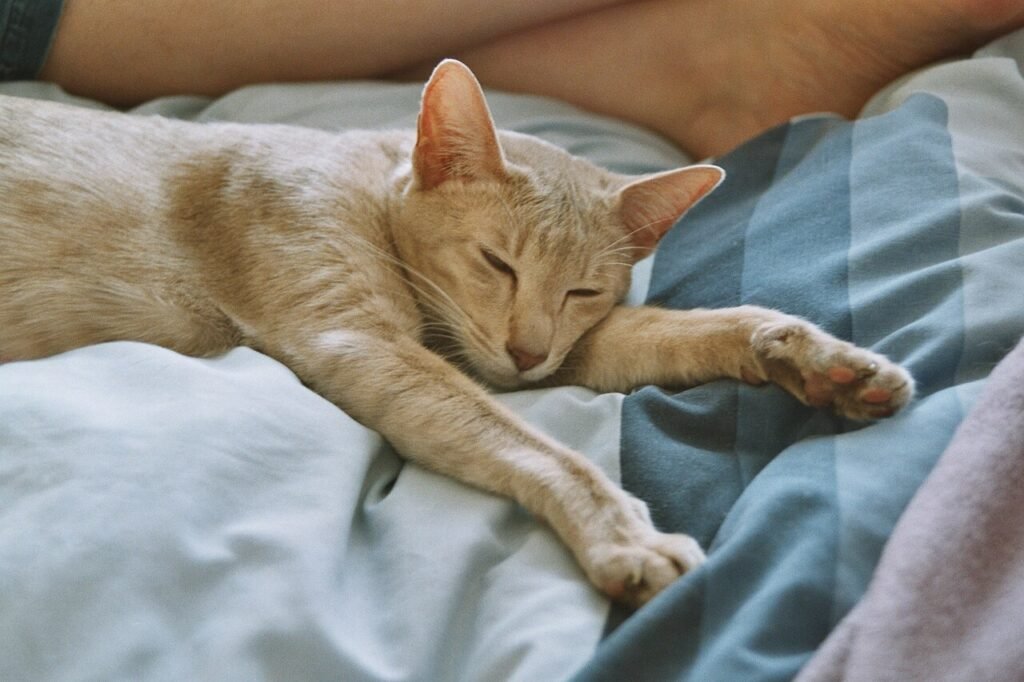
How long are cats pregnant? Complete Guide
Cats are pregnant for about 63 to 65 days — roughly two months. That short window moves fast, so knowing the timeline, the signs, and what your cat needs can make a real difference for her and her kittens. This guide covers how long cat pregnancy lasts, the signs, what to feed her, and how to prepare for the kittens’ arrival.
How long are cats pregnant?
The average cat gestation period is 63–65 days, or about two months, according to PetMD. Veterinary sources give a small range around that average — VCA Canada lists 60–67 days — but most healthy pregnancies land right around the two-month mark. The pregnancy can be divided into roughly three trimesters of about 20 days each, although the first two trimesters can be hard to tell apart at home.
Cats are induced ovulators, which means mating triggers the release of eggs. If you know the breeding date you can estimate delivery from it, but most owners do not know the exact date, so the vet’s estimate matters more than the calendar.
Signs your cat is pregnant
Early signs are subtle, so detecting pregnancy in the first few weeks can be difficult. Here is what to watch for:
- Pinking up: About 16–20 days into the pregnancy, the nipples become pinker and more prominent.
- Behavior changes: In the first two trimesters, queens are often friendlier and more docile than usual, although some become quieter or seek solitude instead.
- Appetite and sleep: Many pregnant cats eat more and sleep more as the pregnancy advances.
- A growing belly: In the last 20 or so days, the belly becomes visibly distended and the nipples and breast tissue swell noticeably.
- Nesting: Near the end, queens often groom their belly and the area under their tail more than usual and start searching for a quiet, sheltered spot to give birth.
Female cats can have their first heat cycle between 4 and 7 months of age, and queens can fall pregnant as young as four months old. If your young unspayed cat has been outside or around an unneutered male, pregnancy is a real possibility even if she still looks like a kitten herself.
How vets confirm pregnancy
The most reliable way to confirm a pregnancy — and how far along your cat is — is a veterinary examination. Vets use abdominal palpation, a blood test, ultrasound, or X-ray. Ultrasound is best at about 25–35 days of gestation and can also estimate how many kittens to expect. An examination three to four weeks after breeding will usually confirm the pregnancy, according to VCA.
Do not try to diagnose pregnancy by pressing on your cat’s belly yourself — it is not always accurate and can cause discomfort.
Feeding a pregnant cat
A pregnant cat needs more food, not just more of the same food. Her nutrient requirements climb to about one and a half times her pre-pregnancy level, and by weaning they may exceed twice that amount, according to VCA Canada. Pregnant cats are usually fed a premium growth and development diet — in practice, a kitten food — or an all-life-stages diet, for the whole pregnancy and a month after the kittens are weaned.
Our kitten food guide explains what to look for on the label, including the AAFCO statement for growth and nutrients such as DHA for brain and vision development. The practical points are simple: offer a high-calorie, high-protein kitten formula, increase meals as her appetite grows, and always keep fresh water available. No calcium, vitamin, or mineral supplements are needed with a complete diet — and supplements should never be added without veterinary advice.
Pregnant cats should also be vaccinated before pregnancy where possible and checked for worms — mention the pregnancy at the vet visit and follow their guidance.
Preparing for birth
In the last week or so, set up a nesting spot: a sturdy box with low sides, lined with clean towels or blankets, in a warm, quiet, draft-free place away from household traffic and other pets. Show it to your cat, but let her choose — some queens pick their own spot, and moving her once settled can stress her.
Have your veterinarian’s phone number close at hand, and keep the area calm and dimly lit when labor begins. Most cats prefer to be left largely alone during birth, with you nearby watching quietly.
What labor looks like
Before labor, many queens become restless, groom themselves more, lose their appetite, and settle into the nest. Most cats deliver their entire litter within about six hours. The mother usually cleans each kitten, chews through the cord, and encourages it to nurse. Litters are commonly one to six kittens, though the number varies.
Try not to interfere while things are progressing normally. Wash your hands before touching newborn kittens, keep handling brief, and let the mother do the work. If a kitten seems weak or is not nursing, keep it warm and call your veterinarian rather than trying home remedies.
When to call a vet
Call your veterinarian right away if labor seems stalled, if your cat has strong contractions without producing a kitten, if she is in visible distress, if you notice heavy bleeding or foul-smelling discharge, or if she seems very weak, feverish, or uninterested in her kittens after birth. Some infections can cause pregnancy loss, so vets often recommend testing before breeding — feline leukemia virus (FeLV) is one of the infections they check for. If you share your home with a pregnant dog too, our guide on how long dogs are pregnant covers their timeline.
Frequently asked questions
How can I tell how far along my pregnant cat is?
Your vet can estimate it from an examination, an ultrasound (best at 25–35 days), or a later X-ray. At home, the signs — pink nipples at 16–20 days, a visible belly in the last three weeks — give only a rough guide.
How many kittens will my cat have?
Litters are usually one to six kittens, but the number varies with the cat’s age, breed, and health. An ultrasound can estimate it, but the exact count is only known at birth.
Can a cat get pregnant at 4 months old?
Yes. Queens can fall pregnant as young as four months old, and first heat usually happens between 4 and 7 months. Talk to your vet about spaying — it prevents unplanned litters and the health risks of very young pregnancies.
What should I feed a pregnant cat?
A high-calorie kitten or growth formula, fed in increasing amounts as the pregnancy advances, with fresh water always available. See our kitten food guide for label guidance.
Sources
- PetMD — Cat Pregnancy: Signs, Stages and Care: https://www.petmd.com/cat/conditions/reproductive/cat-pregnancy-and-kittens-complete-guide
- VCA Canada Animal Hospitals — Pregnancy and Parturition in Cats: https://vcacanada.com/know-your-pet/pregnancy-and-parturition-in-cats
- VCA Canada Animal Hospitals — Feeding the Pregnant Cat: https://vcacanada.com/know-your-pet/feeding-the-pregnant-cat
Pingback: Cat Coughing: Causes, Symptoms & When to See a Vet - PawMeridian