
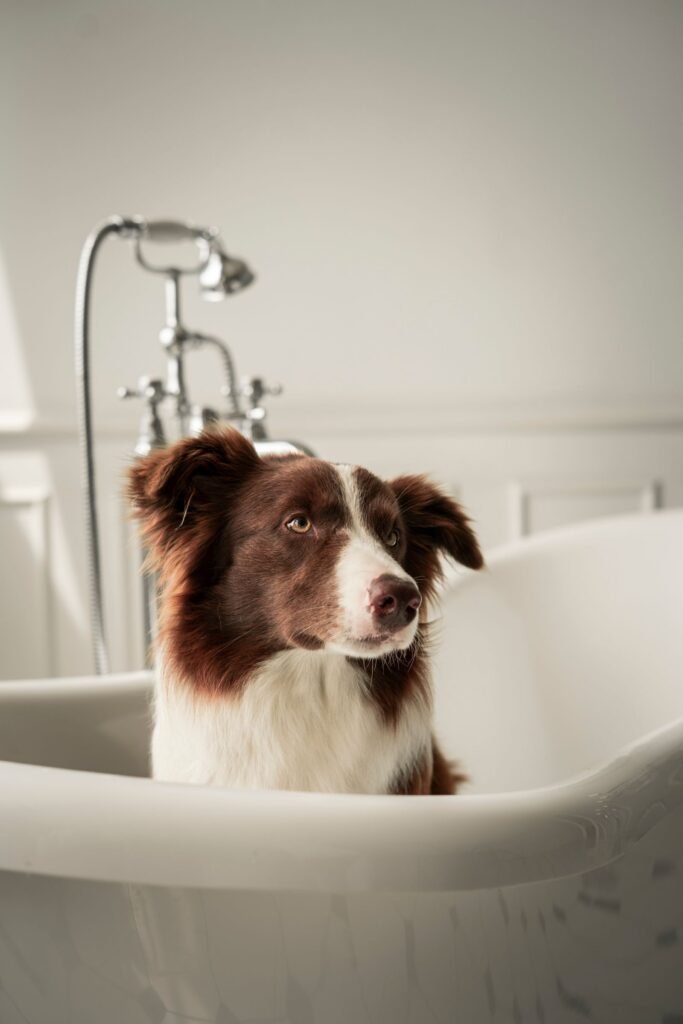
How often should you bathe a dog? For most healthy dogs, about once a month — every four weeks — is the right starting point. That is the figure most vets quote, and it is also the minimum the ASPCA recommends: at least every three months, with most dogs doing best on a monthly routine.
But “once a month” is a starting point, not a rule for every dog. The right frequency depends on your dog’s coat type, how active they are, and whether they have any skin problems. A muddy Labrador that swims every weekend needs baths far more often than a short-haired indoor dog that rarely gets dirty.
How Often to Bathe a Dog by Coat Type and Lifestyle
Coat type is the biggest factor. Long hair traps dirt and tangles, oily coats build up smell faster, and short smooth coats stay clean for weeks with just brushing. Activity matters just as much: a dog that hikes, swims, or rolls in mud needs more baths than a dog that mostly sleeps on the sofa.
| Dog type | Suggested bathing frequency | Notes |
|—|—|—|
| Short-haired, mostly indoors | Every 1–3 months | Brushing between baths is usually enough |
| Medium or long-haired | Every 4–6 weeks | More often if the coat tangles or picks up dirt |
| Oily-coated breeds (Labrador, Basset Hound, Cocker Spaniel) | Every 2–3 weeks | Oily coats smell faster; brush often between baths |
| Active or outdoor dogs | Every 2–4 weeks | After muddy walks or swimming, rinse or bathe as needed |
| Dogs with skin allergies or medicated shampoo | As your vet directs, often 1–3 times a week | Only on veterinary advice — see below |
| Puppies | Every 3–4 weeks at most | Gentle puppy shampoo, warm room, quick and calm |
Use the table as a guide, then adjust by looking at your own dog. If the coat smells, feels greasy, or looks dull despite brushing, a bath is due. If the coat looks clean and the skin is calm, wait.
Can You Bathe a Dog Too Often?
Yes — and this is the mistake most owners make. Bathing too often strips the natural oils from your dog’s skin and coat. Those oils keep the skin moisturised and the coat healthy. Strip them away repeatedly and the skin dries out, becomes itchy and irritated, and may actually produce more oil to compensate, leaving the dog smellier than before.
The signs of over-bathing are easy to spot: dry, flaky, or itchy skin after baths, a dull and brittle coat, a coat that turns greasy again very quickly, and redness between the toes or on the belly. If you see these, stretch the gap between baths and check your shampoo — human shampoo is a common culprit, because human skin is more acidic than dog skin, so it disrupts a dog’s skin barrier and dries it out. Always use a shampoo made for dogs, and rinse until the water runs completely clear; leftover shampoo residue is a frequent cause of itching. One exception: a bath is always fine after your dog rolls in something foul or gets covered in mud. The problem is routine over-bathing, week after week, not the occasional necessary wash.
How Often to Bathe a Puppy
Puppies can be bathed, but less is more. A puppy’s skin is more delicate than an adult dog’s, and puppies chill easily. Most vets suggest waiting until a puppy is at least eight weeks old before its first proper bath, and then bathing no more than every three to four weeks unless the puppy gets genuinely dirty. Use a gentle puppy shampoo, lukewarm water, and a warm room, and keep the whole thing short and calm. Dry the puppy thoroughly afterwards — puppies lose body heat fast when wet. Never use human shampoo on a puppy, and never bathe a puppy that is shivering, unwell, or has just been vaccinated without checking with your vet first. Our pad training your puppy guide covers the other messy part of early puppy life.
How Often to Bathe a Dog With Skin Allergies
Dogs with skin allergies or skin conditions are the exception to the once-a-month rule — and the only group where more frequent bathing is often the right call. Vets commonly recommend bathing dogs with allergies once or twice a week, and in some cases up to three times a week, usually with a medicated or oatmeal-based shampoo that the vet has prescribed.
The logic is different here: for an allergic dog, bathing washes away the allergens sitting on the skin and coat — pollen, dust, and other irritants — before they can trigger a reaction. But this only applies on veterinary advice. Frequent bathing with the wrong shampoo will make an allergic dog worse, not better. If your dog itches constantly, has hot spots, or loses fur, do not guess at a bathing schedule — ask your vet for a plan, including which shampoo to use and how long to leave it on. And never bathe a dog daily unless your vet has specifically told you to. Dogs with allergy-prone skin often belong to breeds that need extra coat care anyway — our hypoallergenic dog breeds guide covers the breeds most often chosen by allergy-sensitive households.
How to Bathe Your Dog Step by Step
A calm, well-run bath is faster and kinder than a rushed one. Follow these steps:
- Brush first. Brush out tangles and loose fur before the coat gets wet — wet mats tighten and become painful to remove.
- Prepare everything before you start. Shampoo, towels, a non-slip mat, and treats within reach. A dog left wet in a tub while you hunt for a towel is a stressed dog.
- Use lukewarm water. Test it on your wrist, the way you would for a baby. Hot water irritates skin; cold water chills small dogs fast.
- Wet from the neck down. Wet the body first and leave the head for last. Keep water out of the ears — a cotton ball placed gently in each ear helps, but remove them afterwards.
- Lather with dog shampoo. Work it through the coat with your fingers, neck to tail. Let it sit for a minute or two if the label says so, especially for oatmeal or medicated shampoos.
- Rinse thoroughly. This is the step most people rush. Rinse until the water runs clear and the coat no longer feels slick. Leftover shampoo causes itching.
- Wipe the face separately. Use a damp cloth on the face and around the eyes — never pour water or shampoo over the head.
- Towel dry, then air dry or blow dry on low. Towel off as much water as you can, then let the coat air dry in a warm room, or use a dryer on its lowest, coolest setting held well away from the skin.
- Brush again once dry. A final brush removes loose fur and leaves the coat smooth.
Keep bath time positive: calm voice, treats, and no rushing. A dog that dreads baths will fight every step. If your dog panics in the bath, try a non-slip mat and a handheld shower head, and keep sessions short until it gets used to the routine. Our why does my dog lick me so much guide touches on the anxiety behaviours that sometimes show up around stressful routines.
How Often Should I Clean My Dog’s Ears?
Ear cleaning goes with bathing, but on its own schedule. For most dogs, cleaning the ears about once a month is enough. Dogs with floppy ears — Spaniels, Bassets, Retrievers — trap more moisture and debris, so every other week is a better rhythm for them. Dogs prone to ear infections may need cleaning more often, but only as your vet advises.
Use a vet-approved ear cleaner, never cotton buds pushed into the ear canal — those push debris deeper and can damage the eardrum. Squeeze a little cleaner into the ear, massage the base gently, let your dog shake, then wipe the outer ear with a cotton ball or gauze. If you see redness, swelling, a bad smell, or dark discharge, stop cleaning and consult a vet: those are signs of infection, not dirt.
Should I Bathe My Dog After Swimming?
Usually a rinse is enough. After a swim in a pool, a quick rinse with fresh water removes chlorine, which can dry out the coat and irritate the skin if left to dry on. After a lake or sea swim, rinse off mud, sand, and salt the same way.
Give a full bath with shampoo only if your dog is still dirty or smelly after rinsing, or has rolled in something unpleasant. Shampooing after every swim is over-bathing. Towel dry thoroughly after swimming, especially in cold weather, and check the ears: trapped water after swimming is a common trigger for ear infections in floppy-eared breeds.
Frequently Asked Questions
+ How often should I bathe my dog?
About once a month for most healthy dogs. Short-haired indoor dogs can go 1–3 months, medium and long-haired dogs every 4–6 weeks, and oily-coated breeds every 2–3 weeks. The ASPCA recommends bathing at least every three months. Adjust for your dog’s coat, activity, and skin condition.
+ Can bathing a dog too often damage its skin?
Yes. Bathing too often strips the natural oils from your dog’s skin and coat, causing dry, flaky, itchy skin and a dull, brittle coat — and the skin may produce extra oil to compensate, making the dog smellier. Signs of over-bathing include dry skin, flaking, itching, and a coat that turns greasy again quickly. Use dog shampoo only, never human shampoo.
+ How often should I bathe a long-haired dog vs a short-haired dog?
Long-haired and medium-coated dogs usually need a bath every 4–6 weeks, because long hair traps dirt and tangles. Short-haired dogs that stay mostly indoors can often go 1–3 months between baths, with regular brushing in between. Oily-coated breeds such as Labradors and Basset Hounds are the exception — every 2–3 weeks.
+ How often should I clean my dog’s ears?
About once a month for most dogs, and every other week for floppy-eared breeds such as Spaniels and Retrievers, which trap more moisture. Use a vet-approved ear cleaner and wipe only the outer ear — never push cotton buds into the canal. Redness, swelling, bad smell, or dark discharge means a vet visit, not more cleaning.
+ Should I bathe my dog after swimming?
Usually a rinse with fresh water is enough — it removes chlorine, salt, and sand. Give a full shampoo bath only if your dog is still dirty or smelly after rinsing. Shampooing after every swim strips the coat’s oils too often. Towel dry well and check floppy ears for trapped water.
Sources
- ASPCA — How Often Should I Bathe My Dog?: https://www.aspca.org/pet-care/dog-care/dog-grooming-tips
- American Kennel Club — How Often Should You Bathe Your Dog?: https://www.akc.org/expert-advice/health/how-often-should-you-bathe-your-dog/
- PetMD — How Often Should You Bathe Your Dog?: https://www.petmd.com/dog/general-health/how-often-should-you-bathe-your-dog
- VCA Animal Hospitals — Bathing Your Dog: https://vcahospitals.com/know-your-pet/bathing-your-dog
Bathing is only half of grooming day — for the nails, see how to trim dog nails at home, with the steps for finding the quick and what to do if you nick it.
Pingback: How to Trim Dog Nails at Home (No Quick Cuts)
Pingback: How to Reduce Shedding on Dogs: Tips That Work
Pingback: How to Remove Dog Hair From Clothes: Laundry Tricks
Pingback: How Often Should You Brush Your Dog's Teeth?