
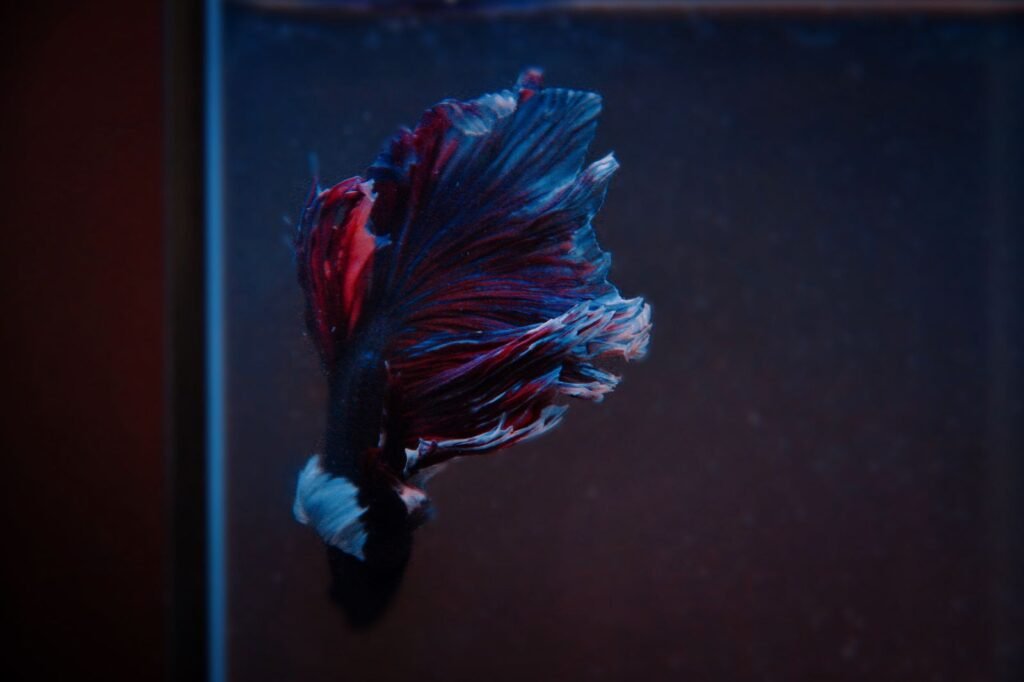
Betta fish are small, dramatic and almost always hungry — or at least, they act hungry. A betta that rushes to the front of the tank every time you walk past is not necessarily starving. Bettas are instinctive beggars, and feeding them every time they beg is one of the fastest ways to harm them.
So, how often to feed betta fish? For most healthy adult bettas, the answer is simple: one or two small meals a day, with one fasting day each week. The rest of this guide explains how much that actually means, what to feed, and the mistakes that turn a healthy betta into a bloated, sick one.
The Short Answer: A Betta Fish Feeding Schedule
A healthy adult betta does best on a betta fish feeding schedule of one to two small meals a day, spaced roughly 8 to 12 hours apart — for example, once in the morning and once in the evening. Each meal should be eaten within about one to two minutes. Any food still floating or sitting on the bottom after that time was too much, and it should be removed with a net or turkey baster.
If you can only feed once a day, that is fine too. One properly sized meal is far better than two oversized ones. What matters most is consistency: feed at roughly the same times each day, in roughly the same amount, and watch your fish’s belly rather than counting pellets blindly.
How Much to Feed Betta Fish: The Eye-Size Rule
The most useful guide to betta fish food portions is the eye-size rule. A betta’s stomach is roughly the size of its eye, so a meal should total about that volume. In practice, that usually means 2 to 4 small pellets per meal, or 2 to 3 if the pellets are large.
Pellet size varies a lot between brands, which is why pellet counts disagree so much online — and even on food packaging, where the guidance often runs high. Judge by the belly instead: after a meal, your betta’s belly should look slightly rounded, not swollen like a marble. If the belly stays flat, the portion was probably a little small. If it bulges noticeably, it was too much.
Soak dry pellets briefly before feeding. Pellets expand two to three times in water, and feeding them dry means they can expand inside the fish instead. A quick 10-second soak in a little tank water is enough.
What Should Bettas Eat?
Bettas are carnivores. In the wild they eat insects and larvae, so their staple food should be a betta-specific pellet with animal protein listed first and roughly 40% protein. Generic flakes and goldfish food are not a good staple for a betta: they are formulated for different fish, they break apart quickly and foul the water, and many bettas will not eat enough of them to thrive.
Variety matters, but it should stay within carnivore foods. Two or three times a week, swap one pellet meal for a small amount of frozen (thawed) bloodworms, brine shrimp or daphnia. Daphnia is especially useful because it is a natural laxative of sorts for fish and can help keep digestion moving. Offer only what the fish eats in a minute or two, and never leave thawed frozen food sitting in the tank.
| Day | Morning | Evening |
|---|---|---|
| Monday | Betta pellets | Betta pellets |
| Tuesday | Betta pellets | Frozen bloodworms or brine shrimp |
| Wednesday | Betta pellets | Betta pellets |
| Thursday | Betta pellets | Frozen daphnia or brine shrimp |
| Friday | Betta pellets | Betta pellets |
| Saturday | Betta pellets | Betta pellets |
| Sunday | Fasting day — no food | Fasting day — no food |
This weekly pattern is a template, not a prescription. If your betta refuses frozen food at first, keep offering small amounts alongside pellets.
Should Betta Fish Have a Fasting Day?
Yes, one fasting day per week is standard keeper advice, and it is one of the easiest ways to prevent problems. A day without food gives the gut a rest, helps clear minor constipation before it becomes bloat, and reduces the waste building up in the tank.
A fasting day is not starvation — a healthy adult easily handles a day without food. Do not fast a sick, very young or visibly underweight betta without advice; if a fish is already thin or unwell, consult an aquatic vet.
How Often to Feed Baby Betta Fish
Baby bettas, or fry, are the exception to the adult schedule. Young, growing bettas need more frequent, smaller meals — typically three small feedings a day of food sized for tiny mouths, such as finely crushed pellets, baby brine shrimp or other fry-appropriate food. As they grow toward adult size, gradually move to the adult schedule of one to two meals a day.
Because fry eat so often, water quality matters even more: feed tiny amounts, remove uneaten food promptly, and keep up with water changes.
Can Betta Fish Go Without Food?
Healthy adult bettas can go several days without food, and a long weekend away is usually nothing to worry about. For a holiday of a few days, it is generally safer to leave a healthy adult betta unfed than to use a feeder block, which can dissolve unevenly and foul the water.
For longer absences, use an automatic feeder set to a small, tested portion — test it for several days before you leave — or a helper with pre-measured portions, since a well-meaning helper almost always overfeeds.
Why Your Betta Always Begs (And Why You Should Ignore It)
Bettas beg by instinct. In the wild, food is unpredictable, so a betta that eats whenever food appears has a survival advantage. In a tank, that same instinct means your fish will dance, flare and follow your finger no matter how recently it ate.
Do not let begging set the schedule. Judge by the belly and the tank: a slightly rounded belly is normal, a swollen belly is not, and uneaten food on the bottom means the portion was too large.
Overfeeding Signs: What to Watch For
Overfeeding is the number one beginner mistake with bettas, and it causes two kinds of trouble at once: it harms the fish and it fouls the water. Uneaten food decays, ammonia rises, and the fish ends up swimming in its own waste.
Watch for these betta fish overfeeding signs:
- A swollen belly that stays rounded long after feeding, rather than settling back down.
- Constipation, shown by long, stringy waste or no waste at all.
- Swim-bladder trouble, where the fish struggles to stay level, floats on its side, or sinks and cannot rise easily.
- Cloudy water or a bad smell, often within a day of overfeeding.
- Lethargy and clamped fins, which can follow poor water quality.
If you suspect overfeeding, follow these steps:
- Stop feeding for one to two days to let the gut settle.
- Remove all uneaten food from the tank right away.
- Test the water for ammonia and nitrite, and do a partial water change if either is raised.
- Offer a small amount of daphnia when feeding resumes, before returning to pellets.
- Cut the portion and go back to the one-to-two-meals-a-day schedule.
If the fish does not improve, floats on its side for more than a day, or stops eating entirely, consult an aquatic vet rather than trying home remedies on guesswork.
Common Betta Feeding Mistakes
- Feeding by the package label alone. Package guidance often runs high. Start smaller and adjust by belly size.
- Using goldfish food or generic flakes as a staple. Bettas need high-protein, betta-specific food.
- Leaving uneaten food in the tank. Remove it within a few minutes of feeding.
- Feeding only one food forever. Pellets plus occasional frozen foods give a better balance.
- Skipping water changes because the tank “looks clean”. Waste from feeding is invisible until it is a problem. Regular partial water changes are part of feeding well.
- Feeding a betta like a goldfish. Goldfish and bettas have very different diets and metabolisms — what suits a comet goldfish does not suit a betta.
Getting the tank itself right matters just as much as the food. Our guide to a betta fish tank covers the heated, filtered setup that makes a feeding schedule work — because even perfect portions cannot save a fish in cold, unfiltered water.
Frequently Asked Questions
+ How many times a day should I feed my betta fish?
Most healthy adult bettas do best on one to two small meals a day, spaced about 8 to 12 hours apart. Each meal should be eaten within one to two minutes, with leftovers removed immediately.
+ How many pellets should a betta fish eat per meal?
Usually 2 to 4 small pellets per meal, or 2 to 3 large pellets. Pellet size varies by brand, so judge by the belly: slightly rounded after feeding is right, swollen like a marble is too much.
+ Should betta fish have a fasting day?
Yes, one fasting day per week is standard advice for healthy adult bettas. It gives the gut a rest and helps prevent bloat and constipation. Do not fast a sick or very young betta without veterinary advice.
+ What happens if I overfeed my betta fish?
Overfeeding causes bloating, constipation and swim-bladder problems, and uneaten food decays and raises ammonia in the water. Fast for a day or two, remove uneaten food, test the water, and cut future portions.
+ Can betta fish go without food while I am on vacation?
Healthy adults are usually fine unfed for a few days. For longer trips, use a tested automatic feeder or a helper with pre-measured portions. Feeder blocks often foul the water and are best avoided.
+ Why does my betta always beg for food?
Bettas beg by instinct, even when they have just eaten. Begging is not a reliable hunger signal, so judge portions by belly size and by whether food is left uneaten, not by how eagerly the fish swims to you.
Once feeding is sorted, the next betta question is company — see betta tank mates for compatible fish, snails and shrimp, and the fish to avoid.
Overfeeding is one of the fastest ways to cloud a tank — if the water has already gone milky, see why is my water cloudy in my aquarium for the causes by colour and how to clear it.
Sources
- PetMD — Betta Fish Facts (high-protein diet, eye-size portion, overfeeding): https://www.petmd.com/fish/care/betta-fish-facts
- PetMD — How to Take Care of Fish: Beginner Guide (feeding once or twice daily, small amounts): https://www.petmd.com/fish/care/evr_fi_how-to-care-of-fish
- PetMD — Betta Fish Care Sheet (PDF, feeding once a day, treats in moderation): http://image.petmd.com/files/2024-07/PMD_BettaFishCareSheet.pdf
Once feeding is sorted, the fun part starts — our betta fish names list has 150+ cute, funny, and cool ideas, grouped by colour and personality.