
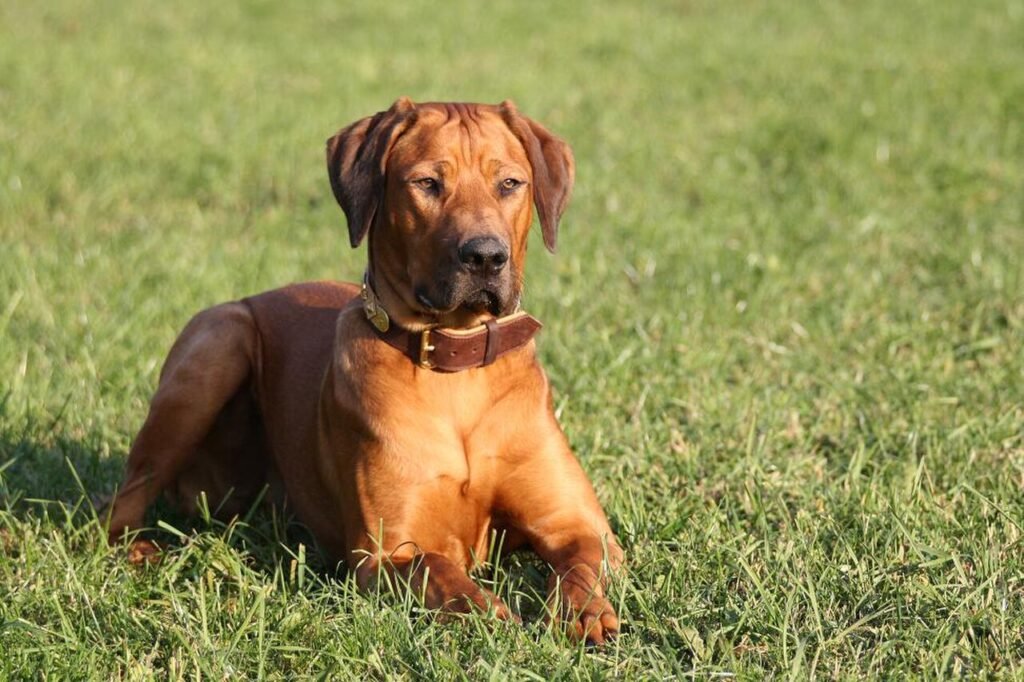
Rhodesian Ridgeback: Temperament, Size, Traits & Care Guide
The Rhodesian Ridgeback is a large, athletic hound from southern Africa, best known for the ridge of hair that runs along its back. It is dignified, loyal to its family, and independent-minded — a powerful dog that suits active, experienced owners far better than someone looking for an easy first dog.
Originally developed in southern Africa, the breed was used to track large game and to guard farms. That history still shapes it: alert, strong, and confident, with a strong prey drive and a calm presence at home.
The Ridge: The Breed’s Signature Trait
The ridge is a strip of hair along the back that grows in the opposite direction to the rest of the coat. In a Rhodesian Ridgeback, it runs from just behind the shoulders to the hips and usually has two symmetrical whorls, or crowns, at its front end.
The ridge is the breed’s defining feature, but it is not the whole dog. Ridgebacks also have a short, dense, glossy coat in shades of wheaten, from light wheaten to red wheaten, a muscular build, and a long, slightly tapered tail. Puppies are born with the ridge already visible, and it stays with them for life.
Size, Appearance and Lifespan
According to the American Kennel Club (AKC) breed standard, males stand 25 to 27 inches tall at the shoulder and weigh around 85 pounds, while females stand 24 to 26 inches and weigh around 70 pounds. The typical lifespan is about 10 to 12 years.
In appearance, the Ridgeback is balanced and athletic rather than bulky. It has a fairly long head, a strong muzzle, round, bright eyes, and medium-sized ears that hang close to the head. The short coat is easy to care for, although it does shed. The breed moves with a smooth, efficient gait, built for covering ground at speed and for endurance.
Temperament: Loyal, Dignified and Independent
Loyalty usually comes first when Ridgeback owners describe their dogs. They tend to bond deeply with their families and are often quietly affectionate at home, happy to lean against you or settle nearby rather than demand constant attention. They are typically dignified and even-tempered, not hyperactive or nervy.
They are also independent thinkers. Bred to work at a distance from their handlers, they do not always obey simply to please you. Training must be consistent, fair, and rewarding — harsh methods tend to backfire with this sensitive breed.
With strangers, Ridgebacks are usually reserved rather than instantly friendly. This aloofness should not be confused with aggression, but early and ongoing socialisation matters, so that wariness does not turn into over-protectiveness. With children, they can be gentle and tolerant, especially with older children, but their size and strength mean supervision is important, and they can accidentally knock over small children. A strong prey drive also means cats and small animals should be introduced carefully.
Exercise and Everyday Life
A Rhodesian Ridgeback needs at least an hour of vigorous daily exercise, plus mental stimulation. Long walks, runs, hikes, and play in a secure area all suit this breed well. A bored, under-exercised Ridgeback is far more likely to become restless or destructive.
A securely fenced yard is highly recommended. Ridgebacks are athletic, with a strong instinct to chase, so keep yours on a leash in unfenced areas and work on recall from puppyhood. At home, they are often surprisingly calm once exercised, but they do not do well left alone for very long periods.
Training, Grooming and Care
Start training early, keep sessions short and positive, and be patient. Ridgebacks learn quickly when they understand what you want, but they can be stubborn if training feels pointless or repetitive. Use food rewards, praise, and play, and prioritise recall, loose-leash walking, and a reliable “leave it” — a pulling adult Ridgeback is hard to manage on a walk.
Grooming is refreshingly simple. The short coat needs only a weekly brush, plus regular nail trims, ear checks, and tooth brushing. Baths are needed only occasionally. Feeding should be measured rather than left out all day, since excess weight puts strain on joints; follow your veterinarian’s guidance on amounts for your dog’s age, size, and activity level.
Health: What to Know
The Rhodesian Ridgeback is generally a healthy breed, but like every pedigree breed it has some health concerns that responsible breeders screen for. These can include hip and elbow dysplasia, a skin condition called dermoid sinus that is linked to the ridge, and certain eye and thyroid conditions. This is general information only, not a diagnosis — if you are concerned about your dog’s health, consult a vet.
Choosing a puppy from a breeder who health-tests the parents is one of the best steps you can take. Ask about the parents’ health history, and take your new puppy for a veterinary check soon after bringing it home.
For a different take on a distinctive breed with a hunting background, you may also enjoy our guide to hunting dogs. If you are still comparing breeds, our guide to the Carolina dog covers another independent, hardy breed. And when the time comes to pick a name, our list of dog names has plenty of ideas.
Is a Rhodesian Ridgeback Right for You?
A Rhodesian Ridgeback could be a great fit if you are an active, confident owner who can offer daily vigorous exercise, a secure yard, consistent training, and plenty of companionship. It is less suited to first-time owners, small apartments without easy access to exercise, or homes where the dog would be left alone all day. Meet the breed in person and be honest about your lifestyle before committing — a Ridgeback will be part of your life for a decade or more.
Frequently Asked Questions
How big does a Rhodesian Ridgeback get?
Males are 25 to 27 inches tall and weigh about 85 pounds, while females are 24 to 26 inches tall and weigh about 70 pounds, according to the AKC standard. Individual dogs vary.
What is the ridge on a Rhodesian Ridgeback?
The ridge is a strip of hair along the back that grows in the opposite direction to the rest of the coat, usually with two symmetrical whorls at the front. It is present from birth.
Are Rhodesian Ridgebacks good family dogs?
They can be, especially with older children and experienced owners. They are loyal and often gentle at home, but they need training and supervision around small children.
Do Rhodesian Ridgebacks need a lot of exercise?
Yes — at least an hour of vigorous daily exercise, plus mental stimulation. They suit active owners with a securely fenced yard.
Are Rhodesian Ridgebacks easy to train?
They are intelligent but independent, so training takes patience and consistency. Positive, reward-based methods work best.
How long do Rhodesian Ridgebacks live?
The typical lifespan is about 10 to 12 years.
Sources
- American Kennel Club — Rhodesian Ridgeback breed page: https://www.akc.org/dog-breeds/rhodesian-ridgeback/
- American Kennel Club — The 7 AKC Dog Breed Groups Explained: https://www.akc.org/expert-advice/lifestyle/7-akc-dog-breed-groups-explained/
- PetMD — Rhodesian Ridgeback breed information: https://www.petmd.com/dog/breeds/rhodesian-ridgeback