
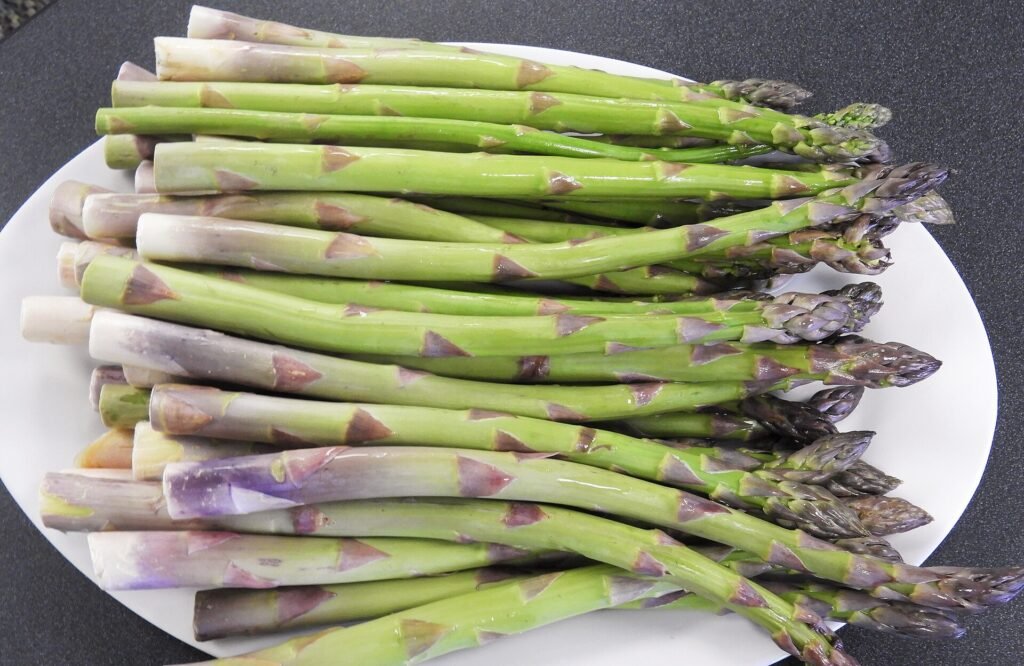
Yes, dogs can eat asparagus — but only the spears, only cooked plain, and only cut into small pieces. The green spears you buy at the grocery store are not toxic to dogs. The part you must never feed is the asparagus fern: the feathery ornamental plant, and especially its small red berries, are toxic to dogs and can cause vomiting and diarrhea. Spears safe, fern dangerous — that one distinction is the whole article in a sentence.
Preparation matters more than usual here: raw stalks are tough and hard for a dog to chew and digest, creating a choking risk and often gas or stomach upset. A few minutes of plain steaming or boiling fixes that — cook it plain, trim the woody ends, chop it small.
As with every treat, keep asparagus within the 10% rule: treats should make up no more than 10% of your dog’s daily calories, with the rest coming from a complete and balanced dog food.
Spears vs Fern: The Warning That Comes First
Most food-safety guides bury this point, so here it is up front. The asparagus plant has two very different parts, and only one belongs anywhere near your dog.
The spears are the young shoots harvested for food. They are safe for dogs when cooked plain and served in moderation. The fern is the mature, feathery foliage of the same plant, often grown as an ornamental garden plant or houseplant. Asparagus fern is toxic to dogs: it contains compounds called sapogenins that can cause vomiting, diarrhea, and abdominal pain if eaten, and its small red berries are the most dangerous part of all.
If you grow asparagus fern in your garden or keep it as a houseplant, keep it somewhere your dog cannot reach, and do not let your dog chew on garden plants unsupervised. If your dog eats asparagus fern or its berries, watch for vomiting, diarrhea, or drooling, and consult a vet promptly. Never try to induce vomiting at home unless a vet tells you to.
Never assume a plant is safe just because its vegetable is: “asparagus is safe” means the spears only.
Are Asparagus Spears Safe for Dogs?
Cooked asparagus spears are safe for dogs in moderation. Veterinary guidance from PetMD and the American Kennel Club lists asparagus among the vegetables dogs can eat, provided it is served plain and prepared properly. Asparagus spears are not toxic, and they do not appear on the ASPCA’s list of people foods to avoid.
Raw asparagus is a different matter. It is not toxic either, but its tough, fibrous texture makes it hard for dogs to chew and digest. Dogs tend to gulp food rather than chew it thoroughly, so a long raw stalk can become a choking hazard or cause an intestinal blockage, and even when swallowed safely it often leads to gas, vomiting, or diarrhea. The safe answer for raw asparagus is simple: do not serve it raw. Cooking softens the fibers and removes most of the risk.
Seasoning is the other trap. Asparagus cooked for people is often prepared with butter, oil, salt, garlic, or onion. Garlic and onion are toxic to dogs, and butter and oil add fat that can upset a dog’s stomach. Your dog’s portion must be cooked separately, with nothing added at all — plain water, plain heat, nothing else.
Benefits of Asparagus for Dogs
Asparagus is a nutrient-dense, low-calorie vegetable. It provides vitamin K, which supports blood clotting and bone health, folate, which supports cell growth, and vitamin A and vitamin C, which support vision and immune function. It also contains potassium, copper, and dietary fiber, which supports healthy digestion. At roughly 3 calories per spear, it is one of the lightest treats you can offer.
For dogs watching their weight, that low calorie count is a genuine advantage: a few pieces can satisfy a begging dog without adding meaningful calories. The fiber can help a dog feel full, but too much at once is exactly what causes gas and loose stools, so portions must stay small.
Cooking does reduce some vitamin content, and dogs get most of their nutrition from regular food anyway, so treat asparagus as a nice occasional extra, not a health intervention. If you want a gentler everyday vegetable, our guide to can dogs eat green beans covers one, and our can dogs eat brussels sprouts guide covers another green vegetable with its own gas warning.
The Risks: Choking, Stomach Upset, and Smelly Urine
The risks of asparagus for dogs come down to four points.
First, choking and blockage from raw or whole stalks. Long, tough stalks are the problem, and small dogs are the most vulnerable. Always cook asparagus until tender, trim the woody ends, and chop it into bite-sized pieces.
Second, digestive upset. Asparagus is high in fiber, and a dog that is not used to it may develop gas, vomiting, or diarrhea after eating too much. Introduce it gradually — a piece or two at first — and watch for stomach upset over the next day before offering a full portion.
Third, seasoning. Butter, oil, salt, garlic, and onion turn a safe vegetable into an unsafe one. Garlic and onion are toxic to dogs, and rich cooking fats can trigger stomach upset or worse in sensitive dogs. Cook your dog’s portion plain, every time.
Fourth, smelly urine. Asparagus contains asparagusic acid, which breaks down into sulfur-containing compounds — the same reason human urine smells odd after asparagus, and the same harmless, temporary effect happens in dogs. It is a quirk worth knowing about so it does not alarm you, not a reason to avoid the vegetable.
How to Prepare Asparagus for Your Dog: Step by Step
Preparing asparagus safely takes a few minutes. Follow these steps:
- Use fresh spears only. Never use asparagus fern, fern leaves, or berries. If you are unsure which part of the plant you have, do not feed it.
- Wash the spears well. Rinse under running water to remove dirt and grit.
- Snap or cut off the woody ends. Bend each spear until it snaps naturally, or cut off the tough, pale bottom inch or two. These ends are too fibrous for dogs.
- Cook it plain. Steam or boil the spears until tender, usually 3–5 minutes. No butter, no oil, no salt, no garlic, no onion, no seasoning of any kind.
- Cool it completely to room temperature before serving.
- Chop into bite-sized pieces. Cut the cooked spears into small pieces suited to your dog’s size. For small dogs, pieces should be no longer than half an inch.
- Start small. Offer one or two pieces the first time and watch for gas or loose stools over 24 hours before offering a full portion.
Do not feed your dog asparagus from a restaurant dish, stir-fry, or casserole, where it will almost certainly have been cooked with oil, salt, or other ingredients. If you are cooking asparagus for yourself, set a few plain spears aside before you season the rest.
How Much Asparagus Can a Dog Eat?
Asparagus is a treat, so keep portions modest and within the 10% treat rule. The table below gives general guidance, but your vet’s advice for your individual dog always comes first.
| Dog size | Example breeds | Safe asparagus portion (occasional treat) |
|---|---|---|
| Small (under 10 lbs) | Chihuahua, Yorkie | 1–2 small chopped pieces |
| Medium (10–50 lbs) | Beagle, Cocker Spaniel | 2–3 small chopped pieces |
| Large (over 50 lbs) | Labrador, German Shepherd | 3–5 small chopped pieces |
Offer asparagus no more than a couple of times a week, not daily, and reduce other treats on days your dog gets vegetables so the total treat allowance stays in check. Puppies can have a tiny taste once they are eating solid food, but keep it to one small piece of well-cooked asparagus — their stomachs are more sensitive than an adult dog’s, and choking risk is higher.
If your dog eats raw asparagus or a large amount at once, watch for choking, gagging, vomiting, gas, or diarrhea. Most cases settle on their own, but consult a vet if vomiting or diarrhea persists, if your dog seems to be in pain, or if a piece may be stuck. If your dog eats asparagus fern or its berries, consult a vet promptly — that is the one asparagus emergency worth taking seriously.
Frequently Asked Questions
+ Can dogs eat asparagus raw or cooked?
Cooked only, in practice. Cooked asparagus spears are safe for dogs in moderation, but raw stalks are tough and fibrous, creating a choking risk and often causing gas, vomiting, or diarrhea. Steam or boil spears plain until tender, trim the woody ends, and chop into bite-sized pieces.
+ How much asparagus can I give my dog?
Keep asparagus within the 10% treat rule: a few small chopped pieces a couple of times a week. Small dogs can have 1-2 pieces, medium dogs 2-3 pieces, and large dogs 3-5 pieces as an occasional treat. Always follow your vet’s guidance for your dog’s weight and health.
+ Is asparagus fern toxic to dogs?
Yes. Asparagus fern and its small red berries are toxic to dogs and can cause vomiting, diarrhea, and abdominal pain. Only the grocery-store spears are safe, and only when cooked plain. Keep ornamental asparagus fern out of your dog’s reach, and consult a vet promptly if your dog eats fern or berries.
+ Can asparagus upset a dog’s stomach or change urine smell?
Yes to both, and both are normal in context. Too much asparagus fiber can cause gas, vomiting, or diarrhea, which is why portions stay small. Smelly urine after asparagus comes from asparagusic acid breaking down into sulfur compounds — it is harmless and temporary, not a sign of illness.
Sources
- American Kennel Club — Fruits and Vegetables Dogs Can and Can’t Eat: https://www.akc.org/expert-advice/nutrition/fruits-vegetables-dogs-can-and-cant-eat/
- ASPCA — People Foods to Avoid Feeding Your Pets: https://www.aspca.org/pet-care/animal-poison-control/people-foods-avoid-feeding-your-pets
- PetMD — Can Dogs Eat Asparagus?: https://www.petmd.com/dog/nutrition/can-dogs-eat-asparagus
- PetMD — Dog Nutrition and Safe Vegetables: https://www.petmd.com/dog/nutrition