
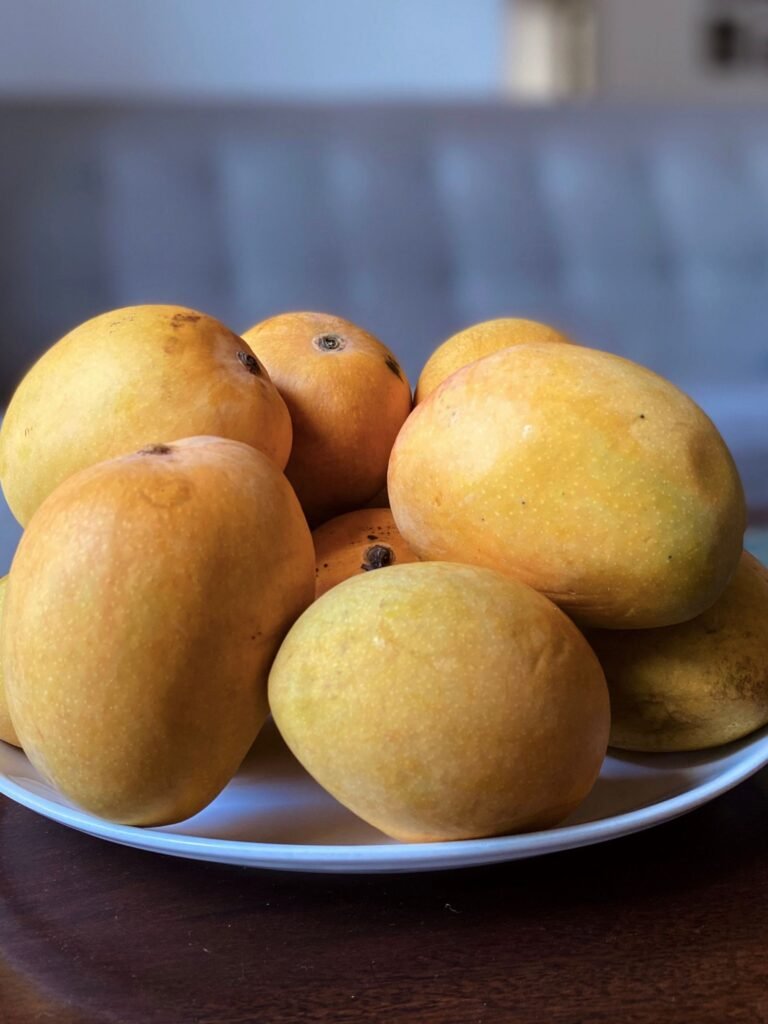
Yes, cats can eat mango — but only the ripe flesh, only in a tiny amount, and only occasionally. If your cat just licked a piece off your plate, there is no emergency: ripe flesh is not toxic, and a single lick is no reason to panic. Just watch for stomach upset over the next few hours, and do not make it a habit.
The honest answer is less enthusiastic: mango is a poor treat choice, not because it is dangerous, but because cats are obligate carnivores built to run on meat, not fruit. They cannot taste sweetness, so mango’s sugar is all cost and no reward — safe in the strict sense, but rarely worth offering.
Is Mango Toxic to Cats?
Ripe mango flesh is not toxic to cats. The ASPCA does not list it as a toxic food for pets, and veterinary sources agree the flesh poses no poisoning risk. That is the good news — and where it ends, because the rest of the mango is a different story.
The pit is the real danger: a choking and intestinal blockage risk, especially for a cat that bats and chews small objects, and its kernel contains harmful cyanide compounds. Never let your cat play with or chew a pit, and throw pits away out of reach.
The skin is also off the menu: tough, fibrous, hard to digest, and possibly carrying pesticide residue. It also contains urushiol, a compound related to poison ivy that some people react to — another reason to peel fully. If your cat swallows skin or pit material, watch for vomiting, diarrhea, lethargy, or appetite loss, and consult a vet promptly.
For other cat treats, see our can cats eat pumpkin guide and our can cats eat salmon guide.
Why Mango Is a Poor Treat for Cats: Sugar and the Sweetness Problem
Mango contains about 14 grams of sugar per 100 grams of flesh — higher than most fruits cat owners reach for. That sugar matters more for cats than for dogs or people, for two reasons.
First, cats cannot taste sweetness. Lacking sweet receptors, a cat gets no pleasure from mango’s sweetness at all — any interest is texture, smell, or curiosity, not sugar. You are spending treat calories on something your cat cannot enjoy the way you do.
Second, cats are obligate carnivores: their systems process meat, not high-sugar plant matter, and they have no nutritional need for fruit. Cats even make their own vitamin C, so mango’s best-known vitamin is redundant.
The table below puts mango’s sugar in context. Lower is better — and mango ranks near the bottom.
| Fruit (per 100 g) | Approximate sugar | Verdict for cats |
|---|---|---|
| Raspberries | ~4.4 g | Better choice, still occasional only |
| Strawberries | ~4.9 g | Better choice, still occasional only |
| Blueberries | ~10 g | Moderate, occasional only |
| Mango | ~14 g | Worst of this group — tiny amounts only |
None of these should be a regular part of a cat’s diet. But strawberries or raspberries beat mango on sugar alone, and a meat-based treat beats all of them for a carnivore.
What About Dried Mango, Canned Mango, and Mango Desserts?
Fresh, ripe mango flesh is the only form that is even debatable. Every other form should be skipped.
Dried mango is out. Drying concentrates the sugar dramatically, and commercial dried mango often adds sugar or preservatives. Mango from a snack mix is doubly off-limits, since trail mixes can contain raisins or chocolate, both toxic to cats.
Canned mango is out too — packed in syrup or juice that adds sugar your cat does not need. Mango ice cream, smoothies, and desserts are also out: they add dairy, which many cats cannot digest well, plus more sugar. A cat licking mango ice cream gets sugar and dairy, not a safe fruit treat.
The rule is simple: if it is not fresh, ripe, plain mango flesh, do not offer it.
How to Serve Mango to Your Cat: Step by Step
If you offer mango at all, preparation matters most. Follow these steps:
- Choose a ripe mango. It should give slightly when pressed and smell fragrant at the stem end. Unripe mango is hard, sour, and harder to digest.
- Wash it well. Rinse under running water to remove dirt and surface residue.
- Peel it fully. Remove all of the skin — no strips left on, since skin is tough and hard to digest.
- Cut the flesh away from the pit. Slice the cheeks off, then cut the flesh away entirely. Discard the pit where your cat cannot reach it.
- Cut one or two pea-sized cubes. That is the whole serving. Do not offer a slice or a chunk — pea-sized is the right scale for a cat.
- Serve plain. No sugar, no yogurt, no cream, no smoothie. Just plain mango flesh.
- Watch the reaction. Offer a single tiny cube the first time and watch for vomiting, diarrhea, or lethargy over the next day before ever offering it again.
Do not force mango on an uninterested cat — many will sniff it and walk away, a sign their carnivore instincts are working. Never use it as a bribe, and never replace any part of a balanced diet with fruit.
How Much Mango Can a Cat Eat?
For a healthy adult cat: 1 to 2 pea-sized cubes, once a week at most — some vets suggest every few weeks is better. Mango should never make up a meaningful share of calories, and it must sit on top of a complete, meat-based diet, never in place of it.
Some cats should skip mango entirely. Diabetic cats should not eat it: high sugar can disrupt blood sugar control, with no nutritional reason to risk it. Overweight cats should skip it too, and so should cats with sensitive stomachs, since fruit sugar and fiber can trigger vomiting or diarrhea. Kittens should also skip it: their developing systems are more sensitive, and fruit’s laxative effect can dehydrate a kitten far faster than an adult.
If your cat eats too much mango, or gets a pit or skin, do not panic, but monitor for vomiting, diarrhea, lethargy, or appetite loss, and consult a vet promptly if symptoms appear or pit material was swallowed. Never induce vomiting at home unless a vet tells you to.
Frequently Asked Questions
+ Is mango toxic to cats?
No, ripe mango flesh is not toxic to cats. The ASPCA does not list mango flesh as a toxic food for pets. The danger lies in the pit, which is a choking and blockage risk and contains cyanide compounds, and the skin, which is tough and may carry pesticide residue.
+ Can cats eat mango skin or pit?
No. Mango skin is tough and fibrous, difficult for cats to digest, and can carry pesticides. The pit is worse: it is a choking and intestinal blockage hazard, and the kernel inside contains cyanide compounds. Peel fully and discard the pit where your cat cannot reach it.
+ How much mango can I give my cat?
For a healthy adult cat, 1 to 2 pea-sized cubes of ripe, peeled mango flesh, once a week at most. That is the entire serving — mango is a rare, tiny treat, not a regular snack. Start with a single tiny cube and watch for stomach upset over the next day.
+ Can diabetic cats eat mango?
No, diabetic cats should not eat mango. Mango contains about 14 grams of sugar per 100 grams, which can disrupt blood sugar control, and it offers no nutrition that justifies the risk. Overweight cats and cats with sensitive stomachs should also skip it.
+ Can kittens eat mango?
Kittens should skip mango. Their developing digestive systems are more sensitive to sugar and fiber than an adult cat’s, and fruit can cause diarrhea that leads to dehydration quickly in a small kitten. Stick to a complete kitten food and vet-approved treats.
Sources
- ASPCA — People Foods to Avoid Feeding Your Pets: https://www.aspca.org/pet-care/animal-poison-control/people-foods-avoid-feeding-your-pets
- PetMD — Cat Nutrition: https://www.petmd.com/cat/nutrition
- Cornell University College of Veterinary Medicine — Feeding Your Cat: https://www.vet.cornell.edu/departments-centers-and-institutes/cornell-feline-health-center/health-information/feline-health-topics/feeding-your-cat
General information only, not veterinary advice — always consult a vet before adding new foods.
Peaches are another stone fruit with the same pit problem — see can cats eat peaches for the pit risks and how to serve a peach safely.
Pingback: Can Cats Eat Peaches? Pit Risks & Safe Guide