
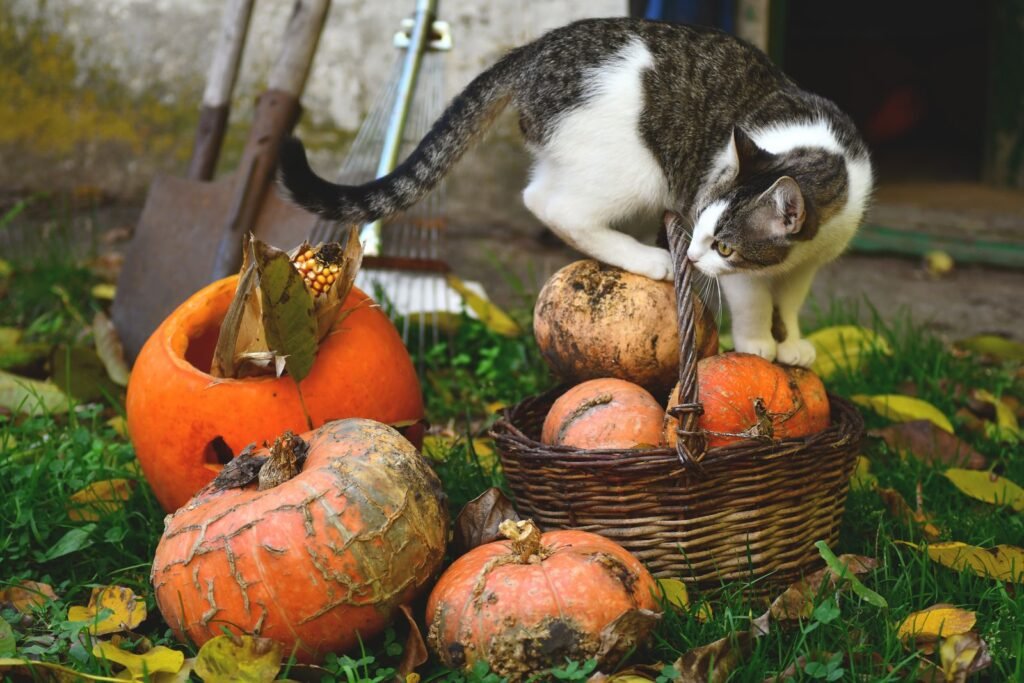
Yes, cats can eat pumpkin — with one very important condition: it must be plain pumpkin. Plain cooked pumpkin and plain canned pumpkin puree, with pumpkin as the only ingredient, are safe for most cats in small amounts and are often recommended by vets as a gentle source of fiber. Pumpkin pie filling, on the other hand, is never safe for cats, because it is loaded with sugar and spices.
Pumpkin for cats is a supplement, not a meal. Cats are obligate carnivores, which means meat must remain the foundation of their diet. Pumpkin adds fiber and a little moisture, but it cannot replace cat food, and it should never make up more than a tiny fraction of what your cat eats each day.
Why Pumpkin Can Be Good for Cats
Pumpkin is mostly water and soluble fiber, with small amounts of vitamins A and C, potassium, and zinc. For cats, the fiber is the main attraction. Soluble fiber absorbs water in the gut, which is why vets sometimes suggest pumpkin for cats dealing with mild digestive upset — it may help firm up loose stools and may also help move things along when a cat is mildly constipated. It is not a treatment for any illness, and it works best as a small, occasional addition to an otherwise balanced diet.
The fiber in pumpkin can also help hairballs pass more easily, since it adds bulk that keeps things moving through the digestive tract. Some cats on weight-management plans benefit too, because a spoonful of low-calorie pumpkin can add fullness without many calories — but always discuss weight loss with your vet first rather than adjusting portions yourself.
Pumpkin Puree vs Pumpkin Pie Filling: Know the Difference
This is the single most important distinction in this whole guide, and it is where most mistakes happen.
Plain pumpkin puree is safe. Check the label: the ingredients list should say “pumpkin” and nothing else. It is sold in cans, usually in the baking aisle, and it looks like thick, smooth, orange paste.
Pumpkin pie filling is not safe. It contains added sugar, cinnamon, nutmeg, ginger, and sometimes other spices. Nutmeg in particular can be harmful to cats, and the extra sugar is bad for their teeth and weight. Pie filling cans are often labeled “pumpkin pie mix” or “pumpkin pie filling” — do not give these to your cat, even in small amounts.
If you are ever unsure which can you are holding, read the ingredients. If there is anything besides pumpkin on the list, put it back.
Can Cats Eat Canned Pumpkin?
Yes — canned pumpkin is usually the easiest and most practical option, as long as it is plain puree. Fresh pumpkin works too, but it takes more effort: it must be cooked until soft, with the skin, seeds, and stringy pulp removed. Canned puree skips all of that work and has a consistent texture cats tend to accept.
Once opened, canned pumpkin should be refrigerated and used within a few days. A smarter approach is to freeze the leftovers in an ice-cube tray, then thaw one small cube at a time. That way you always have plain pumpkin on hand without wasting most of the can.
How Much Pumpkin Can a Cat Eat?
Cats are small, and their stomachs are smaller. Vet guides generally suggest starting with a very small amount — under a teaspoon per serving for an average adult cat, mixed into their regular food. That tiny amount is enough to provide fiber without upsetting the balance of their diet.
| Cat size | Suggested starting amount | How often |
|---|---|---|
| Small adult cat (under 8 lbs) | About 1/2 teaspoon | A few times per week at most |
| Average adult cat (8–12 lbs) | About 1 teaspoon | A few times per week at most |
| Large adult cat (over 12 lbs) | Up to 1 tablespoon | A few times per week at most |
These are general guidelines, not a prescription. Start small, watch for soft stools or gas, and stop if your cat’s digestion gets worse instead of better. Kittens, senior cats, and cats with diabetes, kidney disease, or chronic digestive problems should only get pumpkin if your vet says it is appropriate for them. If your cat has diarrhea or constipation that lasts more than a day or two, or you see blood, vomiting, or lethargy, consult a vet rather than trying to manage it with pumpkin at home.
Can Cats Eat Pumpkin Seeds?
No — pumpkin seeds are not recommended for cats. Raw seeds are a choking hazard, and even roasted seeds can be hard for a cat to digest and may cause a blockage if swallowed whole. The rind is also off the menu: it is tough, hard to digest, and can cause stomach upset or an obstruction. Stick to the soft, cooked flesh or plain puree only, and always remove seeds and skin first if you are preparing fresh pumpkin.
How to Serve Pumpkin to Your Cat
Serving pumpkin to a cat is simple, but a few steps make it safer and more likely to be accepted. Follow these steps:
- Choose plain puree. Canned pumpkin with pumpkin as the only ingredient, or fresh pumpkin you have cooked yourself until soft.
- Remove everything else. If using fresh pumpkin, scoop out the seeds and stringy pulp and peel off the skin. Only the soft flesh goes in the bowl.
- Start with a tiny amount. Mix about half a teaspoon into your cat’s regular wet or dry food so the flavor is mild and familiar.
- Serve at room temperature. Cold pumpkin straight from the fridge can put some cats off; let it warm up briefly first.
- Watch the litter box. Over the next day, check whether stools look normal. If they get looser, cut the amount back or stop.
- Keep it occasional. Pumpkin is a sometimes-food for cats. A few times a week at most is plenty, and it should never replace a meal.
Some cats will sniff pumpkin and walk away, and that is fine. There is no need to force it — pumpkin is optional, and a cat on a complete, balanced cat food is not missing anything essential by skipping it. If your cat refuses it mixed into food, try a smaller amount or a different texture before giving up.
Does Pumpkin Help Cat Constipation or Diarrhea?
Pumpkin may help with mild cases of both, which sounds contradictory until you understand how soluble fiber works. The fiber absorbs excess water, which can firm up loose stools, and it also adds soft bulk, which can help a mildly constipated cat pass stool more comfortably. That is why vets often mention pumpkin first for minor digestive wobbles.
But “may help” has limits. Pumpkin is not a treatment for persistent diarrhea, chronic constipation, vomiting, or any diagnosed digestive disease. If symptoms last more than a day or two, keep coming back, or come with other warning signs such as straining, blood, weight loss, or loss of appetite, your cat needs a vet visit. Never use pumpkin to delay veterinary care for a cat that is clearly unwell.
It is also worth remembering that pumpkin is not the only way to support your cat’s digestion. Fresh water, a consistent high-quality diet, and regular vet checkups matter far more. If you are unsure whether pumpkin suits your cat’s situation, a quick call to your vet is the safest first step.
If you are exploring other human foods for your cat, our guide to can cats have peanut butter covers another food where the “plain only” rule matters just as much, and our wet cat food guide explains how moisture-rich food supports digestion day to day.
Frequently Asked Questions
+ Can cats eat pumpkin?
Yes. Plain cooked pumpkin and plain canned pumpkin puree (pumpkin as the only ingredient) are safe for most cats in small amounts. Pumpkin pie filling is not safe because of added sugar and spices.
+ How much pumpkin can I give my cat?
Start with under a teaspoon per serving for an average adult cat, mixed into regular food, a few times per week at most. Large cats may handle up to a tablespoon. Stop if stools get looser, and consult a vet for kittens or cats with health conditions.
+ Can cats eat canned pumpkin?
Yes, as long as the can contains plain pumpkin puree with no added sugar, spices, or other ingredients. Refrigerate after opening or freeze leftovers in an ice-cube tray for easy portions.
+ Does pumpkin help cat constipation or diarrhea?
Pumpkin may help mild cases of both because its soluble fiber absorbs excess water and adds soft bulk. It is not a treatment for persistent or severe symptoms — if diarrhea or constipation lasts more than a day or two, consult a vet.
+ Can cats eat pumpkin seeds or rind?
No. Seeds are a choking hazard and can cause blockages, and the tough rind is hard to digest. Only serve soft, cooked pumpkin flesh or plain puree.
Another occasional plant treat for cats is covered in our apples for cats guide — flesh only, seeds and core removed, and only a tiny amount.
A sweeter occasional fruit treat for cats is covered in our mango for cats guide — ripe flesh only, pit and skin removed, in tiny portions.
Sources
- ASPCA — People Foods to Avoid Feeding Your Pets: https://www.aspca.org/pet-care/animal-poison-control/people-foods-avoid-feeding-your-pets
- PetMD — Can Cats Eat Pumpkin?: https://www.petmd.com/cat/nutrition/can-cats-eat-pumpkin
- Cornell University College of Veterinary Medicine — Feeding Your Cat: https://www.vet.cornell.edu/departments-centers-and-institutes/cornell-feline-health-center/health-information/feline-health-topics/feeding-your-cat
This article is for general information only and is not veterinary advice. If your cat has ongoing digestive problems or a health condition, consult a vet before changing their diet.
Pingback: Can cats have peanut butter? Safety, Benefits & Risks Explained - PawMeridian
Pingback: Can Cats Eat Apples? Safety, Sugar & Serving Guide - PawMeridian
Pingback: What Do Cats Not Like? Sounds, Smells & Handling Cats Hate - PawMeridian