
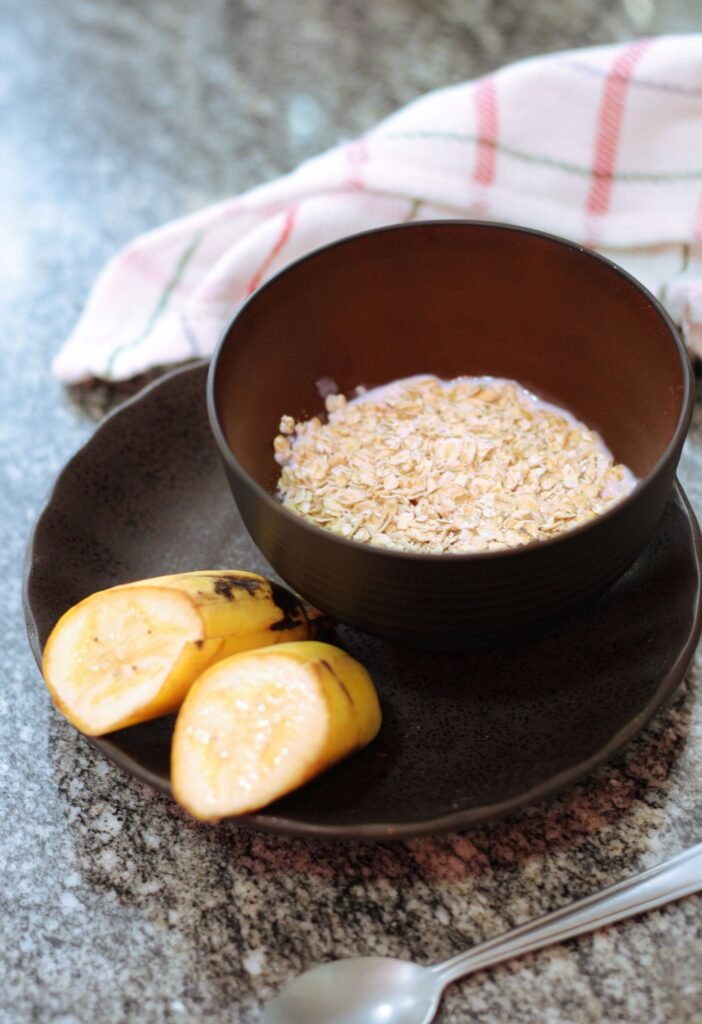
Can cats eat oatmeal? The short answer is yes — plain, fully cooked oatmeal is non-toxic to cats in tiny amounts. But oatmeal offers a cat almost nothing they actually need, and the wrong kind can cause real problems. If you offer it at all, it must be plain, cooked in water, unsweetened, and served rarely and in a very small portion.
Cats are obligate carnivores. Their bodies are built to get energy and essential nutrients from animal protein and fat — including taurine and arachidonic acid, which plants and grains simply do not provide. Oatmeal cannot replace cat food, and a cat that fills up on oatmeal is missing out on the nutrition they actually need.
Is Oatmeal Toxic to Cats?
No, plain oatmeal is not toxic to cats. Cooked oats on their own do not contain anything poisonous to felines, which is why oatmeal shows up on most “safe in moderation” lists. The danger is not the oats themselves — it is everything people usually put in oatmeal, and the way a cat’s digestive system handles grains and dairy.
That distinction explains why two bowls of oatmeal can be completely different for a cat. A spoonful of plain oats cooked in water is harmless in small amounts. A bowl of instant oatmeal with milk, sugar, and flavorings can cause stomach upset at best and expose your cat to genuinely dangerous ingredients at worst.
Can Cats Eat Oatmeal Made With Milk?
No — do not serve oatmeal made with milk. Most adult cats are lactose intolerant, meaning they lack enough of the enzyme needed to digest milk sugar properly. Milk-based oatmeal commonly causes gas, soft stools, or diarrhea in cats, even when the oats themselves are fine. This is the mistake owners make most often, since the oatmeal usually comes straight from their own breakfast bowl — oatmeal for a cat must always be cooked in plain water, with nothing added.
Can Cats Eat Flavoured or Instant Oatmeal?
No — flavoured and instant oatmeal packets are out. These products are designed for human taste buds, not cat stomachs, and they routinely contain ingredients cats should not have:
- Sugar and sweeteners. Added sugar is bad for a cat’s weight and teeth, and some sugar-free products use xylitol, which is toxic to pets.
- Raisins and dried fruit. Raisins and grapes are toxic to cats and dogs, and they appear in several oatmeal flavors.
- Chocolate and cocoa. Chocolate is toxic to cats, and it shows up in chocolate-flavored oatmeal.
- Salt and artificial flavors. Extra sodium and additives add risk with no benefit. If the ingredients list contains anything beyond oats, skip it. Rolled oats or steel-cut oats, cooked fresh in water, are the only safe starting point.
Can Cats Eat Raw Oats?
No — raw, uncooked oats are not recommended for cats. Dry oats are hard, difficult to digest, and can absorb moisture and swell in the stomach. Always cook oatmeal fully until soft, let it cool to room temperature, and serve it plain.
Why Oatmeal Is Near-Useless — But Not Entirely Pointless
It is worth being honest about what oatmeal does and does not do for a cat. Oats provide soluble fiber, small amounts of B vitamins, iron, and magnesium. For a human, that is a solid breakfast. For a cat, it is mostly filler: cats get little usable energy from grains, and oats contain no taurine, no arachidonic acid, and no complete animal protein. Still, it has a few modest uses:
- Mild constipation. The soluble fiber can add soft bulk and help a mildly constipated cat pass stool more comfortably. It is a gentle option, not a treatment — persistent constipation needs a vet.
- A soft food for seniors or dental cases. Cats with sore mouths sometimes accept soft, plain oatmeal more easily than kibble. It should still only supplement, never replace, their proper food.
- Hiding medication. A tiny amount of plain oatmeal can disguise a pill or liquid medicine for a cat that refuses it in other foods — ask your vet whether this suits your cat’s medication.
- Moving hairballs along. Like other fiber sources, oatmeal may help hairballs pass rather than build up, though regular grooming and a proper diet matter far more.
One common confusion is worth clearing up: some commercial cat foods list “oat fiber” or “oat groats” among their ingredients. That does not make a bowl of homemade oatmeal equivalent. In cat food, oat fiber is a small, measured ingredient inside a complete, balanced formula. A bowl of oatmeal on its own is not balanced at all.
How Much Oatmeal Can a Cat Eat?
Very little, and very rarely. Vet guides generally suggest 1 to 2 teaspoons of plain cooked oatmeal, once a week at most — some suggest once every few weeks is better. That is enough for an occasional fiber benefit without displacing real nutrition.
| Cat | Suggested serving of plain cooked oatmeal | Frequency |
|---|---|---|
| Average adult cat | 1–2 teaspoons | Once a week at most |
| Small or less active cat | About 1 teaspoon | Once every few weeks |
| Senior or dental case | 1–2 teaspoons, if vet-approved | Occasional only |
| Kitten | None | Do not serve |
| Diabetic, overweight, or grain-sensitive cat | None | Skip entirely |
Kittens should not get oatmeal: their growth demands precise nutrition, and there is no reason to spend any of their tiny appetite on grains. Cats with diabetes should also skip it, since oatmeal is a concentrated source of carbohydrates that can disturb blood sugar control. Overweight cats and cats with known grain sensitivities should avoid it too. When in doubt, ask your vet before offering oatmeal at all.
How to Prepare Oatmeal Safely for Your Cat
If you decide to offer oatmeal, the preparation rules are strict and simple:
- Use rolled or steel-cut oats. Avoid instant packets, flavoured varieties, and any product with added ingredients.
- Cook in plain water only. No milk, no butter, no salt, no sugar, no toppings.
- Cook until fully soft. Raw or half-cooked oats are hard to digest — cook the oatmeal completely.
- Cool to room temperature. Never serve oatmeal hot from the pot.
- Serve a tiny portion. One to two teaspoons, mixed into regular food or offered on its own, is enough.
- Watch the litter box and appetite. If stools loosen or your cat seems uncomfortable, stop and do not offer it again.
- Keep it rare. Once a week at most, and never as a replacement for a meal.
If your cat refuses plain oatmeal, that is fine — they are not missing anything essential. Do not sweeten it or add milk to tempt them.
Oatmeal for Cat Hairballs: Does It Help?
Oatmeal is sometimes suggested for hairballs because its soluble fiber can help ingested hair move through the gut. In practice, the effect is modest. Regular brushing, which removes loose hair before your cat swallows it, and a diet with appropriate fiber already built in, do far more for hairballs than an occasional spoonful of oatmeal.
If your cat is vomiting hairballs frequently — more than once every week or two — or is retching without producing anything, straining, or losing appetite, that is a vet visit, not an oatmeal situation.
When to Skip Oatmeal and Call the Vet
Skip oatmeal entirely for kittens, diabetic cats, overweight cats, and cats with grain sensitivities or chronic digestive disease, and for any cat that has already had stomach upset from grains or dairy.
Call your vet if your cat develops vomiting, diarrhea, or lethargy after eating oatmeal, or if they ever get into flavoured instant oatmeal containing xylitol, raisins, or chocolate — those ingredients can be genuinely dangerous. And if you are using oatmeal for constipation or hairballs and the problem does not improve within a day or two, stop experimenting and get professional guidance.
If your cat likes sampling human foods, our guides to can cats have peanut butter and wet cat food cover two more foods where “plain only” is the whole rule — and if your cat seems unwell after eating something unusual, our cat coughing guide explains when a symptom needs a vet rather than a home remedy.
Frequently Asked Questions
+ Is oatmeal toxic to cats?
No. Plain, fully cooked oatmeal is non-toxic to cats. The risks come from milk, sugar, flavorings, and dangerous add-ins like xylitol, raisins, or chocolate — not from the oats themselves.
+ Can cats eat oatmeal made with milk?
No. Most adult cats are lactose intolerant, so milk-based oatmeal commonly causes gas, soft stools, or diarrhea. Oatmeal for cats must always be cooked in plain water.
+ How much oatmeal can I give my cat?
Only 1 to 2 teaspoons of plain cooked oatmeal, once a week at most — some vets suggest once every few weeks. Never serve it to kittens, diabetic cats, or overweight cats.
+ Can cats eat flavoured or instant oatmeal?
No. Flavoured and instant packets often contain sugar, xylitol, raisins, chocolate, or excess salt — all harmful to cats. Only rolled or steel-cut oats cooked fresh in water are safe.
+ Can cats eat raw oats?
No. Raw oats are hard to digest and can swell in the stomach. Always cook oatmeal fully until soft and let it cool before serving.
+ Can oatmeal help with cat hairballs?
It may help modestly, since soluble fiber can move ingested hair through the gut. Regular brushing and a proper diet matter far more. Frequent hairballs need a vet visit, not oatmeal.
Sources
- ASPCA — People Foods to Avoid Feeding Your Pets: https://www.aspca.org/pet-care/animal-poison-control/people-foods-avoid-feeding-your-pets
- Cornell University College of Veterinary Medicine — Feeding Your Cat: https://www.vet.cornell.edu/departments-centers-and-institutes/cornell-feline-health-center/health-information/feline-health-topics/feeding-your-cat
This article is for general information only and is not veterinary advice. Cats are obligate carnivores — no grain or plant food can replace a complete, balanced cat diet. Consult a vet before changing your cat’s diet.