
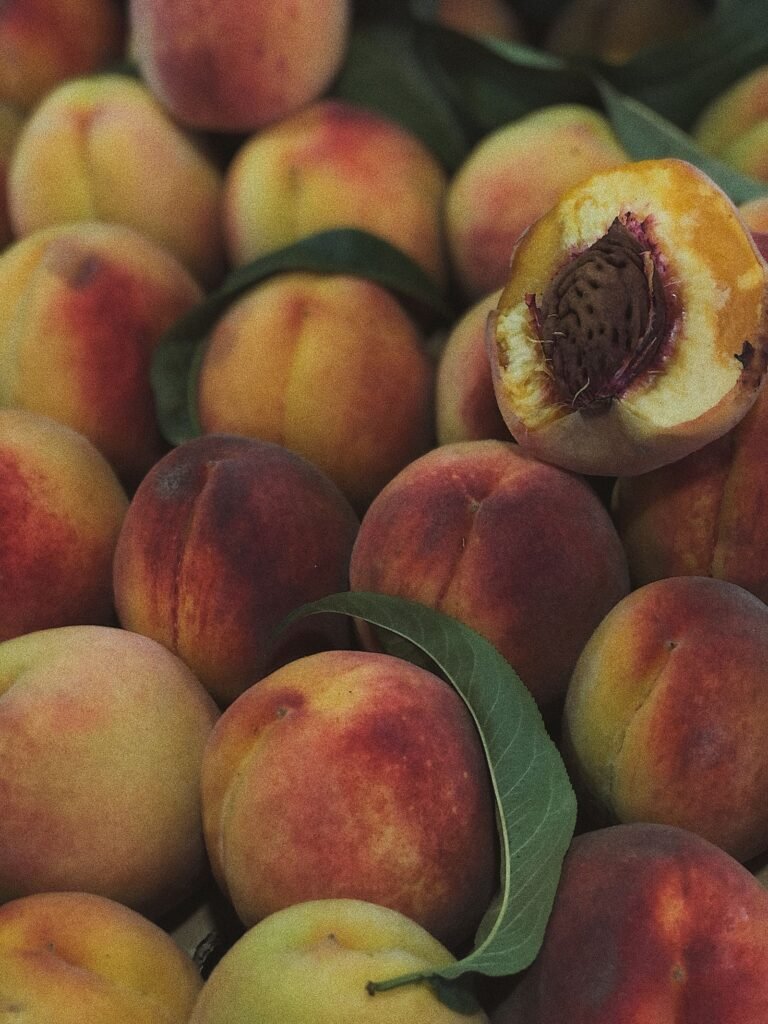
Yes, cats can eat peaches — but only the flesh, only peeled, and only a tiny piece now and then. The peach itself is not the problem. The pit is: it contains amygdalin, which releases hydrogen cyanide when chewed, and a swallowed pit can choke your cat or block its intestines.
Cats do not need peaches at all. They are obligate carnivores, built to get nutrition from meat, and they cannot even taste sweetness. A peach is a curiosity for your cat, never a nutritional need — if your cat shows no interest, do not push it.
Why the Peach Pit Is So Dangerous for Cats
The danger of a peach pit comes in two forms, and both are serious.
First, the kernel inside the pit contains amygdalin. When a cat chews the kernel, amygdalin breaks down and releases hydrogen cyanide, which stops the body’s cells from using oxygen. Signs include difficulty breathing, bright red gums, dilated pupils, vomiting, drooling, and collapse. This is an emergency: call your vet or an animal poison helpline immediately.
Second, a pit swallowed whole is a physical emergency even without any cyanide. A peach pit is large, hard, and smooth, and it can lodge in a cat’s throat or block the intestines. An intestinal blockage often needs surgery and can become life-threatening if it is not treated quickly.
The same cyanide risk applies to peach tree leaves and stems, and wilted leaves are considered even more dangerous than fresh ones. If you have a peach tree in your yard, pick up fallen fruit and pits regularly and do not let your cat chew on fallen leaves or stems.
Safe vs Unsafe Parts of a Peach
Not every part of a peach carries the same risk:
| Part of the peach | Safe for cats? | Why |
|---|---|---|
| Ripe flesh (peeled, pit removed) | Yes, in tiny amounts | Soft, hydrating, and low in toxins — a rare occasional treat |
| Peach pit (stone) | Never | Contains amygdalin, which releases cyanide when chewed; also a choking and blockage risk |
| Peach skin | Best avoided | May carry pesticide residue and is hard for cats to digest — peel it off |
| Leaves and stems | Never | Contain the same cyanide-releasing compounds as the pit; wilted leaves are worse |
| Canned peaches in syrup | Never | Packed in sugary syrup, far too much sugar for a cat |
| Dried peaches | Never | Concentrated sugar, often with preservatives such as sulphites |
| Peach yoghurt or flavoured treats | Never | Added sugar and dairy — cats do not need either, and many are lactose intolerant |
How Much Peach Can I Give My Cat?
A teaspoon-size piece of peeled flesh is enough. Most vets and pet nutrition guides agree on 1 to 2 small pieces per week at most — and less is fine too. Treats of all kinds, including fruit, should stay under 10% of your cat’s daily calories, and fruit should be a rare exception rather than a daily habit.
Kittens, cats with diabetes, cats with kidney disease, and cats on a veterinary diet should not be given peach at all. Cats with diabetes should avoid fruit because of its natural sugar, and cats on a veterinary diet should eat nothing outside that diet unless your vet says otherwise. When in doubt, ask your vet first.
To serve peach safely:
- Pick a ripe, fresh peach. It should be soft and fragrant, with no mould. Unripe or spoiled fruit is more likely to upset your cat’s stomach.
- Wash it well. Rinse under running water to remove dirt and surface pesticide residue.
- Peel it. Remove the fuzzy skin completely — it holds the most pesticide residue and is the hardest part to digest.
- Remove the pit completely. Cut the flesh away from the stone and throw the pit in a bin your cat cannot reach. Check that no pit fragments remain.
- Cut a tiny piece. A piece about the size of your fingertip is plenty. Dice it small so your cat cannot gulp a large chunk.
- Offer it once and watch. If your cat eats it, watch for vomiting, diarrhoea, or loss of appetite over the next few hours. If your cat refuses it, do not insist.
Can Cats Eat Peach Skin?
It is best not to. Peach skin is not poisonous in the same way the pit is, but it holds the most pesticide residue of any part of the fruit, even after washing, and its fuzzy fibre is hard for a cat’s short digestive tract to handle — it can cause vomiting or diarrhoea. Peeling takes a few seconds and removes both problems, so always peel before serving.
Can Cats Eat Canned or Dried Peaches?
No. Canned peaches are almost always packed in syrup, which is far too much sugar for a cat — and cats cannot even taste the sweetness, so there is no benefit to offset the risk. Dried peaches are worse in some ways: drying concentrates the natural sugars, and many dried fruits contain sulphites that can upset a cat’s stomach. Fresh, peeled flesh is the only form that is ever acceptable. The same goes for peach-flavoured yoghurt, juice, and treats: they are made for humans, with added sugar and dairy, and are not suitable for cats.
What to Do If Your Cat Eats a Peach Pit
If your cat eats a peach pit, treat it as an emergency and act immediately:
- Call your vet or an animal poison helpline right away. Do not wait for symptoms to appear — by the time symptoms show, the situation may already be serious.
- Do not try to induce vomiting. Never make your cat vomit unless your vet specifically tells you to. Vomiting can bring a sharp pit fragment back up the throat and cause choking.
- Note what happened. Tell the vet whether the pit was chewed or swallowed whole and how long ago it happened.
- Watch for warning signs. Difficulty breathing, bright red gums, dilated pupils, drooling, vomiting, diarrhoea, lethargy, or loss of appetite all need urgent veterinary attention.
- Follow the vet’s instructions. The vet may want to see your cat immediately, monitor it, or take X-rays to check for a blockage.
A cat that chews a pit may show signs of cyanide poisoning, while a cat that swallows a pit whole is more at risk of choking or an intestinal blockage. Either way, the right move is the same: call your vet now, not later.
Do Peaches Offer Any Benefits to Cats?
A small piece of fresh peach flesh contains vitamins A and C, potassium, fibre, and water, so it can be a hydrating little snack. But your cat already gets all of these nutrients from a complete, balanced cat food, and a cat’s digestive system is not built to make much use of fruit. Peaches offer your cat almost no benefit — they are a novelty, not a health food. If you want to give your cat a treat, a small piece of cooked meat or a vet-approved cat treat is a better choice.
That said, if your cat is curious and you want to share a tiny piece of summer fruit, a peeled piece of peach is one of the safer options — as long as the pit, skin, leaves, and stems are nowhere near it. Our can cats eat mango guide covers another stone fruit with the same pit rules, and our can cats eat apples guide explains why apple seeds carry a similar cyanide risk. For a fruit with no pit worries at all, see our can cats eat pumpkin guide.
The Bottom Line
Can cats eat peaches? Yes — a teaspoon-size piece of peeled, pit-free flesh, once or twice a week at most. The flesh is safe in tiny amounts; the pit, leaves, and stems are dangerous; canned or dried peaches are out. Keep pits out of reach, pick up fallen fruit under peach trees, and if your cat ever eats a pit, call your vet immediately. When in doubt, skip the peach — a complete cat food already gives your cat everything it needs.
Frequently Asked Questions
+ Are peach pits toxic to cats?
Yes. The kernel inside a peach pit contains amygdalin, which releases hydrogen cyanide when chewed. A swallowed-whole pit is also a choking and intestinal blockage risk. If your cat eats a peach pit, call your vet or an animal poison helpline immediately and do not try to induce vomiting.
+ Can cats eat peach skin?
It is best not to. Peach skin is not poisonous like the pit, but it carries the most pesticide residue and is hard for cats to digest, which can cause vomiting or diarrhoea. Always wash and peel the peach before offering a piece of flesh.
+ How much peach can I give my cat?
A teaspoon-size piece of peeled flesh, 1 to 2 small pieces per week at most. Treats of all kinds should stay under 10% of your cat’s daily calories. Kittens, diabetic cats, cats with kidney disease, and cats on a veterinary diet should not be given peach at all.
+ What should I do if my cat eats a peach pit?
Call your vet or an animal poison helpline right away — do not wait for symptoms. Do not try to induce vomiting unless your vet tells you to. Note whether the pit was chewed or swallowed whole, and watch for difficulty breathing, bright red gums, dilated pupils, vomiting, or lethargy.
+ Can cats eat canned peaches?
No. Canned peaches are packed in sugary syrup that is far too high in sugar for a cat, and they may contain preservatives. Dried peaches are also out, because drying concentrates the sugars and they often contain sulphites. Only fresh, peeled flesh is ever acceptable.
Sources
- ASPCA — People Foods to Avoid Feeding Your Pets: https://www.aspca.org/pet-care/animal-poison-control/people-foods-avoid-feeding-your-pets
- PetMD — Which Fruits Can Cats Eat?: https://www.petmd.com/cat/nutrition/which-fruits-can-cats-eat
- ASPCA Animal Poison Control Center: https://www.aspca.org/pet-care/animal-poison-control