
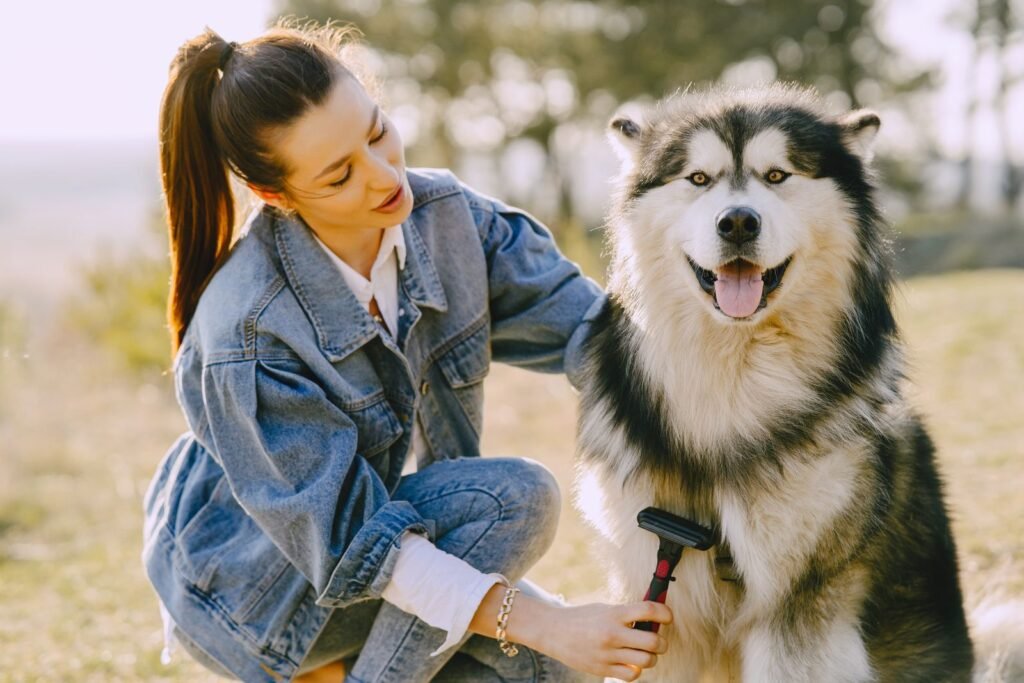
You cannot stop your dog from shedding — and you should not try to. Shedding is normal and healthy: old or damaged hair falls out so new hair can grow in. What you can do is manage it, so far less of that loose hair ends up on your sofa, your clothes, and your floors. The secret is a simple routine: the right brush for your dog’s coat type, regular brushing, the right bathing schedule, and a healthy diet.
Most dogs shed year-round, with heavier “blow-outs” in spring and autumn as they change coats. Double-coated breeds like Huskies and Golden Retrievers shed the most, but even short-coated dogs leave hair everywhere. Whatever your dog’s coat, the routine below cuts loose hair dramatically — usually within two to three weeks.
Find Your Dog’s Coat Type First
Before you buy a brush, work out which coat your dog has — the wrong tool can be useless, or even uncomfortable:
- Short coat — smooth, close-lying hair (Beagles, Boxers, Labradors). Sheds steadily all year, usually in small amounts.
- Medium coat — longer hair with some feathering (Golden Retrievers, Border Collies, Spaniels). Sheds more, and tangles if neglected.
- Double coat — a dense, soft undercoat beneath a longer topcoat (Huskies, German Shepherds, Samoyeds). Sheds heavily, especially in spring and autumn when the undercoat “blows”.
If you are unsure, run your fingers through your dog’s fur: if you feel a thick, fluffy layer under the longer guard hairs, your dog has a double coat.
The Coat-Type Routine Table
This is the routine that beats most of the advice online, because it matches the work to the coat instead of giving every dog the same schedule:
| Coat type | Brush to use | How often to brush | Bath schedule |
|---|---|---|---|
| Short coat | Rubber brush or bristle brush | Weekly (2–3 times a week in shedding season) | Every 4–6 weeks, or only when dirty |
| Medium coat | Slicker brush, then a comb | 2–3 times a week (daily in shedding season) | Every 4–6 weeks, brush right after |
| Double coat | Undercoat rake first, then slicker brush | Daily in shedding season, 3–4 times a week otherwise | Every 4–6 weeks, brush right after while the coat dries |
The PDSA gives similar guidance, and Blue Cross notes that grooming for 15 to 30 minutes a week helps reduce the hair shed around the house.
The Shedding-Reduction Routine, Step by Step
The whole session takes 10 to 20 minutes, and it works best outside, where the loose hair blows away instead of settling on your carpet.
- Brush before the bath. Start with a dry coat. A quick brush-out removes surface dirt and loose hair so the bath can do its job.
- Work in sections, head to tail. Brush in the direction the hair grows, in short, gentle strokes. Work one section at a time and clear the brush often — a brush clogged with hair does nothing.
- For double coats, rake first, then slicker. Push an undercoat rake gently through the coat to pull out the dead undercoat, working in layers. Only then use the slicker brush to smooth the topcoat and catch what is left. Never rake against the grain or press hard.
- Bath every 4–6 weeks with a dog shampoo. Warm water and a gentle dog shampoo loosen dead undercoat that brushing alone cannot reach. For a full guide on timing, see how often should you bathe your dog.
- Brush right after the bath. This is the step most owners skip, and it is the most effective one: a bath loosens dead undercoat, and brushing while the coat dries pulls it out in one go instead of letting it fall around your house over the next week.
- Finish with a quick once-over outdoors. A final five-minute brush outside catches the last loose hairs.
- Vacuum and lint-roll on the same day. Brushing moves the hair from the dog to your home in a controlled way — so clean up right after, while it is all in one place. A rubber-bristled broom works well on furniture, and a lint roller handles clothes; see our guide on how to remove dog hair from clothes.
Choosing the Right Brush
- Undercoat rake — the single most effective tool for double-coated heavy shedders. Its spaced metal teeth reach through the topcoat and pull out dead undercoat.
- Slicker brush — fine wire pins, good for medium and long coats and for finishing after the rake. Use light pressure: pressing hard scratches the skin.
- Bristle brush — best for short coats. It removes loose surface hair and spreads the coat’s natural oils.
- Rubber brush or grooming glove — gentle, good for short-coated dogs and dogs that dislike brushes, and handy in the bath.
- Deshedding tools — bladed tools like the FURminator and similar designs. They work, but they are easy to overuse: too much pressure or too many passes can cut healthy topcoat and irritate the skin. Use them once a week at most, with light, even strokes, and stop if the skin looks pink.
Bathing: Helpful, But More Is Not Better
Bathing helps shedding because warm water and shampoo loosen dead undercoat. But bathing too often backfires. Blue Cross advises that dogs with a healthy coat and no skin problems really only need bathing when they are dirty, and that washing too often can dry out the coat and cause skin irritation. Over-bathing strips the natural oils from the skin, and dry, irritated skin can actually shed more.
Stick to every 4 to 6 weeks for most dogs, and only bathe more often if your dog gets genuinely dirty. Always use a shampoo made for dogs, never human shampoo: human products are the wrong pH for dog skin and dry it out. If your dog has a skin condition, ask your vet which shampoo to use before you buy anything medicated.
Do Deshedding Shampoos Work?
Honestly, they help a little — but they do not stop shedding. Deshedding shampoos contain conditioners that help loosen dead coat during the wash, so more of it rinses out in the bath instead of falling out later. Used together with a brush-out after the bath, they make the routine more effective. Used on their own, with no brushing, they achieve very little. The brush does the real work.
Can Diet Reduce Dog Shedding?
Diet supports a healthy coat, but it cannot stop normal shedding — and no supplement can, either. A dog fed a complete, balanced food that meets AAFCO or FEDIAF standards already gets the protein and fats a healthy coat needs. Hair is mostly protein, so good-quality animal protein matters, and omega-3 fatty acids support skin and coat health. If your dog’s coat looks dull, dry, or brittle, talk to your vet about the food first.
Be wary of any product that promises to “stop shedding” through diet or supplements. Shedding is a normal biological process, not a deficiency, and no food or pill switches it off.
Keep the House Under Control
Even with the best routine, some hair will reach your floors — the goal is less of it, not zero:
- Vacuum twice a week in shedding season, including under furniture. A pet-hair attachment picks up far more than a standard head.
- Wash bedding weekly — your dog’s bed holds more loose hair than anywhere else.
- Cover favourite spots with washable throws — far easier to wash a throw than to de-hair a sofa.
- Lint-roll before you leave the house, not after you arrive.
When Shedding Is a Vet Problem
Normal shedding is gradual, even, and your dog’s skin looks healthy underneath. See your vet promptly if you notice any of these:
- A sudden change — your dog starts shedding far more than usual, seemingly overnight.
- Bald patches or thinning in one area, especially if the skin looks red, flaky, or sore.
- Skin irritation — constant scratching, licking, or biting at the coat, or a rash under the fur.
- Other symptoms — weight loss, lethargy, or a dull coat alongside the shedding.
These can be signs of allergies, parasites, hormonal problems, or stress — all need a vet to diagnose and treat. Do not try to fix sudden, patchy, or itchy shedding with a new shampoo or supplement: get the cause checked first. While you groom, check your dog’s ears and skin too — see our guide on how to clean dog ears.
Frequently Asked Questions
+ What causes excessive shedding in dogs?
Most heavy shedding is normal — seasonal coat changes in spring and autumn, plus year-round shedding in double-coated breeds. Excessive shedding beyond your dog’s normal pattern can be caused by stress, poor diet, allergies, parasites, or hormonal problems. If the increase is sudden, or comes with bald patches, itching, or sore skin, see your vet.
+ When is shedding a vet problem?
When it changes suddenly, when it leaves bald patches or thinning in one area, or when it comes with skin irritation, constant scratching, or other symptoms such as weight loss or lethargy. Normal shedding is gradual and even, with healthy skin underneath. Sudden, patchy, or itchy shedding needs a vet to find the cause — do not try to fix it with a new shampoo or supplement first.
+ Do deshedding shampoos work?
They help a little, but they do not stop shedding. Deshedding shampoos loosen dead coat during the wash, so more of it rinses out in the bath — but they only make a real difference when you brush your dog right after the bath. On their own, with no brushing, they achieve very little. No shampoo can stop normal shedding.
+ How often should I brush a shedding dog?
It depends on the coat: short coats need a weekly brush, medium coats 2–3 times a week, and double coats daily during shedding season and 3–4 times a week otherwise. The PDSA gives the same guidance — many long-haired breeds need daily brushing, medium coats a few sessions a week, and short coats a weekly brush. Brush for 10–20 minutes per session, and always brush right after a bath.
+ Can diet reduce dog shedding?
Diet supports a healthy coat but cannot stop normal shedding. A complete, balanced food with good-quality protein gives the coat what it needs, and omega-3 fatty acids support skin and coat health. No food or supplement switches shedding off — be wary of any product that claims to. If your dog’s coat looks dull or brittle, talk to your vet about the food before adding anything.
Sources
- PDSA — Grooming your pet: https://www.pdsa.org.uk/pet-help-and-advice/looking-after-your-pet/all-pets/grooming-pets
- Blue Cross — How often should you wash your dog?: https://www.bluecross.org.uk/advice/dog/wellbeing-and-care/how-often-should-you-wash-your-dog
- Blue Cross — Dog skin and ear care: https://www.bluecross.org.uk/advice/dog/health-and-injuries/skin-and-ear-care-for-dogs
- RSPCA — Grooming your dog: https://www.rspca.org.uk/adviceandwelfare/pets/dogs/health/grooming
Pingback: Dog Grooming Clippers: Choose & Use Them Safely
Pingback: Clumber Spaniel: Temperament, Traits & Complete Care Guide
Pingback: Red Labrador: Traits, Temperament & Care Guide
Pingback: Black German Shepherd: Traits, Temperament & Care Guide
Pingback: Long Haired German Shepherd: Traits, Temperament & Care Guide