
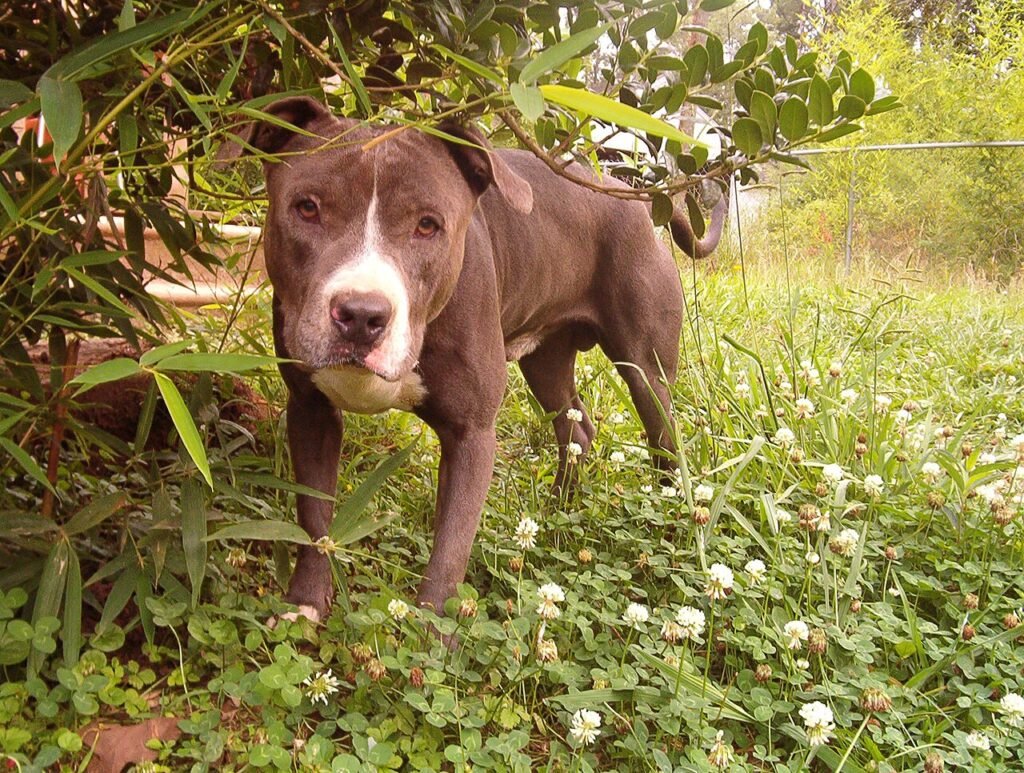
A blue nose pitbull is not a separate breed. The term describes pit bull-type dogs with a grey-blue, or “blue”, coat and a matching blue-grey nose, lips, and eye rims. The colour comes from a diluted black pigment, which gives the coat its distinctive silvery-grey look. Dogs sold as blue nose pitbulls are usually American Pit Bull Terriers, American Staffordshire Terriers, or mixes of pit bull-type dogs. This distinction matters, because it affects what you can expect from their temperament, health, and legal status, and it helps you avoid breeders who market colour as if it were a rare breed of its own.
What does “blue nose” actually mean?
Blue in this context is a diluted form of black, not a bright blue colour. A blue nose dog has a grey or slate-coloured coat, often with white markings on the chest, face, or paws, and a nose that is grey rather than black. Some blue dogs also have lighter eyes, although eye colour can vary and may change as a puppy grows.
The AKC recognises the American Staffordshire Terrier, a closely related pit bull-type breed, but not the American Pit Bull Terrier or a separate blue nose breed; the UKC does recognise the American Pit Bull Terrier. Always ask which breed or mix a listed dog actually is.
Colour alone does not change temperament: a blue coat does not make a dog calmer, more aggressive, or more loyal than any other colour. What matters is the individual dog, their early experiences, and how they are raised.
Appearance, size, and lifespan
Pit bull-type dogs are medium-sized, muscular, and athletic, with a broad head, strong jaw, short coat, and a tail that is often described as whip-like. Most American Pit Bull Terriers stand around 43 to 53 centimetres tall at the shoulder and weigh roughly 14 to 27 kilograms, with males usually larger than females. American Staffordshire Terriers are similar in size, though stockier in build. Individual and mixed-breed dogs can fall outside these ranges.
Their short coat is easy to groom but offers little protection from cold or sun, so they may need a coat in winter and shade in summer. Average lifespan is often given as 12 to 14 years, depending on genetics, weight, diet, exercise, and veterinary care.
Temperament: what to realistically expect
Well-raised pit bull-type dogs are often described as confident, people-oriented, and eager to please. Many are affectionate, playful, and clownish at home. They are also strong and sometimes boisterous, which means they can accidentally knock over small children simply by jumping up in excitement, even when they mean no harm.
No breed is automatically good or bad with children, other dogs, or strangers. Early socialisation is essential: introduce puppies gently to different people, sounds, places, and animals. Some pit bull-type dogs are very sociable with other dogs, while others prefer people; this variation is normal.
Supervise any strong dog around children, and teach children not to pull ears or tails or disturb a dog while eating or sleeping. If a dog shows fear, resource guarding, or persistent reactivity, do not use punishment; seek advice from your vet or a certified behaviourist.
Exercise, training, and enrichment
Blue nose pitbulls are active dogs that need plenty of daily exercise. Most healthy adults do well with at least an hour of activity a day, split between walks, play, and training, plus enrichment such as puzzle feeders. Puppies need shorter, gentler exercise while their joints develop; your vet can advise on the right amount.
Training should start early, using positive reinforcement: rewards, praise, and play. Teach sit, down, recall, loose-lead walking, and leave it first. Because these dogs are strong, lead training and a well-fitting harness matter; avoid methods relying on pain or fear.
Mental stimulation matters as much as exercise: a bored dog is more likely to chew, dig, or bark excessively. Rotate toys, hide treats for sniffing games, and supervise chewing, removing toys that break into pieces.
Health, grooming, and feeding
Pit bull-type dogs are generally healthy, but can be prone to skin allergies, hip dysplasia, and knee problems. Dilute coat colours, including blue, are sometimes linked to colour dilution alopecia, which can cause thinning hair and skin problems in some dogs. Not every blue dog develops this condition, but it is a reason to choose a breeder who health-tests breeding dogs, or a rescue that provides a veterinary assessment, and to have any coat or skin changes checked promptly by your vet.
Grooming is straightforward: brush weekly, bathe when needed, check ears, and trim nails. Feed a complete, age-appropriate food in measured portions, with treats only a small part of daily calories. For allergies, digestive, or weight issues, ask your vet for a feeding plan rather than trying home remedies.
Is one right for you, and is it legal where you live?
A blue nose pitbull can suit an active household with time for training, exercise, and companionship, but not everyone. They need consistent training, secure fencing, and an owner comfortable with a strong, energetic dog, and do not suit long periods alone.
Before committing, check your lease and insurer’s rules if you rent, as some restrict pit bull-type dogs, and plan introductions to existing pets carefully. Rescue staff can tell you about an individual dog’s temperament, which is more useful than breed labels. Beware breeders charging a large premium purely for blue colour or refusing health tests.
Breed-specific legislation varies widely by country, region, city, and housing provider; some places restrict or ban pit bull-type dogs, others use behaviour-based rules. This article is not legal advice: check local animal-control rules and housing or insurance conditions before bringing one home.
See also: terrier, hypoallergenic dog breeds, and Carolina dog.
Frequently Asked Questions
Is a blue nose pitbull a separate breed?
No. It is a colour description, not a breed, referring to pit bull-type dogs with a diluted grey-blue coat and matching grey nose.
Are blue nose pitbulls more aggressive than other pitbulls?
No. Temperament depends on genetics, socialisation, training, and environment, and varies between individual dogs.
How big do blue nose pitbulls get?
Most stand around 43 to 53 centimetres at the shoulder and weigh roughly 14 to 27 kilograms, males usually larger; mixes can fall outside these ranges.
Do blue nose pitbulls have more health problems?
Some blue dogs develop colour dilution alopecia, causing hair thinning and skin problems, but not all do. They can also be prone to skin allergies and joint problems.
Are blue nose pitbulls good family dogs?
Many are affectionate and devoted, but suitability depends on the individual dog, training, and supervision. They are strong, so interactions with small children should always be supervised.
Are blue nose pitbulls legal where I live?
It depends on your location, as rules vary by country, region, city, and housing provider and change over time. Check local rules before buying or adopting; this is general information only, not legal advice.
For a shorter, stockier bully-type companion, the Pocket Bully packs the same loyal temperament into a 13–17 inch frame.
Sources
- AKC — American Staffordshire Terrier: https://www.akc.org/dog-breeds/american-staffordshire-terrier/
- AKC: https://www.akc.org/ | PetMD: https://www.petmd.com/ | AVMA: https://www.avma.org/