
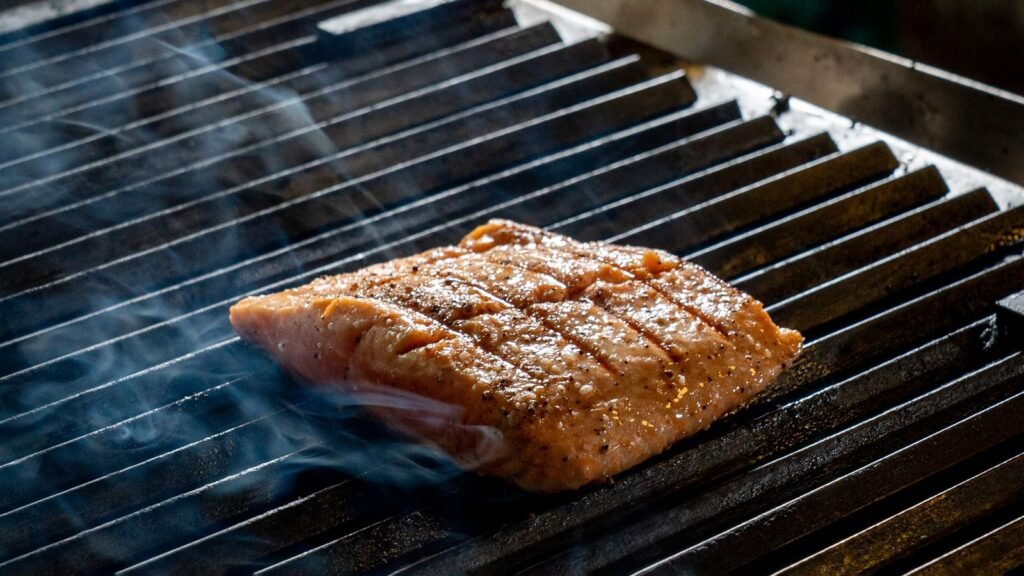
Yes, dogs can eat fish — with two non-negotiable conditions: it must be fully cooked, and it must be completely boneless. Served that way, plain fish is a healthy, protein-rich addition to a dog’s diet. Served raw, undercooked, or full of bones, the same fish can cause serious harm.
Fish is one of the most common proteins in commercial dog food for good reason. It is easy to digest, rich in lean protein, and a natural source of omega-3 fatty acids, which support skin, coat, joint, and heart health. But not every fish is equal, and preparation matters more than the species you pick. This guide covers which fish are safe for dogs, which to avoid, how much to serve, and what to do if your dog steals raw fish.
Why Fish Can Be Good for Dogs
Fish offers a nutritional profile that few other proteins match. A plain, cooked fillet gives your dog high-quality, easily digestible protein with relatively little fat, plus long-chain omega-3 fatty acids (EPA and DHA) that help keep skin healthy and coats shiny. That is why fish-based diets are often recommended for dogs with food sensitivities: fish is a “novel” protein for many dogs, meaning they are less likely to have developed an allergy to it than to chicken or beef.
Fish also supplies vitamin D, selenium, iodine, and B vitamins. Fish works best as an occasional topper alongside a balanced dog food, not as a replacement for it. A fish-only homemade diet would miss nutrients your dog needs, so talk to your vet or a veterinary nutritionist before trying one.
What Fish Is Safe for Dogs to Eat?
The safest fish for dogs are shorter-lived species that are low in mercury and easy to debone. These are the ones vets and pet nutrition sources most often name:
| Fish | Omega-3 level | Mercury level | Notes |
|---|---|---|---|
| Salmon | High | Low | One of the best choices; serve cooked and boneless only |
| Sardines | High | Very low | Small, soft bones usually dissolve when cooked, but remove them anyway |
| Cod | Moderate | Low | Lean, gentle on sensitive stomachs |
| Whitefish | Moderate | Low | A common limited-ingredient kibble protein |
| Trout | Moderate | Low | Similar profile to salmon, usually well tolerated |
| Tilapia | Low | Very low | Lean and mild, but lower in omega-3s |
| Herring | High | Low | Rich in omega-3s; watch the salt in canned versions |
| Flounder | Low–moderate | Low | Lean and mild |
Salmon deserves a special note: it is one of the best fish for dogs, but raw salmon is genuinely dangerous. Raw or undercooked salmon and trout from the Pacific Northwest can carry a parasite that causes salmon poisoning disease, which is fatal in dogs if untreated. Cooking kills the parasite completely, so cooked salmon is safe — raw salmon never is.
Canned fish needs care too. Canned tuna in water, drained, is acceptable as a very occasional treat, but tuna is a larger, longer-lived fish and carries more mercury than the fish above, so it should not be a regular choice. Canned sardines in water (no added salt) are a better canned option. Never feed fish packed in oil with added salt, or any fish in brine, sauces, or spicy marinades.
Can Dogs Eat Raw Fish?
No. Raw fish should never be fed to dogs. Raw fish can carry parasites and bacteria, including the parasite behind salmon poisoning disease, and some raw fish contain thiaminase, an enzyme that breaks down thiamine (vitamin B1) and can cause deficiency over time. Cooking destroys both the parasites and the thiaminase.
What if your dog steals raw salmon, as many owners worry about? Do not panic, but do not ignore it either. Watch for vomiting, diarrhea, lethargy, loss of appetite, or fever over the following days — salmon poisoning symptoms typically appear within about a week. If any of these appear, or if you know the fish was wild-caught raw salmon or trout, call your vet promptly and tell them exactly what happened. This guide is general information, not a diagnosis — your vet is the right person to decide whether treatment is needed. For more on handling stolen food safely, our guide to can dogs eat shrimp follows the same cooked-only, shell-off logic.
Can Dogs Eat Fish Bones?
No. Fish bones are a choking hazard and can splinter, cutting the mouth, throat, or digestive tract, or causing a blockage. This applies to cooked bones as well as raw ones — cooking does not make fish bones safe.
Always fillet the fish and run your fingers over the flesh to check for pin bones before serving. Buy boneless fillets when you can, and never hand your dog the leftover skeleton from your own dinner plate. The same caution applies to fish skin in large amounts: a little plain, cooked skin is usually fine, but skin is fatty, and a large portion can upset a sensitive stomach or contribute to pancreatitis risk in dogs prone to it.
How to Prepare Fish for Your Dog
Preparing fish for your dog is simple, and the whole point is to keep it plain:
- Choose a low-mercury fish. Salmon, sardines, cod, whitefish, trout, or tilapia are good starting points.
- Cook it thoroughly. Bake, grill, steam, or poach until the flesh flakes easily and reaches a safe internal temperature. No raw or undercooked portions.
- Remove every bone. Use boneless fillets and check by hand for pin bones before serving.
- Keep it plain. No salt, butter, oil, garlic, onion, lemon pepper, breading, or sauces. Garlic and onion are toxic to dogs, and fried or battered fish adds fat your dog does not need.
- Cool it and flake it. Let the fish cool to room temperature and break it into small, bite-sized pieces before mixing it into your dog’s food.
- Start small. Offer a small portion first and watch for any digestive upset or allergic reaction (itching, ear redness, vomiting, or loose stool) over the next day before making fish a regular topper.
How Much Fish Can a Dog Eat?
Fish should be treated like any other treat: it should make up no more than about 10% of your dog’s daily calories. That rule keeps the overall diet balanced and prevents a tasty topper from crowding out complete nutrition.
As a rough guide, a small dog (under 20 pounds) can have about 1 to 2 ounces of cooked fish a few times a week, a medium dog (20 to 50 pounds) about 2 to 4 ounces, and a large dog (over 50 pounds) about 4 to 6 ounces. These are starting points, not prescriptions — adjust to your dog’s size, weight, and total diet, and ask your vet if your dog has kidney disease, pancreatitis, or is on medication.
A small amount daily is fine for most healthy dogs if it stays within the 10% treat allowance and the fish is low in mercury — daily sardines are a popular choice for exactly that reason. Daily tuna is not a good idea, since mercury accumulates over time.
Fish to Avoid for Dogs
Some fish are best left off your dog’s menu entirely:
- Swordfish, king mackerel, tilefish, and shark. These large, long-lived predators accumulate the highest mercury levels.
- Albacore (white) tuna. Much higher in mercury than light tuna; keep it rare or skip it.
- Raw or undercooked fish of any kind. Parasites, bacteria, and thiaminase risk.
- Smoked, cured, or salted fish. Far too much salt for a dog.
- Fish sticks, battered, or fried fish. Breading, salt, and frying oil add fat and calories without nutrition.
- Fish with bones, heads, tails, or fins attached. Choking and splinter risk. Always check treat labels for onion or garlic powder too.
The Bottom Line
Cooked, boneless, plain fish — especially low-mercury choices like salmon, sardines, cod, and whitefish — is a healthy treat for most dogs. Raw fish, bones, high-mercury species, and seasoned or fried preparations are where the real risks live. Keep portions within the 10% treat rule, start small, and check with your vet if your dog has any health condition or is trying fish for the first time. If you want a portion framework matched to your dog’s weight, our dog food calculator can help you work out daily calories before you add any topper.
Frequently Asked Questions
+ What fish is safe for dogs to eat?
Low-mercury, cooked, boneless fish is safest: salmon, sardines, cod, whitefish, trout, tilapia, herring, and flounder. Serve them plain, with all bones removed.
+ Can dogs eat raw fish?
No. Raw fish can carry parasites and bacteria, including the parasite that causes salmon poisoning disease in dogs, and some raw fish contain thiaminase, which breaks down vitamin B1. Always cook fish thoroughly.
+ Can dogs eat fish bones?
No. Fish bones can choke a dog, splinter, and cut or block the digestive tract. Always serve boneless fillets and check by hand for pin bones.
+ Is tuna safe for dogs?
Occasionally, in small amounts: drained canned tuna in water is acceptable as a rare treat. Tuna is higher in mercury than most fish, so it should not be a regular food, and albacore tuna should be avoided or kept very rare.
+ How much fish can a dog eat?
Keep fish within the 10% treat rule: roughly 1 to 2 ounces a few times a week for a small dog, 2 to 4 ounces for a medium dog, and 4 to 6 ounces for a large dog, adjusted to your dog’s diet and your vet’s advice.
+ Is salmon good for dogs?
Yes — cooked, boneless salmon is one of the best fish for dogs, rich in omega-3 fatty acids and lean protein. Raw or undercooked salmon is dangerous because it can carry the parasite that causes salmon poisoning disease.
Sources
- PetMD — Can dogs eat fish? https://www.petmd.com/dog/nutrition/can-dogs-eat-fish
- VCA Animal Hospitals — Salmon poisoning: https://vcahospitals.com/know-your-pet/salmon-poisoning
- ASPCA — People foods to avoid feeding your pets: https://www.aspca.org/pet-care/animal-poison-control/people-foods-avoid-feeding-your-pets
- U.S. Food and Drug Administration — Advice about eating fish: https://www.fda.gov/food/consumers/advice-about-eating-fish
Pingback: Can dogs eat shrimp? Safety, Benefits & Risks Explained - PawMeridian