
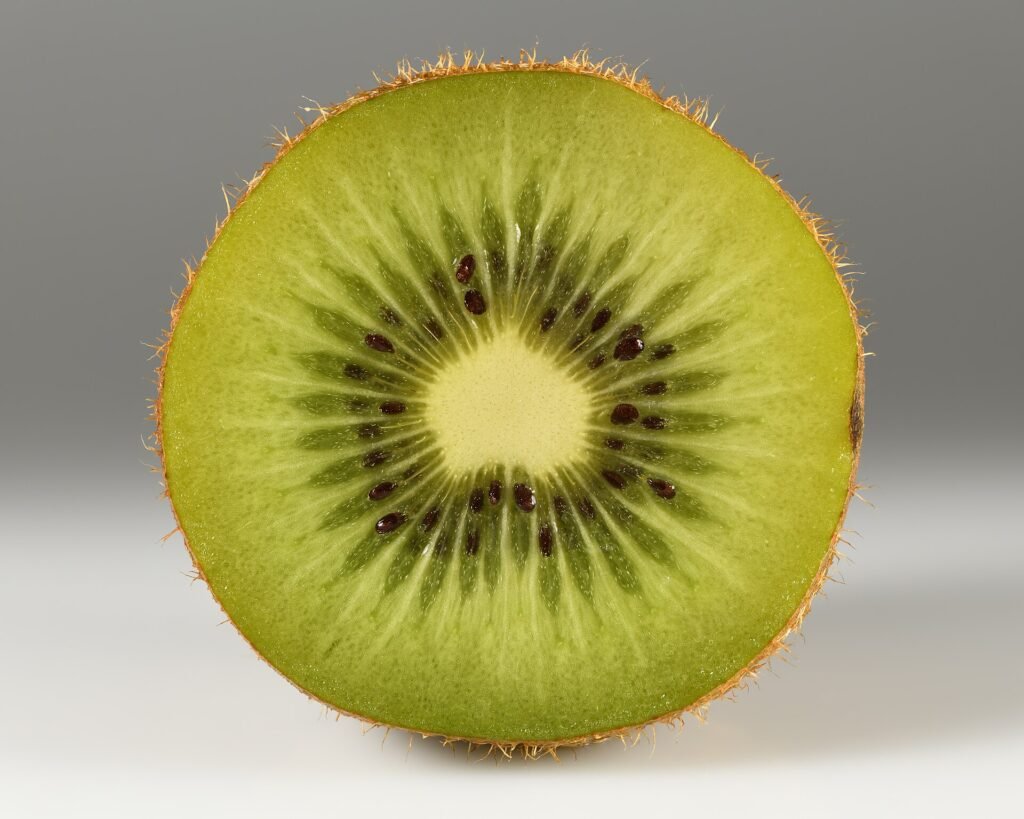
Yes, dogs can eat kiwi — but only the peeled flesh, and only in small amounts. Kiwifruit is not toxic to dogs, and its soft green flesh is rich in vitamin C, fiber, and potassium. The parts to leave out are the fuzzy skin, which is hard to digest and can be a choking risk if swallowed whole, and the whole fruit itself, which should never be handed to a dog uncut. Peel it, cut it into small pieces, and kiwi becomes a simple, refreshing occasional treat.
Kiwi for dogs works best as a rare snack rather than a regular addition to the bowl. Like all treats, it should stay within the 10% rule: treats, including fruit, should make up no more than 10% of your dog’s daily calories, with the rest coming from a complete and balanced dog food. Dogs do not need fruit in their diet, but a few small pieces of kiwi now and then are a safe way to share a healthy snack.
Is Kiwi Safe for Dogs?
Kiwi flesh is safe for dogs. Veterinary guidance from PetMD confirms that dogs can have peeled, diced kiwi in small amounts, and the American Kennel Club lists kiwi among the fruits dogs can eat. Kiwi does not appear on the ASPCA’s list of people foods to avoid feeding pets, which covers the genuinely dangerous foods like grapes, onions, and garlic.
The safety warnings around kiwi are about preparation, not the flesh itself. A whole kiwi is a choking hazard, especially for small dogs and enthusiastic eaters that swallow food without chewing. The fuzzy skin is tough, fibrous, and difficult for dogs to digest, and it can cause gas or stomach discomfort. The tiny black seeds, by contrast, are not toxic — unlike apple seeds, kiwi seeds do not contain cyanide compounds — but scooping most of them out is still the safest habit, particularly for puppies and small breeds.
If you are exploring other fruits, our guide to can dogs eat pears follows the same peel-and-remove-the-risky-parts logic, and our can dogs eat pineapple guide covers another sweet tropical fruit. Dragon fruit works the same way — peel it, dice the flesh, and skip the skin: our guide to can dogs eat dragon fruit covers portions, benefits and the risks to watch for.
Benefits of Kiwi for Dogs
Kiwi earns its place as a dog treat for a few solid reasons. It is an excellent source of vitamin C, which supports immune function and tissue repair, though dogs can make their own vitamin C and do not need it supplemented. It provides potassium, which supports normal muscle and nerve function, and dietary fiber, which supports healthy digestion. Kiwi also contains vitamin E and antioxidants, and it is high in water, which makes it a hydrating snack on a warm day.
Because kiwi is soft and naturally sweet, most dogs enjoy it, and a few small pieces can satisfy a dog that begs for table food without loading up on calories. For dogs that need to watch their weight, that matters — though kiwi’s natural sugar still counts, so portions must stay small.
That said, keep any benefit claim modest. A treat-sized portion of kiwi is not a medicine and will not fix a health problem. If your dog has diabetes, weight problems, or a sensitive stomach, check with your vet before offering kiwi at all — and consult a vet promptly if your dog shows signs of illness after eating anything new.
The Risks: Skin, Whole Fruit, Sugar and Sweetened Products
The risks of kiwi for dogs are almost entirely avoidable, and they come down to four points.
First, the skin. Can dogs eat kiwi skin? The skin is not toxic, but it is rough, fibrous, and hard to digest. It can cause gas, stomach discomfort, and, if swallowed in a large piece, a blockage risk. Always peel kiwi before serving it to your dog. The packet advice is simple: skin off, every time.
Second, the whole fruit. Never hand your dog an unpeeled, uncut kiwi. Cut it into bite-sized pieces first. This matters most for small dogs, puppies, and dogs that gulp their food.
Third, sugar. Kiwi is naturally sweet, and that sugar adds up. Dogs with diabetes should only have kiwi if your vet agrees, and overweight dogs should get it rarely and in tiny amounts. Too much kiwi at once can also cause loose stools or diarrhea in any dog, because of the combination of sugar, fiber, and water.
Fourth, sweetened kiwi products. Dried kiwi, kiwi jam, kiwi jelly, and kiwi-flavored candy are not safe choices for dogs. Dried fruit concentrates the sugar dramatically, and jams and candies add sugar and sometimes sweeteners that dogs should not eat. Stick to fresh, ripe kiwi served plain.
Skin-On vs Peeled: Why Peeling Wins
Some owners wonder whether washing the skin is enough. It is not the best choice for dogs. Washed kiwi skin is still tough and fibrous, and a dog’s digestive system handles it poorly compared to a human’s. Peeling removes the problem entirely, and it takes only a few seconds. There is no nutritional reason to keep the skin on: the flesh underneath holds the vitamin C, fiber, and potassium your dog would benefit from anyway. For puppies, small dogs, and dogs with sensitive stomachs, peeled is the only sensible option.
How to Serve Kiwi to Your Dog: Step by Step
Serving kiwi safely takes about a minute. Follow these steps:
- Choose a ripe kiwi. It should give slightly when pressed gently. Unripe kiwi is hard and sour; overripe kiwi is mushy and more likely to upset the stomach.
- Wash it well. Rinse under running water to remove dirt and surface residue.
- Peel it completely. Use a peeler or a knife and remove all of the fuzzy brown skin.
- Cut it in half and scoop out most of the seeds. The tiny seeds are not toxic, but removing the bulk of them is the safest habit, especially for small dogs.
- Cut into bite-sized pieces. Small cubes or thin slices prevent choking, especially for small breeds and enthusiastic eaters.
- Serve plain. No sugar, no yogurt coating, no kiwi-flavored desserts. Just fresh kiwi.
- Start small. Offer one or two small pieces the first time and watch for any stomach upset over 24 hours.
Never feed your dog kiwi that has been canned in syrup or stored in sweetened juice. Fresh kiwi only, served plain.
How Much Kiwi Can a Dog Eat?
Kiwi is a treat, not a meal, so keep portions modest and within the 10% treat rule. The table below gives general guidance, but your vet’s advice for your individual dog always comes first.
| Dog size | Example breeds | Safe kiwi portion (occasional treat) |
|---|---|---|
| Extra-small (under 10 lbs) | Chihuahua, Yorkie | 1–2 small pieces |
| Small (10–30 lbs) | Beagle, French Bulldog | 2–4 small pieces |
| Medium (30–50 lbs) | Cocker Spaniel, Border Collie | 4–6 small pieces |
| Large (over 50 lbs) | Labrador, German Shepherd | 6–8 small pieces |
Offer kiwi no more than once or twice a week, not daily, and reduce other treats on days your dog gets fruit so the total treat allowance stays in check.
Can puppies eat kiwi? Puppies can have a tiny taste of peeled kiwi once they are eating solid food, but keep it to one small piece and watch for digestive upset — their stomachs are more sensitive than an adult dog’s. If your puppy has a sensitive stomach, skip kiwi until they are older and check with your vet first.
If your dog eats a whole kiwi or a large piece of skin by accident, do not panic, but do not ignore it either. Watch for vomiting, diarrhea, lethargy, loss of appetite, or difficulty passing stools, and consult a vet if you notice any of these signs. Never try to induce vomiting at home unless a vet tells you to.
Frequently Asked Questions
+ Can dogs eat kiwi?
Yes, dogs can eat kiwi in moderation. Serve only the peeled flesh, cut into small bite-sized pieces, as an occasional treat within the 10% treat rule. Kiwi flesh is not toxic to dogs.
+ Can dogs eat kiwi skin?
No, you should always peel kiwi before giving it to your dog. The skin is not toxic, but it is tough and fibrous, hard to digest, and can cause gas, stomach discomfort, or a choking risk if swallowed in a large piece.
+ Are kiwi seeds safe for dogs?
Yes, kiwi seeds are not toxic to dogs — unlike apple seeds, they do not contain cyanide compounds. Still, scooping most of the seeds out is the safest habit, especially for puppies and small dogs, since the flesh is what you want to serve.
+ How much kiwi can I give my dog?
Keep kiwi within the 10% treat rule, once or twice a week at most. Extra-small dogs can have 1-2 small pieces, small dogs 2-4 pieces, medium dogs 4-6 pieces, and large dogs 6-8 pieces as an occasional treat. Always follow your vet’s guidance for your dog’s weight and health.
+ Can puppies eat kiwi?
Puppies can have a tiny taste of peeled kiwi once they are eating solid food — one small piece is enough for a first try. Their stomachs are more sensitive than an adult dog’s, so watch for digestive upset over 24 hours and check with your vet if you are unsure.
Sources
- American Kennel Club — Fruits and Vegetables Dogs Can and Can’t Eat: https://www.akc.org/expert-advice/nutrition/fruits-vegetables-dogs-can-and-cant-eat/
- ASPCA — People Foods to Avoid Feeding Your Pets: https://www.aspca.org/pet-care/animal-poison-control/people-foods-avoid-feeding-your-pets
- PetMD — Can Dogs Eat Kiwi?: https://www.petmd.com/dog/nutrition/can-dogs-eat-kiwi
- PetMD — What Fruits Can Dogs Eat?: https://www.petmd.com/dog/nutrition/what-fruits-can-dogs-eat