
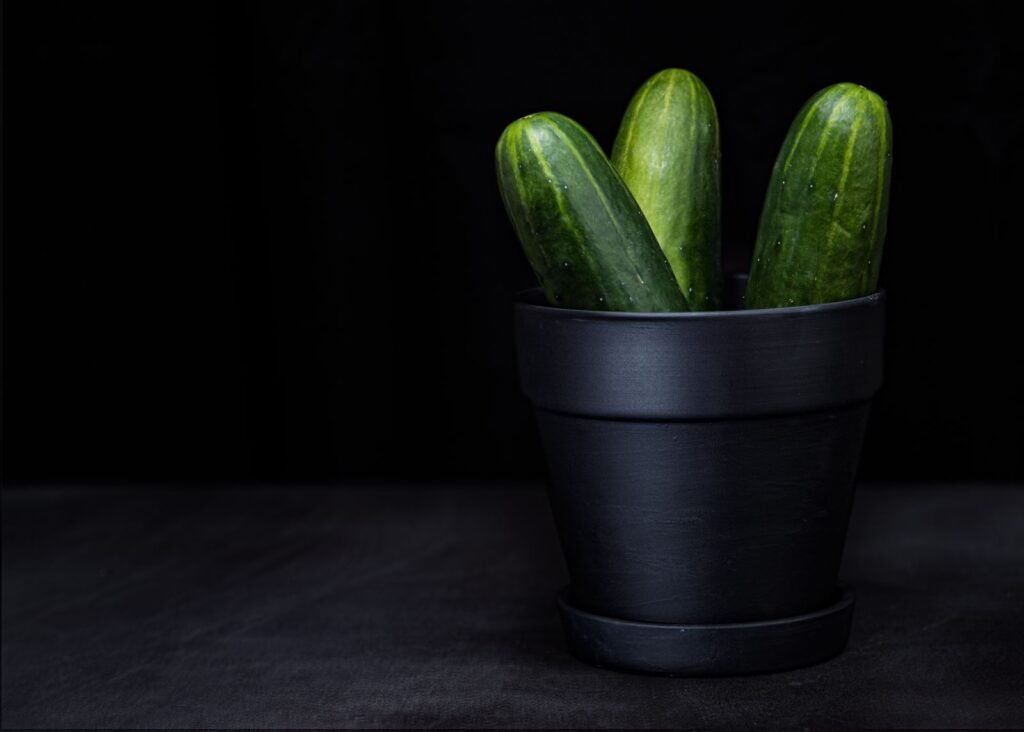
Yes, dogs can eat cucumber — fresh, plain, and in moderation. If your dog just stole one off the counter, relax: plain cucumber is not toxic, and a stolen slice or two is very unlikely to cause worse than a mildly upset stomach. Watch for loose stools over the next day, especially if your dog is small and swallowed a large piece whole.
Cucumber is one of the simplest vegetables to share: about 95–96% water, only ~8 calories per half-cup of slices, plus vitamins K and C, potassium, and magnesium. The rules that matter are about serving, not whether you serve it.
Is Cucumber Safe for Dogs?
Cucumber is safe for dogs when served fresh and plain. The American Kennel Club and PetMD list it among the vegetables dogs can eat, and the ASPCA does not list it as toxic. The warnings around cucumber are not about the vegetable itself — they are about portion size, piece size, and pickled versions.
Fresh cucumber is very different from a pickle. Pickles are cucumbers soaked in brine, and that brine is the problem: it is high in salt and often seasoned with garlic, onion, or other spices. Garlic and onion are toxic to dogs, and excess salt can cause vomiting and diarrhea. Even a plain dill pickle is too salty and acidic to be a good treat. Stick to fresh cucumber.
The other safety point is physical: a whole cucumber or thick round slice can choke or block, particularly for small dogs and gulpers. Always cut cucumber into small, bite-sized pieces first.
For other vegetables, see our can dogs eat green beans guide and our can dogs eat watermelon guide.
Benefits of Cucumber for Dogs
Cucumber earns its place for three reasons. First, hydration: almost entirely water, a few slices refresh on a hot day or after a walk without meaningful calories.
Second, weight control. At roughly 8 calories per half-cup, cucumber is far lighter than most commercial treats — a medium biscuit can carry 40. Swapping a biscuit for a few slices cuts treat calories dramatically while still giving your dog something crunchy.
Third, sugar content, or rather the lack of it. Cucumber is very low in sugar, which is why vets often suggest it for overweight and diabetic dogs — it will not spike blood sugar the way fruit treats can. Still, cucumber is a treat, not a treatment: check with your vet first if your dog has diabetes or a weight plan, and always consult a vet if your dog shows signs of illness after eating something new.
Cucumber also provides fiber, vitamins K and C, potassium, and magnesium — not a superfood, since complete dog food covers these, but a better-than-average treat.
The Risks: Choking, Upset Stomachs, and Pickles
The risks are almost entirely avoidable and come down to three points. First, choking and blockage: never hand your dog a whole cucumber or a thick round slice. Cut it into small pieces or thin half-moons, and supervise the first few times, especially with small breeds and enthusiastic eaters.
Second, stomach upset from too much. A whole cucumber in one sitting can cause gas, loose stools, or diarrhea — the most common cucumber problem, and a portion problem, not a toxicity problem. Start with one or two small pieces and watch for upset over the next day before offering a full portion.
Third, pickles and seasoned cucumber. Salt, vinegar, garlic, onion, and spice blends have no place in a dog’s bowl — serve cucumber plain or not at all.
Can Dogs Eat Cucumber Skin and Seeds?
This is the one point where sources disagree, so here is the settled answer: cucumber skin and seeds are both safe for dogs, but peeling and deseeding is the safer choice for sensitive stomachs.
The skin is edible and adds fiber, but it is also where pesticide residue and wax collect, and it can be harder to digest. Wash thoroughly, and peel for puppies, small dogs, or sensitive stomachs. For a healthy adult dog, washed skin left on is fine.
The seeds are soft, small, and not toxic — unlike apple or pear seeds, they carry no cyanide concern. For sensitive stomachs, though, removing them reduces upset risk. Practical rule: leave skin and seeds on for a healthy adult dog if the cucumber is well washed and cut small; peel and deseed for puppies, small dogs, and sensitive stomachs.
How to Serve Cucumber to Your Dog: Step by Step
Serving cucumber safely takes about a minute. Follow these steps:
- Choose a fresh, firm cucumber. It should feel solid, not soft or shriveled.
- Wash it well. Rinse under running water to remove dirt, pesticide residue, and wax.
- Peel if needed. Peel for puppies, small dogs, or sensitive stomachs. Otherwise, washed skin is fine.
- Cut into bite-sized pieces. Small cubes or thin half-moons prevent choking. Never serve whole cucumbers or thick rounds.
- Remove seeds for sensitive dogs. Scoop the seeds out if your dog has a delicate stomach.
- Serve plain. No salt, no dressing, no dip, no pickling brine.
- Start small. Offer one or two small pieces the first time and watch for stomach upset over 24 hours.
For a summer variation, freeze thin slices and offer one or two as a cool treat on a hot day. Supervise closely — a frozen piece is still a choking risk if too large, and it should be thin enough to crunch, not swallow whole.
How Much Cucumber Can a Dog Eat?
Cucumber is a treat, so keep it within the 10% rule: treats should make up no more than 10% of your dog’s daily calories, with the rest coming from a complete and balanced dog food. The table below gives general guidance, but your vet’s advice for your individual dog always comes first.
| Dog size | Example breeds | Safe cucumber portion (occasional treat) |
|---|---|---|
| Extra-small (under 10 lbs) | Chihuahua, Yorkie | 1–2 thin slices |
| Small (10–25 lbs) | Beagle, French Bulldog | 2–4 thin slices |
| Medium (25–50 lbs) | Cocker Spaniel, Border Collie | A small handful of slices |
| Large (over 50 lbs) | Labrador, German Shepherd | A small handful of slices |
Offer cucumber a few times a week, not daily, and cut back other treats those days. Puppies can have one small, peeled piece once eating solid food — keep it minimal, as puppy stomachs are more sensitive.
If your dog eats a whole cucumber or a large chunk, do not panic, but monitor for vomiting, diarrhea, lethargy, or blockage signs such as straining or abdominal pain, and consult a vet promptly if any appear. Never induce vomiting at home unless a vet tells you to.
Frequently Asked Questions
+ Can dogs eat cucumber skin and seeds?
Yes, both are safe. The skin is edible and adds fiber, and the seeds are soft and non-toxic. Wash thoroughly first, and peel and deseed for puppies, small dogs, or sensitive stomachs.
+ How much cucumber can I give my dog?
Keep cucumber within the 10% treat rule: a few thin slices a few times a week. Extra-small dogs can have 1–2 slices, small dogs 2–4, and medium or large dogs a small handful.
+ Can dogs eat pickles instead of cucumber?
No. Pickling brine is high in salt and often contains garlic, onion, or spices that are harmful to dogs. Serve fresh, plain cucumber instead.
+ Is cucumber good for overweight or diabetic dogs?
Cucumber is one of the better treats for overweight and diabetic dogs: about 95% water, very low in calories, and very low in sugar. It still counts toward the treat allowance, so check with your vet first.
+ Can puppies eat cucumber?
Yes, one small, peeled, bite-sized piece once they are eating solid food. Keep portions minimal and watch for digestive upset.
Sources
- American Kennel Club — Can Dogs Eat Cucumbers?: https://www.akc.org/expert-advice/nutrition/can-dogs-eat-cucumbers/
- PetMD — Can Dogs Eat Cucumbers?: https://www.petmd.com/dog/nutrition/can-dogs-eat-cucumbers
- ASPCA — People Foods to Avoid Feeding Your Pets: https://www.aspca.org/pet-care/animal-poison-control/people-foods-avoid-feeding-your-pets
- American Kennel Club — Fruits and Vegetables Dogs Can and Can’t Eat: https://www.akc.org/expert-advice/nutrition/fruits-vegetables-dogs-can-and-cant-eat/
General information only, not veterinary advice. Always consult a vet before adding a new food to your dog’s diet.