
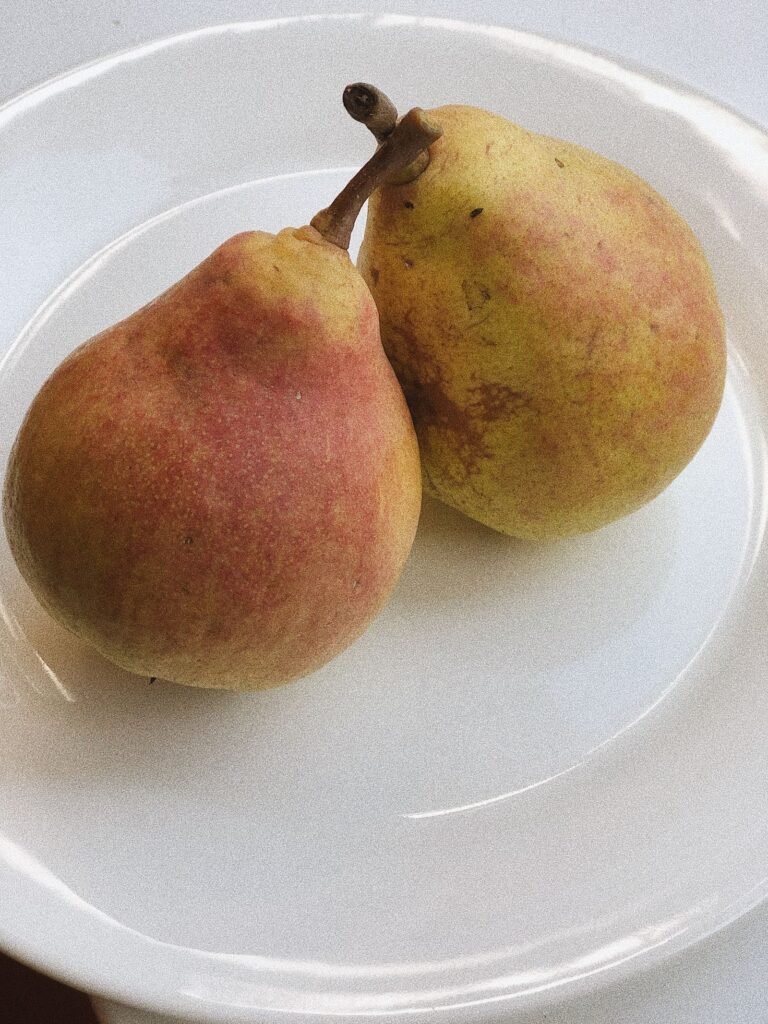
Yes, dogs can eat pears — but only the flesh, and only after you remove the seeds and core. Fresh pear flesh is a safe, sweet treat for most dogs, packed with fiber and vitamins. The parts you must never serve are the seeds, which contain trace cyanide compounds, and the tough core, which is a choking risk. Get those two things right and pears are one of the simpler fruits to share with your dog.
Pears are also a useful alternative when you want a low-fat, hydrating snack. They are mostly water, they are naturally sweet without added sugar, and a few small slices go a long way. Like all treats, though, pear should stay within the 10% rule: treats, including fruit, should make up no more than 10% of your dog’s daily calories, with the rest coming from a complete and balanced dog food.
Are Pears Safe for Dogs?
Pear flesh is safe for dogs. Veterinary guidance from the American Kennel Club and PetMD lists pears among the fruits dogs can eat, provided they are served fresh, ripe, and properly prepared. The safety warnings around pears are not about the flesh at all — they are about what surrounds it.
The seeds are the main concern. Like apple seeds, pear seeds contain amygdalin, a compound that can release small amounts of cyanide when chewed and digested. A single swallowed seed is unlikely to harm a medium or large dog, but there is no reason to take the risk, and small dogs are more vulnerable. Always core the pear and discard every seed before serving.
The core itself is hard, fibrous, and awkwardly shaped, which makes it a choking hazard, especially for dogs that gulp food without chewing. The stem poses the same problem. Remove the core, stem, and seeds, and what is left is perfectly dog-friendly.
If you are exploring other fruits, our guide to can dogs eat pineapple follows the same flesh-only logic, and our can dogs eat watermelon guide covers another hydrating summer fruit.
Benefits of Pears for Dogs
Pears earn their place as a dog treat for a few solid reasons. They are rich in dietary fiber, which supports healthy digestion and regular bowel movements. They provide vitamin C, which supports immune function, and vitamin K, which plays a role in blood clotting and bone health. Pears also contain copper, a mineral dogs need in small amounts for iron metabolism and connective tissue.
Because pears are high in water and low in fat, they are a lighter option than many commercial treats. A few slices can satisfy a dog that begs for table food without loading up on calories. For dogs that need to watch their weight, that matters — though pear’s natural sugar still counts, so portions must stay small.
Pears are also gentle on the stomach for most dogs. Unlike citrus fruits, they are not acidic, and unlike grapes or raisins, they carry no toxicity risk in the flesh. That makes them a good first fruit to try if your dog has never had fresh fruit before. As with any new food, introduce a small amount first and watch for loose stools or gas over the next day before offering a full portion.
The Risks: Seeds, Sugar, Skin and Canned Pears
The risks of pears for dogs are almost entirely avoidable, and they come down to four points.
First, seeds and core, as covered above. Never hand your dog a whole pear or a leftover core to gnaw on. Core it yourself, check for stray seeds, and throw the core away.
Second, sugar. Pears are naturally sweet, and that sugar adds up. Dogs with diabetes or weight problems should only have pear occasionally and in small amounts, and only if your vet agrees. If your dog is on a weight-management plan, ask your vet whether fruit treats fit before adding them — and consult a vet promptly if your dog shows signs of illness after eating anything new.
Third, canned pears. Canned pears in syrup are not safe for dogs. The syrup is loaded with added sugar, and some canned fruit products contain preservatives or sweeteners that dogs should not eat. Even pears canned in juice are a poor choice: they are softer, sweeter, and harder to portion than fresh pear. Stick to fresh, ripe pears every time.
Fourth, the skin. Can dogs eat pear skin? Yes, in most cases the skin is safe and adds fiber. But the skin is also where pesticide residue collects, so wash the pear thoroughly, and if your dog has a sensitive stomach, peel it. For small dogs and puppies, peeled, bite-sized pieces are the safest option because skin can be harder to digest.
How to Serve Pears to Your Dog: Step by Step
Serving pears safely takes about a minute. Follow these steps:
- Choose a ripe pear. It should give slightly when pressed near the stem. Unripe pears are hard and harder to digest; overripe pears are mushy and more likely to upset the stomach.
- Wash it well. Rinse under running water to remove dirt and surface residue.
- Cut it in half and remove the core. Scoop out the entire core, including every seed, and discard the stem.
- Peel if needed. Peel for puppies, small dogs, or dogs with sensitive stomachs. Otherwise, washed skin is fine.
- Cut into bite-sized pieces. Small cubes or thin slices prevent choking, especially for small breeds and enthusiastic eaters.
- Serve plain. No sugar, no caramel, no yogurt coating, no pear-flavored desserts. Just fresh pear.
- Start small. Offer one or two small pieces the first time and watch for any stomach upset over 24 hours.
Never feed your dog pear-flavored candy, pear pie filling, or dried pears with added sugar. Dried fruit concentrates the sugar dramatically — a handful of dried pear slices can contain as much sugar as several whole pears.
How Much Pear Can a Dog Eat?
Pear is a treat, not a meal, so keep portions modest and within the 10% treat rule. The table below gives general guidance, but your vet’s advice for your individual dog always comes first.
| Dog size | Example breeds | Safe pear portion (occasional treat) |
|---|---|---|
| Small (under 10 lbs) | Chihuahua, Yorkie | 1–2 small cubes |
| Medium (10–50 lbs) | Beagle, Cocker Spaniel | 2–4 small slices |
| Large (over 50 lbs) | Labrador, German Shepherd | 4–6 small slices |
Offer pear no more than a few times a week, not daily, and reduce other treats on days your dog gets fruit so the total treat allowance stays in check. Puppies can have a tiny taste of pear once they are eating solid food, but keep it to one small cube and watch for digestive upset — their stomachs are more sensitive than an adult dog’s.
If your dog eats a pear core or a few seeds by accident, do not panic, but do not ignore it either. A single seed or two is unlikely to cause poisoning, yet you should watch for vomiting, diarrhea, lethargy, or difficulty breathing, and consult a vet if you notice any of these signs or if your dog swallowed a large amount of core material. Never try to induce vomiting at home unless a vet tells you to.
Frequently Asked Questions
+ Can dogs eat pears?
Yes, dogs can eat fresh pear flesh in moderation. Remove the seeds, core, and stem first, cut the flesh into bite-sized pieces, and serve it plain. Pear flesh is safe; the seeds and core are not.
+ Are pear seeds poisonous to dogs?
Pear seeds contain amygdalin, which can release trace amounts of cyanide when chewed. A single seed is unlikely to seriously harm a larger dog, but seeds should always be removed before serving. If your dog eats several seeds, watch for vomiting, diarrhea, or lethargy and consult a vet.
+ Can dogs eat pear skin?
Yes, washed pear skin is safe for most dogs and adds fiber. Wash the pear thoroughly first, and peel it for puppies, small dogs, or dogs with sensitive stomachs, since skin can be harder to digest.
+ How much pear can I give my dog?
Keep pear within the 10% treat rule: a few small pieces a few times a week. Small dogs can have 1–2 small cubes, medium dogs 2–4 slices, and large dogs 4–6 slices as an occasional treat. Always follow your vet’s guidance for your dog’s weight and health.
+ Can dogs eat canned pears?
No, canned pears are not a good choice for dogs. Pears canned in syrup are loaded with added sugar, and even juice-packed pears are sweeter and harder to portion than fresh fruit. Stick to fresh, ripe pears served plain.
Unlike pears, plums carry a pit risk — see our plums for dogs guide for the flesh-only, pit-out rule.
Sources
- American Kennel Club — Fruits and Vegetables Dogs Can and Can’t Eat: https://www.akc.org/expert-advice/nutrition/fruits-vegetables-dogs-can-and-cant-eat/
- ASPCA — People Foods to Avoid Feeding Your Pets: https://www.aspca.org/pet-care/animal-poison-control/people-foods-avoid-feeding-your-pets
- PetMD — Can Dogs Eat Pears?: https://www.petmd.com/dog/nutrition/can-dogs-eat-pears
- PetMD — Dog Nutrition and Safe Fruits: https://www.petmd.com/dog/nutrition
Pingback: Can Dogs Eat Cranberries? Benefits, Risks & Safe Serving Guide - PawMeridian
Pingback: Can Dogs Eat Kiwi? Benefits, Risks & Safe Serving Guide - PawMeridian
Pingback: Chihuahua Dog: Temperament, Size & Complete Care Guide - PawMeridian
Pingback: Red Golden Retriever: Traits, Temperament & Complete Care Guide