
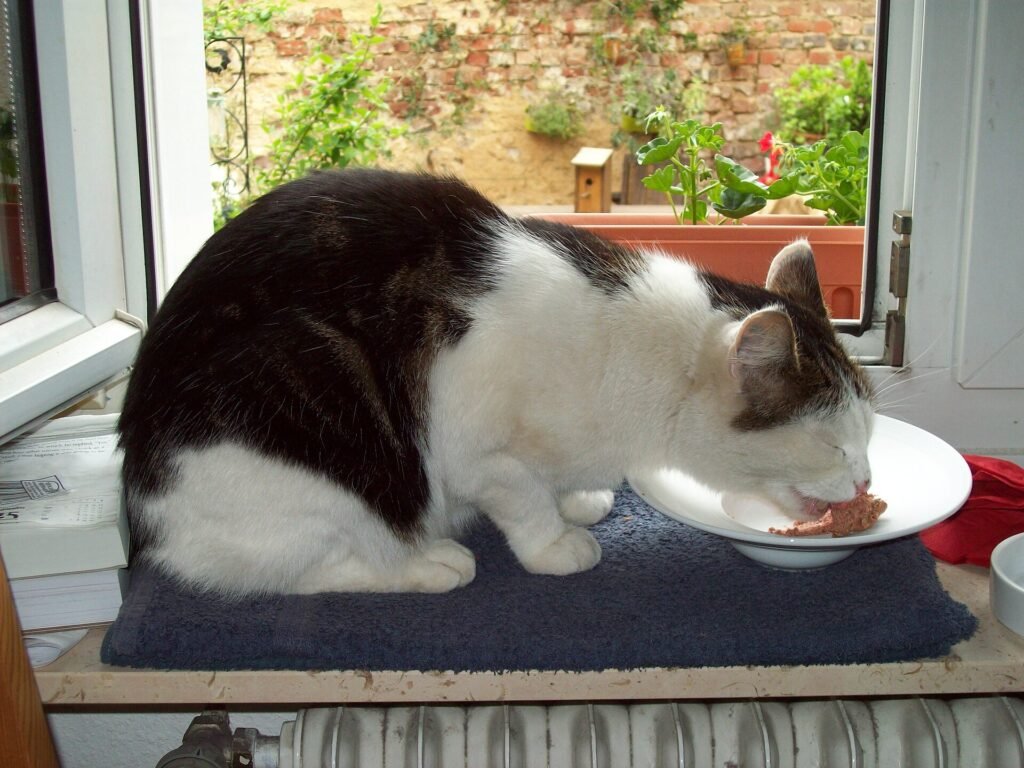
Feeding a cat looks simple — fill the bowl and walk away. But the amount, the timing and the type of food all shape your cat’s weight, energy and long-term health. The Association for Pet Obesity Prevention found that 61% of cats assessed at veterinary clinics carried excess weight, mostly from free-feeding. The good news: a healthy routine is easy once you know the basics.
Choosing the Right Food
Cats are obligate carnivores — they depend on nutrients found only in animal products, most importantly taurine, an amino acid they cannot make themselves. Without enough taurine, cats can develop heart disease and vision loss.
Look for food labelled “complete and balanced” with an AAFCO statement — it meets the recognised nutrient profiles for your cat’s life stage. Kittens need a growth formula, adults a maintenance formula from about 12 months, and seniors an easily digestible senior formula. Cats with a health condition need a diet your vet chooses. Never feed a cat dog food: it lacks taurine and other nutrients cats must get from their diet.
How Much Food Does a Cat Need Each Day?
It depends on your cat’s ideal weight, age and activity level. A typical healthy indoor adult cat weighing 4–5 kg (9–11 lb) needs roughly 200–250 calories a day; spayed or neutered cats need about 20% fewer.
| Ideal weight | Calories per day | Dry food only | Wet food only (85 g pouches) |
|---|---|---|---|
| 2.5 kg (5.5 lb) | 120–140 kcal | 30–35 g | About 1.5 |
| 3.5 kg (8 lb) | 160–180 kcal | 40–45 g | About 2 |
| 4.5 kg (10 lb) | 200–220 kcal | 50–55 g | About 2.5 |
| 5.5 kg (12 lb) | 230–250 kcal | 58–63 g | About 3 |
| 6.5 kg (14 lb) | 260–280 kcal | 65–70 g | About 3.5 |
Feed for the weight your cat should be, not the weight it is now, and ask your vet to confirm the target. Weigh food on a kitchen scale: a “cup” of kibble can be off by 30%. Check the calories on the label — dry food is usually 350–450 kcal per 100 g, wet food roughly 70–100 kcal per 85 g pouch. Treats and table scraps combined should stay under 10% of daily calories, about 20–25 calories for an average cat.
How Often Should You Feed a Cat?
Frequency depends on age. The Cornell Feline Health Center’s guidance is the simplest version to follow:
| Life stage | Age | Meals per day |
|---|---|---|
| Kitten | Under 6 months | 3–4 small meals |
| Junior | 6–12 months | 2–3 meals |
| Adult | 1–7 years | 2 meals, 8–12 hours apart |
| Senior | 7+ years | 2–3 smaller meals |
Kittens have tiny stomachs and enormous energy needs — four small meals a day up to about 12 weeks, then three until six months. Our guide to feeding a 3-month-old kitten covers that stage; weaning usually starts at 3–4 weeks and is complete by about 8 weeks.
Most healthy adult cats do best on two measured meals a day, morning and evening. Cats naturally prefer little and often, so splitting the daily ration into more small portions is fine if your schedule allows it. Senior cats often eat less at a sitting, so two to three smaller meals can be easier — but Cornell advises keeping the adult routine unless your vet says otherwise.
How to Feed a Cat: A Simple Daily Routine
- Weigh the day’s food in the morning, using the table above and your food’s label.
- Split it into two meals — half in the morning, half in the evening, roughly 8–12 hours apart, at the same times each day.
- Serve wet food at mealtimes and the measured dry portion at the second meal.
- Put the bowl in a quiet spot, away from the litter box and traffic; in a multi-cat home, each cat gets its own bowl.
- Time-limit wet food — pick up uneaten wet food after 20–30 minutes.
- Refresh the water daily, in a separate bowl away from the food bowl, and wash both bowls daily.
- Weigh your cat once a month. If it is gaining, cut the daily amount by about 10%; if it is losing weight without trying, talk to your vet.
Wet Food vs Dry Food
Neither is automatically better — both can be complete and balanced — but they work differently, and most vets recommend a mix of the two.
Wet food is about 70–80% water, so it helps with hydration. Cats have a naturally low thirst drive, and extra moisture supports the kidneys and bladder. It comes in built-in portions that make measuring easy — but it spoils quickly in the bowl and usually costs more per calorie.
Dry food is convenient, keeps well, and works in puzzle feeders that keep a cat busy. But it is only 8–12% moisture and very calorie-dense, so it is easy to over-pour — a small extra handful every day is enough to make a cat overweight over a year.
A practical compromise for a 200-calorie cat: one wet pouch in the morning (about 80–100 kcal) and a weighed dry portion in the evening. Split the daily target between the two foods — don’t feed a full portion of each.
Fresh Water Matters
Water is part of feeding, not an afterthought. Cats should always have fresh water available, and many drink more when the bowl sits away from the food bowl. As a rough guide, a cat needs about 60 ml of water per kilogram of body weight per day. If your cat suddenly drinks much more or less than usual, mention it to your vet.
Mistakes to Avoid
- Free-feeding dry food all day. An always-full bowl means no portion control, and most cats slowly gain weight.
- Cow’s milk. Many cats are lactose intolerant, and cow’s milk commonly causes diarrhoea. Kittens need kitten milk replacer, not cow’s milk.
- Sudden food changes. Switching foods overnight often causes an upset stomach. Mix the new food in gradually over 7–10 days.
- Toxic foods. Never feed onions, garlic, chocolate, caffeine, grapes, raisins, xylitol, alcohol or raw dough. Lilies are highly toxic to cats — keep them out of the house entirely.
- Ignoring a lost appetite. A cat that refuses food for more than a day should see a vet right away — cats can develop serious liver problems after just a couple of days without eating.
Small amounts of plain cooked meat or fish make fine occasional treats — our guides on can cats eat salmon and can cats eat pumpkin explain which everyday foods are safe and how much is sensible. Keep any extras inside that 10% treat budget.
The Bottom Line
How to feed a cat comes down to three habits: choose a complete and balanced food for your cat’s life stage, measure the daily amount instead of guessing, and serve it as two scheduled meals a day.
Frequently Asked Questions
+ How many times a day should I feed my cat?
Most healthy adult cats should eat twice a day, about 8–12 hours apart. Kittens under 6 months need 3–4 small meals a day, juniors aged 6–12 months need 2–3 meals, and senior cats often do best on 2–3 smaller meals a day.
+ How much food should I feed my cat per day?
A typical healthy indoor adult cat weighing 4–5 kg (9–11 lb) needs roughly 200–250 calories a day, split across two meals — about 50–55 g of dry food, or about 2.5 pouches (85 g) of wet food. Always check your food’s label and feed for your cat’s ideal weight.
+ Is wet food or dry food better for cats?
Both can be complete and balanced. Wet food is 70–80% water, so it helps with hydration and kidney health, while dry food is convenient and calorie-dense. Most vets recommend a mix — a wet meal in the morning and a weighed dry portion in the evening.
+ Can I leave food out for my cat all day?
It is not recommended. Free-feeding dry food all day removes portion control, and most cats slowly gain weight — 61% of cats assessed at vet clinics already carry excess weight. Scheduled, measured meals let you control calories and spot appetite changes early.
+ Can cats drink cow’s milk?
No. Many cats are lactose intolerant, and cow’s milk commonly causes diarrhoea. Kittens need kitten milk replacer rather than cow’s milk, and adult cats do not need milk at all — fresh water is what they need.
+ How do I switch my cat to a new food?
Mix the new food in gradually over 7–10 days, increasing the share of new food a little each day. A sudden switch often causes vomiting or diarrhoea, and some cats will refuse a new food outright if it appears without warning.
Sources
- Cornell Feline Health Center — How often should you feed your cat?: https://www.vet.cornell.edu/departments/cornell-feline-health-center/health-information/feline-health-topics/how-often-should-you-feed-your-cat
- International Cat Care — Feeding your cat or kitten: https://icatcare.org/articles/feeding-your-cat-or-kitten
- RSPCA Australia — What should you feed your cat or kitten?: https://www.rspca.org.au/latest-news/blog/what-should-you-feed-your-cat-or-kitten/
- Blue Cross — Kitten Food Advice: https://www.bluecross.org.uk/advice/cat/food-and-weight/kitten-food
- Petco — Vet Q&A: What’s the Right Amount of Wet & Dry Food for Your Cat Daily?: https://www.petco.com/pet-education/cat/vet-qa/cat-wet-dry-food-daily-amount
Pingback: Can Cats Eat Salmon? Benefits, Risks & Safe Preparation