
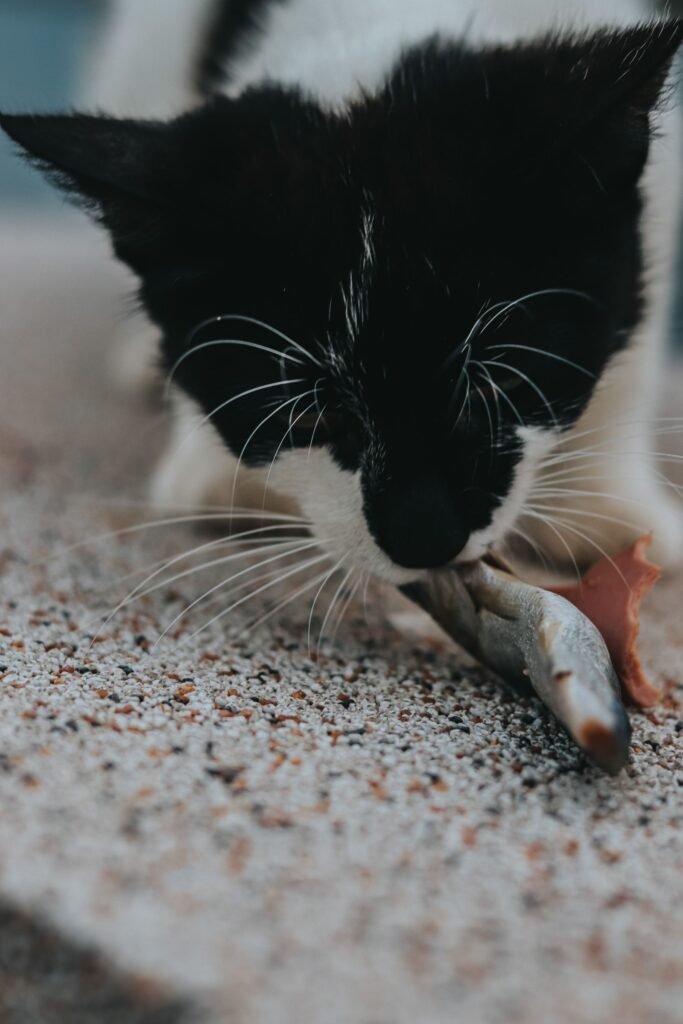
Yes, cats can eat salmon — but only when it is cooked, plain, and boneless. That one sentence covers most of what you need to know. Cooked salmon is a good source of protein and omega-3 fatty acids, and many cats love the taste. Raw salmon, smoked salmon, and seasoned salmon are a different story, and each carries risks that are easy to avoid by sticking to the plain-cooked rule.
Salmon for cats is best treated as an occasional treat, not a staple. Cats are obligate carnivores, so meat and fish suit them well, but a complete, balanced cat food already covers their nutritional needs. Salmon adds variety and omega-3s; it does not replace their regular diet. For the full routine — amounts, schedules and wet versus dry food — see our guide on how to feed a cat.
Is Salmon Good for Cats?
In small amounts, yes. Salmon is rich in high-quality protein and omega-3 fatty acids (EPA and DHA), which support skin and coat health, joint comfort, and normal brain and eye development in kittens. It also provides vitamin D, vitamin B12, selenium, and potassium. That nutritional profile is part of why salmon is such a common flavor in commercial cat foods.
The catch is balance. Salmon is also fairly high in fat and calories for a small animal, and it does not contain everything a cat needs on its own — notably, it is not a complete source of taurine and other nutrients cats require in precise amounts. That is why salmon works as a treat on top of a complete cat food, not as a replacement for it. A cat that eats mostly salmon, or mostly any single human food, risks nutritional gaps over time.
Can Cats Eat Raw Salmon?
No — raw salmon is not safe for cats. Raw fish can carry bacteria such as Salmonella and Listeria, and parasites that cooking kills. Raw fish also contains thiaminase, an enzyme that breaks down thiamine (vitamin B1). A thiamine deficiency in cats can cause serious neurological symptoms, including loss of coordination and seizures, so this is not a minor concern.
This rule covers sushi-grade salmon, raw offcuts from your own cooking, and any “fresh from the market” fish that has not been cooked. Freezing reduces some parasite risk but does not remove bacteria or thiaminase, so freezing is not a safe substitute for cooking. If salmon is going to your cat, it must be fully cooked through.
How to Prepare Salmon Safely for Your Cat
Preparing salmon for a cat takes only a few minutes, but every step matters. Follow these steps:
- Start with fresh, plain salmon. A skinless fillet is easiest. Avoid pre-marinated, smoked, cured, or seasoned fish.
- Cook it thoroughly. Bake, steam, grill, or poach the salmon until it flakes easily and is cooked all the way through. No pink, raw center.
- Use no seasoning at all. No salt, butter, oil, garlic, onion, lemon, sauces, or spice rubs. Cats do not need them, and several common seasonings are harmful to cats.
- Remove all bones. Check the fillet carefully with your fingers and pull out every pin bone. Even small bones can choke a cat or injure their throat or gut.
- Let it cool completely. Serve at room temperature, never hot from the pan.
- Flake it into small pieces. Small, bite-sized flakes are easier for a cat to eat and let you control the portion.
- Serve it plain, on its own or mixed into regular food. Do not add it to a bowl of seasoned leftovers from your own dinner.
If you are cooking salmon for yourself at the same time, simply set aside a small unseasoned portion for your cat before you season the rest. That keeps things simple and avoids any mix-ups.
How Much Salmon Can a Cat Eat, and How Often?
Salmon should stay within treat territory: no more than about 10 percent of your cat’s daily calories, and for most cats that means a small amount once or twice a week at most. A few small flakes or roughly a tablespoon of cooked, flaked salmon is plenty for an average adult cat in one serving.
| Cat | Suggested serving of cooked salmon | Frequency |
|---|---|---|
| Average adult cat | About 1 tablespoon, flaked | Once or twice a week at most |
| Small or less active cat | A few small flakes | Once a week at most |
| Kitten | Tiny taste only, if at all | Only with vet guidance |
Overfeeding salmon can lead to weight gain because of its fat content, and a diet heavy in fish has been linked in some cats to allergies and to high mercury exposure over time. Salmon is lower in mercury than large predatory fish like tuna or swordfish, but mercury still accumulates, which is another reason to keep portions small and occasional. If your cat has kidney disease, a fish allergy, or is on a restricted diet, ask your vet before offering salmon.
Can Cats Eat Salmon Skin?
Salmon skin is technically edible once cooked, but it is not a good idea for most cats. The skin is the fattiest part of the fish, so it adds a lot of calories and can upset a sensitive stomach, causing vomiting or diarrhea. Skin can also carry seasoning or cooking oil from your own meal. The safest choice is to remove the skin before serving and offer only the plain flesh.
Can Cats Eat Smoked Salmon?
No — smoked salmon is not safe for cats. Smoked and cured salmon is very high in salt, and cats are far more sensitive to excess sodium than humans. Too much salt can cause vomiting, diarrhea, excessive thirst, and in severe cases sodium poisoning. Smoked salmon is also often prepared with other flavorings and may not be cooked in a way that removes the same risks as raw fish. Lox, gravlax, and other cured salmon products fall in the same category: keep them off your cat’s plate.
Canned Salmon for Cats: Is It OK?
Canned salmon can be acceptable, but only if you choose carefully. Look for salmon canned in water with no added salt, and check the label for bones — canned salmon often contains soft, edible bones, which many cats handle fine, but if your cat is a gulper, pick boneless varieties. Avoid salmon canned in oil, brine, or sauces, and never offer salmon from a can that lists salt, garlic, or onion among the ingredients. As with fresh salmon, rinse it, serve a small amount, and treat it as an occasional extra rather than a meal.
Can Kittens Eat Salmon?
Kittens can have a tiny taste of plain cooked salmon once they are weaned and eating solid food, but it is not necessary and should be kept very small. Kittens have precise nutritional needs for growth, and their regular kitten food is formulated to meet them. A little cooked salmon as a rare treat is fine for most healthy kittens, but never raw salmon, and never enough to displace their normal food. If your kitten has a sensitive stomach, skip it and ask your vet first.
When to Skip Salmon and Call the Vet
Most cats handle a small amount of cooked salmon without any trouble, but watch for signs of a problem after the first few servings: vomiting, diarrhea, itchy skin, or swelling around the face could signal a fish allergy or intolerance. Stop offering salmon and consult a vet if any of these appear.
Also consult a vet rather than experimenting at home if your cat has kidney disease, pancreatitis, a known fish allergy, or is on a prescription diet — in those cases, even a small treat can interfere with their care. And if your cat ever eats raw salmon, smoked salmon, or salmon with bones or seasoning, watch for vomiting, diarrhea, lethargy, or difficulty swallowing, and call your vet promptly if anything seems off.
For another food where the preparation rules matter just as much, see our guide to can cats have peanut butter, and if your cat is a picky eater, our wet cat food guide can help you find a complete diet they actually enjoy.
Frequently Asked Questions
+ Can cats eat raw salmon?
No. Raw salmon can carry bacteria and parasites, and it contains thiaminase, an enzyme that destroys thiamine (vitamin B1). Only fully cooked salmon is safe for cats.
+ Is salmon skin safe for cats?
It is best avoided. Cooked salmon skin is very fatty and can upset your cat’s stomach or add unnecessary calories. Serve only the plain flesh with the skin removed.
+ How often can cats eat salmon?
Keep salmon as an occasional treat: about a tablespoon of cooked, flaked salmon once or twice a week at most for an average adult cat, within 10 percent of daily calories.
+ Can cats eat smoked salmon?
No. Smoked and cured salmon is far too salty for cats and may contain other flavorings. Excess salt can cause vomiting, diarrhea, and in severe cases sodium poisoning.
+ Can kittens eat salmon?
A tiny taste of plain cooked salmon is usually fine once a kitten is weaned, but it is not necessary. Keep it very small, never raw, and never let it displace their regular kitten food. Ask your vet if your kitten has a sensitive stomach.
+ Is canned salmon OK for cats?
Yes, if it is salmon in water with no added salt, garlic, or onion. Avoid salmon canned in oil, brine, or sauces, and serve only a small amount as an occasional treat.
Sources
- ASPCA — People Foods to Avoid Feeding Your Pets: https://www.aspca.org/pet-care/animal-poison-control/people-foods-avoid-feeding-your-pets
- PetMD — Can Cats Eat Salmon?: https://www.petmd.com/cat/nutrition/can-cats-eat-salmon
- Cornell University College of Veterinary Medicine — Feeding Your Cat: https://www.vet.cornell.edu/departments-centers-and-institutes/cornell-feline-health-center/health-information/feline-health-topics/feeding-your-cat
This article is for general information only and is not veterinary advice. If your cat has a health condition or shows signs of allergy after eating fish, consult a vet.