
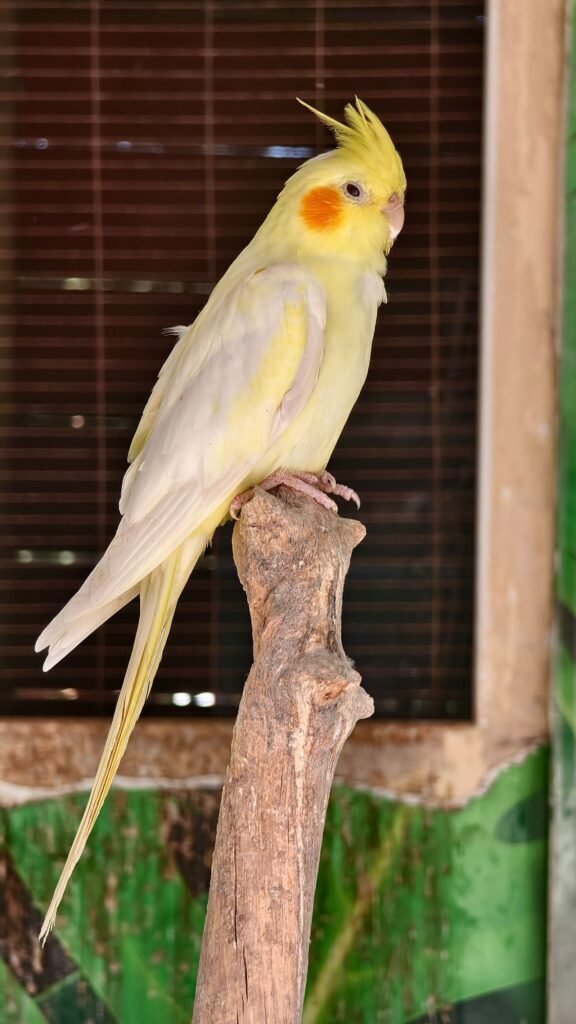
A weiro bird is a cockatiel. “Weiro” is simply the Australian name for the cockatiel (Nymphicus hollandicus), the small grey parrot with the yellow face, orange cheek patches, and expressive crest that is one of the most popular pet birds in the world. If you saw the word “weiro” on an Australian pet site and wondered whether it was a different bird, the answer is no — it is the same bird, under its Australian name. It is also sometimes called a quarrion.
Cockatiels are native to the arid interior of Australia, where they live in large flocks and travel long distances in search of grass seed and water. They have been kept as pets for well over a century, and captive breeding has produced many colour varieties — the lutino (mostly yellow), the pearl, the pied, and the cinnamon. The wild-type bird is grey with a yellow face and orange cheeks, and the male usually has a brighter yellow face than the female.
Weiro Bird Quick Facts
| Fact | Detail |
|---|---|
| Common names | Weiro, quarrion, cockatiel |
| Scientific name | Nymphicus hollandicus |
| Adult size | 30–33 cm (12–13 inches) including the long tail |
| Adult weight | 80–100 g |
| Lifespan (pet) | 15–25 years |
| Lifespan (wild) | 10–14 years |
| Origin | Arid and semi-arid Australia |
| Care level | Low — one of the easiest parrots to keep |
| Diet | Pellets 60–70%, vegetables 20–25%, fruit 5–10%, a little seed |
| Temperament | Gentle, social, affectionate, and chatty |
These numbers come from Australian sources such as Kellyville Pets (30–33 cm, 80–100 g, lifespan 15–25 years); other sources give a slightly wider size range, up to about 35 cm.
Where Does the Name “Weiro” Come From?
The cockatiel has carried Australian names since long before it became a global pet. “Quarrion” is believed to come from an Aboriginal word, and “weiro” is the other traditional Australian name for the bird. Australian pet shops and breeders still use both names — so a listing for a “weiro” in Sydney and a listing for a “cockatiel” in London describe exactly the same species.
So almost everything written about cockatiels applies word for word to weiros — there is no separate weiro species, diet, or temperament.
Are Weiros Good Pets for Beginners?
Yes — weiros are one of the best first parrots you can choose. They are gentle, rarely bite hard, and are far less demanding than larger parrots such as African greys or macaws. A hand-raised weiro will usually step up onto your finger, enjoy head scratches, and whistle along to music. They are also relatively quiet for a parrot: they whistle and chirp, and males can be quite loud when excited, but they do not have the ear-splitting scream of a large cockatoo.
That said, a weiro is a flock animal, and a lonely weiro is an unhappy one. If you are away most of the day, your bird will need a second bird or several hours with you every evening — bored weiros can start feather-plucking, screaming, or biting.
What Do Weiro Birds Eat?
A weiro’s diet should be built on a quality small-parrot pellet (roughly 60–70% of the daily diet), with fresh vegetables daily (about 20–25%), a little fruit (5–10%), and a small share of seed mix. A seed-only diet is one of the most common causes of illness in pet cockatiels — it is high in fat and low in vitamin A, and it commonly leads to vitamin A deficiency, obesity, and fatty liver disease.
Safe daily foods include broccoli, carrots, kale, cooked sweet potato, apple (without seeds), pear, and berries. Never feed avocado, chocolate, caffeine, alcohol, onion, garlic, or apple seeds — all are toxic to birds. Our cockatiel food guide has the full diet ratios and how to switch a seed-addicted bird onto pellets.
Housing and Daily Care in Brief
A weiro needs the largest cage you can fit in your home — Australian guides recommend a minimum of about 90 × 50 × 90 cm, with bar spacing of 1.5–2 cm so the bird can stretch its wings but cannot get its head stuck. Add several perches of different thicknesses, a cuttlebone, and a rotating selection of toys.
Weiros also need time outside the cage every day — at least an hour in the morning and an hour in the afternoon, in a bird-safe room. They need 10–12 hours of sleep a night, and they are prone to “night fright”: a sudden scare in the dark can make a weiro thrash around its cage and injure itself. A light cage cover at night and a small night light nearby help prevent it. If your bird has a night fright, check it for injuries in the morning and contact an avian vet if you find bleeding or a drooping wing. For a comparison with other small parrots, see our types of parrots guide.
How Long Do Weiro Birds Live?
A pet weiro typically lives 15–25 years, while wild weiros live around 10–14 years. That gap is mostly down to safety: pet birds do not face predators, drought, or food shortages, and they get veterinary care. But a long life is not automatic — it depends on diet, exercise, and attention.
The biggest threats are preventable: obesity from a seed-heavy diet, vitamin A deficiency, smoke and non-stick pan fumes, and chronic egg-laying in females — ask an avian vet for help rather than trying home remedies. Our cockatiel lifespan guide goes deeper on the factors that add years and the warning signs of illness.
Do Weiro Birds Talk?
Weiros are famous whistlers rather than famous talkers. Males in particular can learn whole tunes and will often whistle back and forth with their owner for hours. Some weiros do learn a few words, but their voice is very high-pitched, so the words can be hard to make out. Females are usually quieter, though every bird is an individual. If talking is your main goal, a weiro may disappoint you; if you want a cheerful, musical companion, a weiro is hard to beat.
Should You Get a Weiro?
A weiro is a good choice if you want a small, gentle, long-lived parrot and can offer daily company, a pellet-based diet, and a big cage. It is a poor choice if you are away all day, want a silent pet, or are not ready for a commitment that can last 25 years. Buy from a reputable breeder, choose a hand-raised young bird, and find an avian vet before you bring it home.
Frequently Asked Questions
+ What is a weiro bird?
A weiro bird is a cockatiel (Nymphicus hollandicus). “Weiro” is the Australian name for the cockatiel, and the bird is also sometimes called a quarrion. It is the same small parrot — grey with a yellow face, orange cheek patches, and a crest — not a different species.
+ Is a weiro the same as a cockatiel?
Yes. A weiro and a cockatiel are exactly the same bird. “Weiro” and “quarrion” are Australian names for the cockatiel, so all cockatiel care, diet, and lifespan information applies to weiros as well.
+ How long do weiro birds live?
A pet weiro typically lives 15–25 years, while wild weiros live around 10–14 years. A pellet-based diet, daily exercise, and regular avian vet check-ups are the main factors that help a pet weiro reach the top of that range.
+ Are weiros good pets for beginners?
Yes, weiros are one of the best first parrots. They are gentle, rarely bite hard, and are less demanding than larger parrots. They do need daily social time, though — a lonely weiro can become bored and start feather-plucking or screaming.
+ Do weiro birds talk?
Weiros are better whistlers than talkers. Males often learn whole tunes and whistle along with their owners, and some learn a few words, but their high-pitched voice makes words hard to understand. Females are usually quieter.
Sources
- Kellyville Pets — Cockatiel Care Guide: https://www.kellyvillepets.com.au/blogs/bird-tips-and-advice/cockatiel-care-guide
- PetMD — Cockatiel Care: https://www.petmd.com/bird/care/cockatiel-care-sheet
- Lafeber Pet Birds — Cockatiel: https://lafeber.com/pet-birds/species/cockatiel/
- VCA Animal Hospitals — Cockatiels: Feeding: https://vcahospitals.com/know-your-pet/cockatiels-feeding
- ASPCA — People Foods to Avoid Feeding Your Pets: https://www.aspca.org/pet-care/animal-poison-control/people-foods-avoid-feeding-your-pets