
Types of parrots: Complete Guide, Facts & Care Tips
Parrots are a large and varied group of birds — more than 350 species — ranging from tiny budgies to macaws nearly a metre long. The most commonly kept pet parrots include budgerigars, cockatiels, conures, African greys, macaws, cockatoos, and various parakeets. They differ hugely in size, noise, temperament, and lifespan, so choosing the right type matters far more than choosing the prettiest one. A parrot is also a long commitment: small species may live 10 years or more, and large species can live 40 to 70 years.
Budgerigars (budgies)
Budgies are the most popular pet parrot in the world. They are small — about 18 cm (7 inches) long — colourful, sociable, and relatively easy to care for compared with larger parrots. They are chatty too: males in particular can learn to mimic words, though their voices are soft and not always clear. PetMD reports that budgies live 5 to 12 years in captivity, though with good care many reach the upper end of that range. They do best in pairs if you cannot spend several hours a day with them, and they need daily time out of the cage, fresh vegetables alongside a good seed or pellet diet, and plenty of toys.
Cockatiels
Cockatiels are small Australian parrots, about 30 cm (12 inches) long including their long tail, and are often recommended as a good starter parrot. They are usually friendly, gentle, and adaptable, and are famous for whistling tunes — many learn to copy melodies better than they copy words. Cockatiels live around 15 to 25 years in captivity, so even this “starter” bird is a two-decade commitment. They need daily companionship; a lonely cockatiel may scream or pluck its feathers. They also produce fine feather powder, a point for allergy sufferers.
Conures
Conures are medium-sized, high-energy parrots from Central and South America, popular for their playful, clownish personalities. Green-cheeked conures are quieter than many conures, while sun conures are brilliantly coloured — and famously loud. Conures generally live 20 to 30 years. They bond strongly with their owners and need several hours of interaction and out-of-cage time every day, plus sturdy toys and a cage built for a medium parrot.
Quaker parrots (monk parakeets)
Quaker parrots are small-to-medium green parrots, about 29 cm long, known for being talkative and intelligent, and they often build up a surprisingly large vocabulary. PetMD puts their lifespan at 15 to 20 years. Check local rules before getting one: Quakers are restricted or banned in some US states, because escaped birds can form wild colonies. Our guide to the Quaker parrot covers their care in more detail.
African grey parrots
African greys are widely regarded as the most intelligent pet parrot: medium-to-large grey birds with a red tail, famous for mimicking speech with remarkable accuracy. That intelligence comes with demands — puzzle toys, foraging games, training, and daily interaction — and without stimulation they are prone to feather plucking. They can live well over 40 years, so they suit experienced owners who can give them hours of attention every day.
Macaws
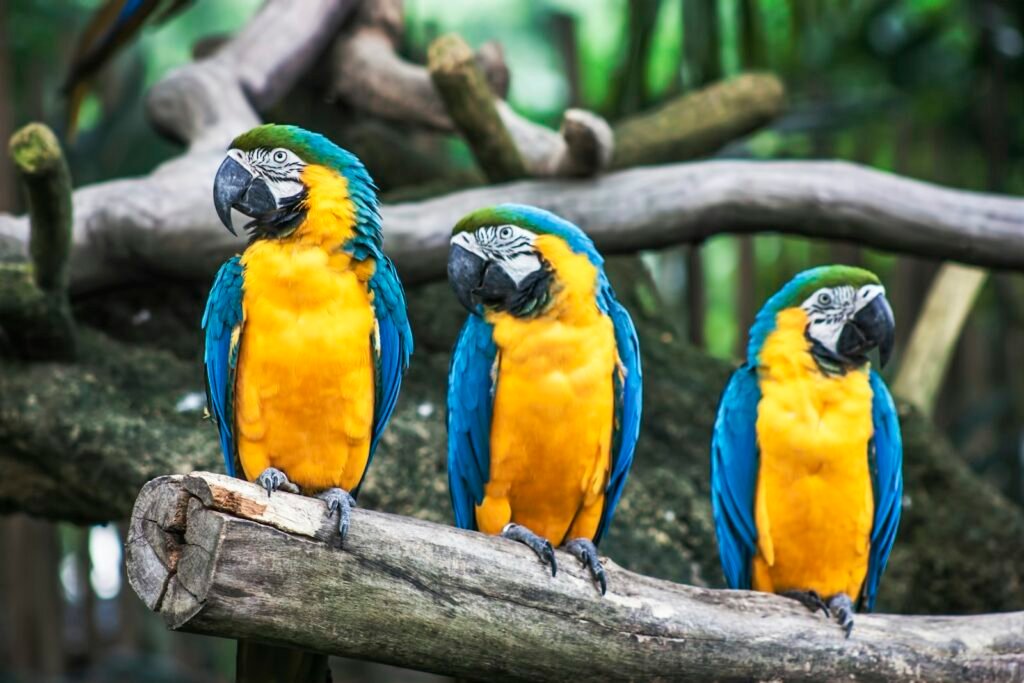
Macaws are the largest parrots, and the most spectacular. Blue-and-gold, scarlet, and green-winged macaws are the best-known species, growing to around 90 cm (three feet) from head to tail. They are highly intelligent, sociable, and form strong bonds with their owners, and they can learn to talk. They are also the biggest commitment in every sense: a macaw needs a very large cage plus daily time outside it, constant toy replacement, and tolerance for extremely loud calls. PetMD notes that captive macaws generally live 35 to 50 years. A macaw suits only an owner with space, experience, and a plan for who will care for the bird decades from now.
Cockatoos, lovebirds, and parrotlets
Cockatoos — including sulphur-crested, umbrella, and Moluccan cockatoos — are large, white or pink parrots famous for their crests and affectionate, almost dog-like devotion. They are also among the loudest and most demanding pet birds: one that does not get enough attention can scream for hours and develop feather-plucking problems. Cockatoos commonly live 40 to 70 years and need an experienced owner and several hours of interaction daily.
Lovebirds are small, stocky parrots, about 13 to 17 cm long, known for bright colours and bold personalities; they live roughly 10 to 15 years and need daily handling to stay tame. Parrotlets are even smaller — barely larger than a budgie — but have the confidence of a much bigger parrot, and live around 15 to 20 years.
A parrot that no longer exists: the Carolina parakeet
Not every parrot type is still with us. The Carolina parakeet was the only parrot species native to the eastern United States; hunting, habitat loss, and disease drove it to extinction, with the last known individual dying in 1918. Its story is a reminder to buy only legal, captive-bred birds, never wild-caught ones. Read more in our article on the Carolina parakeet.
How to choose the right type
Time: every parrot needs daily interaction; large parrots need several hours. Noise: conures, macaws, and cockatoos are loud, while budgies, cockatiels, and parrotlets are kinder on neighbours. Lifespan: a macaw or cockatoo may outlive your current lifestyle and home, so plan for the bird’s whole life. Experience: budgies and cockatiels forgive beginner mistakes; African greys, macaws, and cockatoos do not. Cost and space: large parrots need large cages, specialist avian vet care, and a constant supply of toys.
If a parrot’s noise, lifespan, or daily demands feel like too much, that is useful information, not a failure. A smaller, quieter pet — such as a Roborovski hamster — may fit your home better. Whichever type you choose, buy from a reputable breeder or rescue, insist on a captive-bred bird, and find an avian vet before you bring your parrot home.
FAQ
What is the best type of parrot for a beginner?
Budgies and cockatiels are the usual recommendations — smaller, quieter, and more forgiving than large parrots, though cockatiels still live 15 to 25 years.
Which parrot lives the longest?
Large parrots live longest: macaws generally 35 to 50 years in captivity and cockatoos 40 to 70 years. Budgies typically live 5 to 12 years.
Which parrot talks the best?
African greys are famous for the clearest, most accurate speech, and Quaker parrots are excellent talkers for their size. Budgies can also learn many words, though their voices are quieter.
Are parrots good pets for apartments?
Small, quieter species such as budgies, cockatiels, and parrotlets can work well in apartments. Conures, macaws, and cockatoos are usually too loud for shared walls.
Of all the parrot types, cockatiels are among the longest-lived small parrots — see cockatiel lifespan for how long they live and the seven factors that decide it.
Sources
- PetMD — How long do parrots live?: https://www.petmd.com/bird/how-long-do-parrots-live
- PetMD — How long do birds live?: https://www.petmd.com/bird/care/how-long-do-birds-live&
- Vetstreet — Fascinating facts about four types of parrots: https://www.vetstreet.com/our-pet-experts/fascinating-facts-about-4-types-of-parrots
- University of Vermont Veterinary Medical Association — Birds, information on birds: http://www.uvma.org/birds/
Once you have picked a species, the day-to-day work is the same for most of them — our how to care for a parrot guide covers the cage, diet, and daily routine for beginners.
Pingback: Small Birds: Best Small Pet Bird Species for Beginners - PawMeridian
Pingback: What Do Parrots Eat? A Balanced Diet Guide (Plus Foods That Are Toxic)
Pingback: Cockatiel Food: What to Feed Your Cockatiel
Pingback: Weiro Bird (Cockatiel): Care, Diet & Lifespan