
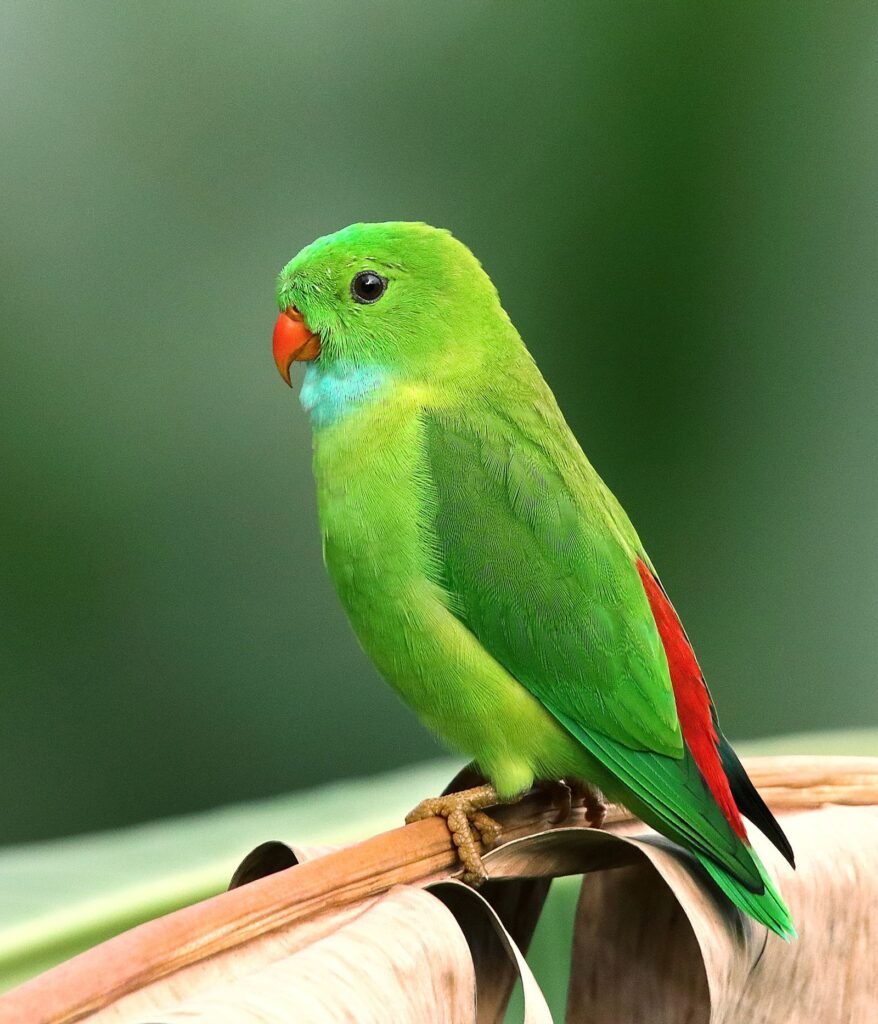
What do parrots eat? A healthy pet parrot eats a diet built on high-quality pellets — about 60 to 70% of what it eats each day — plus fresh vegetables and fruit every day, with seeds and nuts as occasional treats only. An all-seed diet is not enough: it is too fatty and too low in vitamins, and it can lead to liver disease and vitamin A deficiency. That pellets-first rule is the single most important thing to know about feeding a parrot.
What Do Parrots Eat in the Wild?
Wild parrots are foragers, and their diet changes with the season and the species. Most eat a mix of fruits, seeds, nuts, flowers, buds, leaves and the occasional insect.
That variety is the model for a pet parrot’s diet, but a pet cannot forage across a forest. It depends on you to provide the same balance in a bowl: a pellet base plus fresh foods. Exact needs vary by species — our types of parrots guide can help you check what fits your bird.
The Balanced Parrot Diet: Proportions That Work
Veterinary guidance from VCA Hospitals puts pellets at the foundation of the diet:
| Food group | Share of the daily diet | Examples |
|---|---|---|
| Formulated pellets | 60–70% | A quality pellet sized for your parrot species |
| Fresh vegetables | 20–25% | Carrots, broccoli, sweet potato, peas, bell peppers, leafy greens |
| Fresh fruit | 5–10% | Apple, banana, berries, mango, melon, grapes |
| Seeds, nuts and treats | Small amounts only | Sunflower seeds, walnuts, almonds — training rewards, not meals |
| Clean water | Always available | Fresh water, changed daily |
Pellets matter because they are nutritionally complete: every bite contains the same balance of protein, vitamins and minerals. A parrot on a seed mix picks out its favourites — usually sunflower seeds — and leaves the rest, so it ends up eating mostly fat. Over time, that seed-only pattern is linked to obesity, liver disease and vitamin A deficiency.
Switching a seed-addicted parrot to pellets takes patience. Mix a small amount of pellets into the seed and increase the pellet share gradually over several weeks. If your parrot refuses pellets entirely after a few weeks, ask an avian vet for a conversion plan — never starve a parrot into eating something new.
What Fruits Can Parrots Eat?
Most fresh fruit is safe. Offer a few small pieces a day, washed and chopped, and remove anything uneaten after a few hours:
- Apples — remove all seeds and the core; apple seeds contain traces of cyanide compounds
- Bananas — a favourite for most parrots, easy to eat and digest
- Berries — blueberries, strawberries and raspberries are rich in antioxidants
- Mango and papaya — high in vitamin A, which seed-only diets lack
- Melon — cantaloupe and watermelon, with seeds removed
- Grapes and oranges — small pieces; citrus is safe in moderation
Fruit is higher in sugar than vegetables, so keep it to the smaller share of the fresh food — roughly a third, with vegetables making up the rest.
What Vegetables Can Parrots Eat?
Vegetables should be the bigger part of the fresh food you offer every day — lower in sugar than fruit and rich in the vitamin A parrots need most. Offer them raw or lightly steamed, chopped into pieces your bird can hold in its foot:
- Dark leafy greens — kale, spinach, romaine lettuce and dandelion leaves
- Carrots — raw or steamed; excellent for vitamin A
- Broccoli and cauliflower — florets are easy for parrots to pick apart
- Sweet potato — always serve cooked, never raw
- Peas and green beans — fresh or thawed from frozen
- Bell peppers — all colours; pepper seeds are safe, unlike fruit pits
- Squash and pumpkin — cooked, in small cubes
Rotate vegetables through the week, and wash all produce well.
Can Parrots Eat Only Seeds?
No — this is the most common feeding mistake parrot owners make. Seeds alone are too high in fat and too low in calcium, vitamin A and other nutrients. A parrot fed only on seeds may look fine for a while, but over time it risks obesity, fatty liver disease, feather problems and a weakened immune system.
Seeds still have a place: as treats and training rewards. A spoonful of seed mix a few times a week is plenty — think of seeds as dessert, not the meal. The same applies to nuts: almonds, walnuts and hazelnuts are healthy in small amounts, but calorie-dense, so a couple of nuts a day is enough for most medium parrots. Larger species can handle a little more; smaller birds need less — our small bird guide covers their needs.
How Much Should I Feed My Parrot a Day?
A medium parrot such as an African grey or Amazon does well on about 1/4 to 1/2 cup of pellets a day, plus a similar amount of chopped fresh vegetables and fruit. Offer pellets all day, put fresh food out in the morning, and remove leftovers after a few hours.
Watch your parrot’s weight rather than measuring to the gram. A healthy parrot is active, alert and holds a steady weight. If it is gaining weight, cut back on seeds and nuts first. If it is losing weight or eating much less than usual, do not guess at the cause — consult an avian vet promptly. Keep fresh water available, changed at least once a day. If you are still choosing a species, our quaker parrot guide covers one popular species and its care needs in detail.
Foods That Are Toxic to Parrots — Never Feed These
Some everyday human foods are dangerous or deadly for parrots — memorise this list:
| Toxic food | Why it is dangerous |
|---|---|
| Avocado | Contains persin, which can cause heart failure in birds |
| Chocolate | Contains theobromine, toxic even in small amounts |
| Caffeine (coffee, tea, cola) | Can cause heart problems and hyperactivity |
| Alcohol | Extremely toxic; even a small amount can be fatal |
| Onion and garlic | Damage red blood cells and can cause anaemia |
| Fruit pits and seeds | Contain cyanide compounds; always remove pits and seeds |
| Xylitol and artificial sweeteners | Toxic to birds; check sugar-free products carefully |
| Salty, sugary or fatty snacks | Strain the liver and kidneys |
| Raw dried beans | Contain toxins that cooking removes; never feed raw |
| Mushrooms | Some varieties are toxic |
Two more household dangers: Teflon and other non-stick cookware give off fumes when overheated that are lethal to birds — never use non-stick pans near a parrot. And never offer food that has been in your mouth: human saliva carries bacteria that can make birds seriously ill.
If your parrot eats something from this list, do not wait for symptoms and do not try home remedies — contact your avian vet or an animal poison helpline immediately.
Frequently Asked Questions
+ What do parrots eat in the wild?
Wild parrots eat fruits, seeds, nuts, flowers, buds, leaves and the occasional insect, depending on species and season. Pet parrots should get the same variety: a pellet base plus fresh vegetables and fruit every day.
+ What fruits can parrots eat?
Apples (seeds and core removed), bananas, berries, mango, papaya, melon, grapes and oranges are all safe. Offer a few small pieces a day.
+ What foods are poisonous to parrots?
Avocado, chocolate, caffeine, alcohol, onion, garlic, fruit pits and seeds, xylitol, raw dried beans, mushrooms, and salty, sugary or fatty snacks. Avocado contains persin, which can cause heart failure. If your parrot eats any of these, contact an avian vet immediately.
+ Can parrots eat only seeds?
No. An all-seed diet is too high in fat and too low in calcium and vitamin A, and over time it can lead to obesity, liver disease and a weakened immune system. Seeds should be a small treat only — pellets should make up 60 to 70% of the diet.
+ How much should I feed my parrot a day?
It depends on species and size. A medium parrot such as an African grey or Amazon does well on about 1/4 to 1/2 cup of pellets a day, plus a similar amount of chopped fresh vegetables and fruit.
Cockatiels follow the same pellet-first rules, with a few species-specific details — see cockatiel food for the exact diet ratios and the foods that are toxic to them.
Sources
- VCA Hospitals — Parrots: Feeding: https://vcahospitals.com/know-your-pet/parrots-feeding
- ASPCA — People Foods to Avoid Feeding Your Pets: https://www.aspca.org/pet-care/animal-poison-control/people-foods-avoid-feeding-your-pets
- Lafeber Pet Birds — Parrot Nutrition: https://lafeber.com/pet-birds/nutrition/
- Lafeber Pet Birds — Parrot Species: https://lafeber.com/pet-birds/species/
Pingback: Cockatiel Food: What to Feed Your Cockatiel